


 Live Score
 Cricket Teams
 Cricket Players
36 wickets in 4 Tests, dismissed Viv Richards twice; his own success became a burden, career faded with Kumble’s rise
He took 16/136, the best match haul on Test debut, and later bowled 59 overs unchanged - the longest uninterrupted spell in history - yet played just 17 Tests.

 Prefer HTon Google


At 19, an Indian leg-spinner walked into Test cricket against perhaps the most intimidating batting side of his age and produced something the game had never quite seen. Across two innings in Madras, he bowled 54.3 overs, conceded 136 runs and took 16 wickets. Viv Richards, the great destroyer of bowling attacks, fell to him twice. By the time India completed a 255-run victory, a teenager making his debut had rewritten a record that had stood for 16 years.
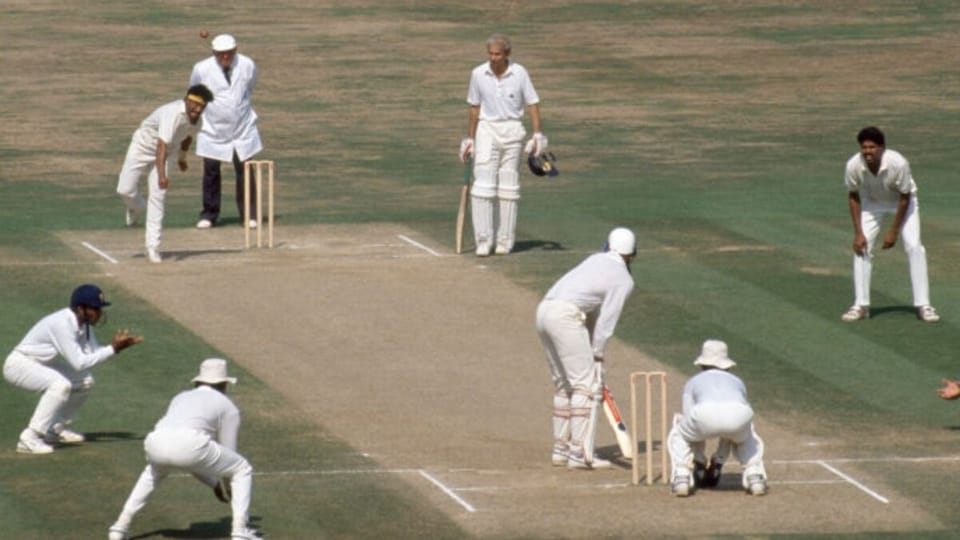
And it did not immediately look like a freak occurrence. Three Tests against New Zealand followed later that year, bringing another 20 wickets. Four matches into his international career, the young spinner had 36 Test wickets at 14.61. No bowler in history had taken more after his first four Tests. India appeared to have discovered a leg-spinner capable of defining an era.
The name was Narendra Hirwani. And almost four decades later, his career remains one of Indian cricket's most fascinating studies in how quickly greatness can appear — and how brutally expectations can change once it does.
From 36 wickets in four Tests to an overseas reckoning
Hirwani's 16 for 136 against West Indies in January 1988 remains the best match analysis by a bowler on Test debut. Bob Massie had taken 16 for 137 for Australia in 1972; Hirwani displaced him by a single run. Even the victims gave the performance its weight. Richards was dismissed in both innings, first for 68 and then for four. His next series strengthened the belief that India had found something exceptional. Against New Zealand at home, Hirwani collected 20 wickets in three Tests. After four appearances, his international numbers belonged in fantasy.
What followed was the part far less frequently remembered. His remaining 13 Tests produced only 30 wickets at 48.70. The contrast with his opening burst could scarcely have been greater. Hirwani finished with 66 wickets from 17 Tests at 30.10, but even that overall figure hides the divide that came to define him. At home, he took 45 Test wickets at 16.62. Away from India, he managed 21 at 59.00.
The 1988-89 tour of the West Indies brought the first warning. On pitches offering less assistance, Hirwani took six wickets in three Tests at 57.33. His flight and loop had devastated batters on Indian surfaces, but overseas conditions demanded different methods and greater adaptability. There were still unusual moments. At The Oval in 1990, Hirwani sent down 59 consecutive overs in England's second innings, finishing with 1 for 137. It remains one of the longest uninterrupted spells in Test history. Yet by the end of that year, his regular place in the side had disappeared.
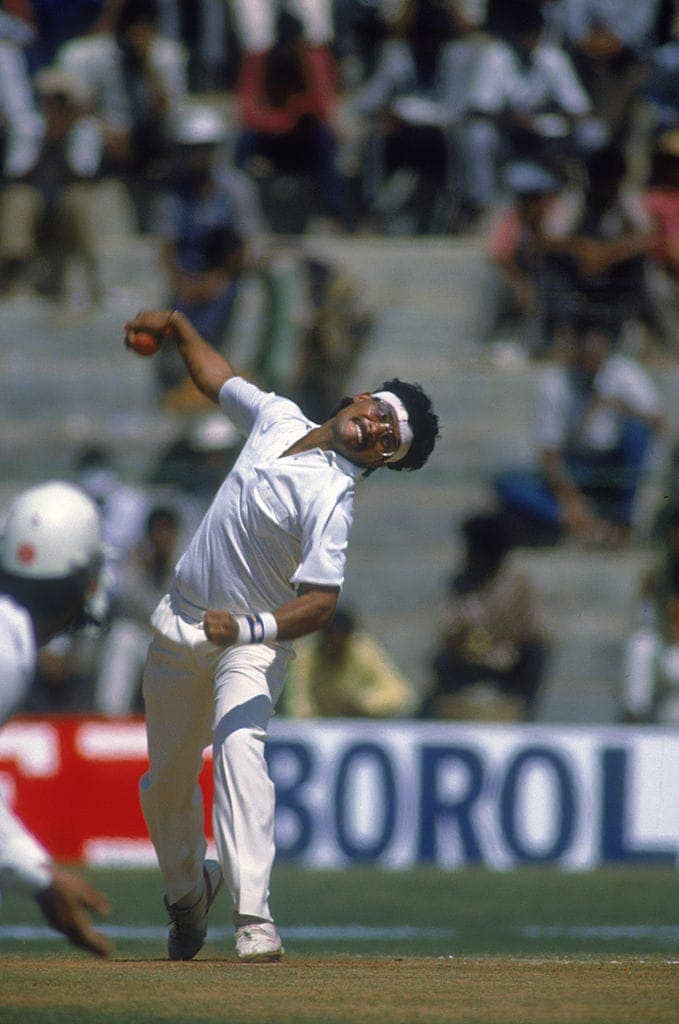
Then came Anil Kumble. Hirwani would later speak about the burden created by those first 16 wickets. “People started to expect a lot from me. After that, if I got 3-4 wickets, they didn't rate it (highly); everyone wanted eight. And 3-4 wasn't eight,” Hirwani said in an interaction later with Cricbuzz. Meanwhile, Kumble was developing into India's premier spinner, leaving Hirwani increasingly dependent on occasional recalls.
Nearly five years after his previous Test, he returned against New Zealand at Cuttack in 1995 and took 6 for 59. It should have felt like a second beginning. Instead, only two more Tests followed, both against South Africa in 1996.
International cricket moved on. Hirwani did not stop bowling. That is the forgotten half of his story.
He finished with 732 first-class wickets at 27.05, including 54 five-wicket hauls and 10 ten-wicket match hauls. In the Ranji Trophy alone, he took 441 wickets. During 1992-93 and 1993-94, he collected 51 and 58 first-class wickets respectively. More remarkably, long after his India career had effectively ended, the numbers surged again. Hirwani took 79 first-class wickets in 2002-03, when he was already 34. That season included 34 wickets in the Duleep Trophy, still the highest tally in a single edition of the competition.
There lies the contradiction of Narendra Hirwani. He is remembered because his Test career exploded into life with 16 wickets in one match. Yet concentrating only on that debut almost diminishes what followed. The same bowler who struggled to reproduce his home dominance overseas continued working for years after international cricket had stopped calling.
A teenager once took 36 wickets in his first four Tests and looked ready to own an era. He eventually played only 17. But a career that seemingly vanished from international cricket continued quietly until the first-class wicket column read 732.


