


 Live Score
 Cricket Teams
 Cricket Players
CSK turn to Zaheer Khan for more than a new coach as the post-Fleming era demands a new cricketing identity
Zaheer Khan inherits CSK at a crossroads, tasked with preserving its core philosophy while reshaping the franchise for a faster, younger T20 era.

 Prefer HTon Google


Zaheer Khan spent years trying to perfect a slower ball his body did not naturally want to bowl. He experimented with different grips and methods, discarded the versions that did not suit him, and kept searching until he found something that did. It was a small technical journey inside a much larger career, but it says something revealing about the mind Chennai Super Kings have now entrusted with the task of shaping their next era.
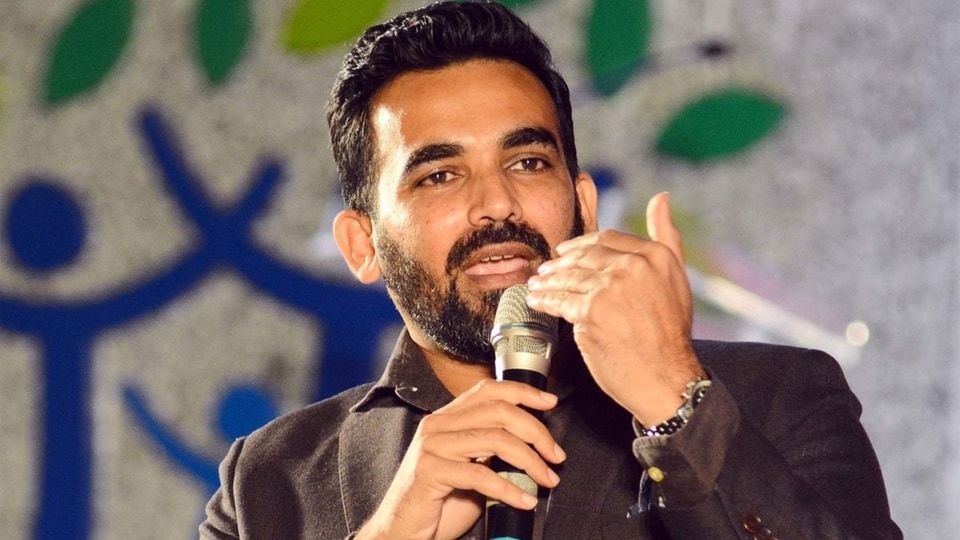
Zaheer has never appeared particularly sentimental about methods. As a bowler, he adapted because adaptation was necessary. He shortened his run-up, altered his angles, learnt to use the crease differently and evolved from a young fast bowler operating largely on instinct into one of India's most cerebral seamers. His game eventually became less about possessing one overwhelming weapon and more about understanding which weapon a particular moment demanded. That, more than his reputation as one of India's finest fast bowlers, may explain why CSK see him as the right man to succeed Stephen Fleming.
Zaheer does not have to dismantle the CSK philosophy
The obvious temptation is to portray Zaheer's arrival as a dramatic break from the Fleming era. After all, replacing the coach who helped construct one of the IPL's most enduring dynasties naturally feels like the beginning of something radically different.
Deep Dive

The more interesting reality is that Zaheer's coaching philosophy has frequently sounded remarkably similar to the culture CSK spent years cultivating under Fleming and MS Dhoni. Across his administrative and coaching roles, Zaheer has repeatedly spoken about clarity, defined responsibilities and allowing players enough freedom to retain their natural instincts. During his time with Mumbai Indians, his emphasis was often on helping younger cricketers express themselves without filling their minds with unnecessary noise. At Lucknow Super Giants too, the language remained familiar: establish roles, create an environment in which players understand what is expected of them and then allow them to make decisions.
Fleming's CSK were built on many of the same foundations. At their best, CSK were never a franchise obsessed with visibly coaching every minute detail. Players were trusted. Roles were carefully constructed. The dressing room was deliberately insulated from panic. Dhoni and Fleming created an environment in which experienced cricketers were expected to understand their own games and take responsibility for them.
Zaheer Khan, therefore, does not arrive as an ideological outsider. That could prove critical because CSK's problem is not that everything about the old model suddenly became obsolete. Their difficulty has been separating the principles that made the model successful from the habits that gradually became too comfortable.
Fleming himself acknowledged that CSK had perhaps been slow to evolve as T20 cricket accelerated around them. Younger players arrived with different ranges, different physical capabilities and a fundamentally different understanding of risk. The franchise that once stayed ahead because it knew exactly what kind of cricket it wanted to play eventually found parts of the format changing faster than its own template. Zaheer's challenge is not to erase the CSK way. It is to identify which parts still matter.
Also Read: ‘Zaheer Khan is the Sachin Tendulkar of bowling’: MS Dhoni's old faith echoes through CSK's new era
The new CSK may need players who solve problems themselves
This is where Zaheer's mentality becomes especially relevant. He has spoken strongly about the danger of allowing data and predetermined match-ups to overwhelm instinct. His objection has never been to information itself, but to cricketers becoming so dependent on external instructions that they lose the ability to read the contest unfolding in front of them.
That principle defined his own bowling. Zaheer often reached the top of his run-up carrying several possibilities rather than one rigid delivery. If the batter moved, he had one response. If the batter stayed still, he had another. The larger tactical plan existed, but the final decision belonged to the bowler.
That distinction could become important for a changing CSK side. The franchise is already moving away from the overwhelmingly experience-driven identity that defined much of its history. Younger cricketers are being trusted earlier. The investments made in players such as Prashant Veer and Kartik Sharma reflected a willingness to gamble heavily on potential rather than simply purchase established certainty, while Ayush Mhatre, Anshul Kamboj and others represent a squad increasingly dependent on development.
This is precisely the sort of environment in which Zaheer's background at Mumbai Indians becomes significant. His role there extended well beyond working with fast bowlers. He was involved in talent identification and player development inside an organisation that became particularly effective at discovering cricketers before they became obvious IPL commodities. The ability to improve unfinished players may now matter more to CSK than the ability to manage a dressing room full of finished ones.
There is, however, an important reason for caution. Zaheer's season with Lucknow Super Giants did not produce the transformation either side would have wanted. LSG finished outside the playoffs, and his tenure ended after only one season amid reports of differences within the leadership structure. His emphasis on clarity becomes particularly interesting in that context because clarity is difficult to create when too many cricketing voices are pulling in different directions. CSK must avoid that problem.
If Zaheer, Ruturaj Gaikwad, Dhoni and the ownership are genuinely aligned, the transition has every chance of being cleaner. If the old hierarchy continues to coexist awkwardly with a new head coach's authority, even the strongest philosophy can become muddled. That is what makes this appointment more consequential than a simple change of coach.
Fleming's greatest achievement was helping turn a collection of cricketing principles into a culture so recognisable that CSK eventually stopped needing to explain what the “CSK way” meant. Zaheer's task is more complicated. He must decide which parts of that culture are permanent truths and which were merely successful solutions to an older version of T20 cricket. He does not need to destroy the Fleming era to begin his own. He only needs to know what to keep, what to discard and, much like that elusive slower ball years ago, when to keep searching for something better.


