


 Live Score
 Teams
Teams Players
Why BCCI went back to Rohit and Kohli in T20Is. What it means for Gill, Jaiswal, Rinku and the future of Indian cricket
Making sense of Rohit Sharma and Virat Kohli's return to T20Is for the Afghanistan series and what it means for the future of Indian cricket.

 Prefer HTon Google


Away from the extensive preparations for the ODI World Cup at home, the eventual heartbreak in Ahmedabad and the ongoing World Test Championship cycle, if the last 14 months indicated anything, as far as T20I cricket was concerned, India were looking to move on from Rohit Sharma and Virat Kohli. The lessons of the past T20 World Cup losses, primarily down to India's archaic-style approach, seemed to be in the past. Packed with young guns, fresh from their impressive campaigns in the 2023 Indian Premier League season, India had changed their T20 cricket. There was more aggression from the batters throughout the line-up, with less price put on each wicket while adding variety to the team with left-handed options.
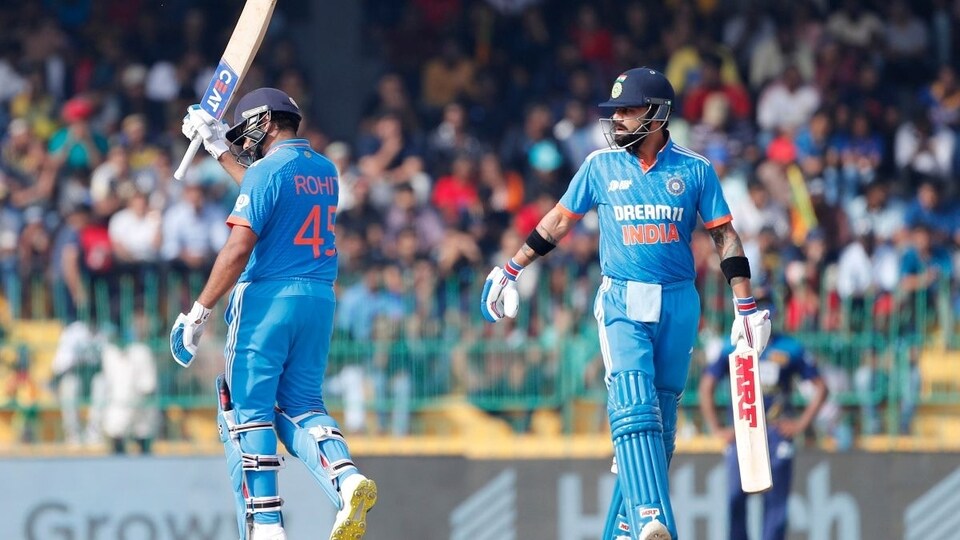
Over the course of the 16 T20Is played after the IPL season last year, with Hardik Pandya, Jasprit Bumrah and Suryakumar at the helm alternatively, in Rohit's absence, India saw the emergence of Yashasvi Jaiswal, Tilak Varma, Rinku Singh and Jitesh Sharma as tailor-made options for the format. And more so, with them proving their worth even on the international stage, India looked more complete with enough left-handed options to dabble, good hitters against both spin and pace, middle-order aggressors and most importantly, a finisher. Although the Kohli-Rohit question remained a cynosure through these matches, with the likes of Sunil Gavaskar and Irfan Pathan calling for a need for 'experience' in the line-up with the T20 World Cup slated to take place in the unknown Windies and U.S. conditions, there was a growing talk about few experts backing India's want to adapt the modern-day T20 approach.
ALSO READ: Rohit, Kohli's T20I return drawback outlined as former India selector points out major T20 World Cup headache
However, on Sunday evening, the long wait and array of questions ended as the selectors brought Kohli and Rohit back into the T20I format for the three-match contest against Afghanistan, which subsequently all but guaranteed their place in the World Cup squad. But it more so, as former cricketer Deep Dasgupta put it, brought India "back to square one".
Making sense of Kohli and Rohit's T20I return
India lacked a leader, not just for the series, but even for the World Cup. Hardik Pandya has been the unofficial skipper in the format in Rohit's stead for the better part of the last 24 months, but the all-rounder has also been injury-prone throughout his career. His struggle with a back injury in 2021 had cost India the T20 World Cup that year, and so was for the ODI World Cup this year after he was ruled out with an ankle twist in the early part of the tournament, from which he has yet to recover.
In Hardik's absence, Suryakumar had led the side against Australia at home, where the team won 4-1, before holding South Africa to a 1-1 draw. But the star batter had also incurred an ankle injury during the final game in the Proteas series, thus ruling him out of the Afghanistan tie. India could have looked at Ravindra Jadeja as a leadership option, given he was the vice-captain in the South Africa series, but the selectors also had to manage his workload with the long England Test series ahead. Thus enter Rohit.
But why Kohli? The selectors couldn't have picked one and left out the other. There is more at stake for the selectors than merely picking the team, especially when it comes to ICC events.
Should India have gone back to Rohit and Kohli for T20Is?
One of the reported reasons behind Rohit losing his captaincy role for Mumbai Indians was down to his dwindling numbers in IPL. The only season he has ever managed to have an overall strike rate of 140 or more was back in 2015. His average scoring rate has been 7.6 per ball in the last four seasons while he averaged only 20 since 2022. Yet there remains certain hope given his new-look aggressive-style batting in the ODI World Cup last year, especially in the powerplay, which laid the foundation for big scores early on and eased the pressure off the subsequent batters. Rohit, hence, would want to perfectly reproduce that yet again, in the shortest format, and move on from his conservative approach against the new balls, having scored at a strike rate of 128 in the powerplay in IPL since 2021.
As far as run-scoring is concerned, Kohli has had far better IPL seasons on a consistent basis, with 1851 runs since 2020, the fifth-highest among all batters, but that has been managed at a strike rate of just over a run-a-ball. For Kohli, the problem lies in the middle overs and against spin. Since 2020, among the 20 batters who have at least faced 500 deliveries in the middle overs, Kohli's strike rate of 116.27 is the lowest. He is the only batter to score below the run-a-ball rate. Moreover, he takes 10.6 deliveries to score a boundary between overs 7 and 16, which is almost a boundary every two overs, and almost double the deliveries taken by Sanju Samson (SR of 152.87; boundary rate of 5.3) and Suryakumar Yadav (SR of 150.59; boundary rate of 4.8), the two best batters in this phase in the last four IPL seasons.
Kohli's strike rate takes a nosedive in the middle overs when up against the spin variety, with an average strike rate of 105.53, the lowest among 18 batters (minimum 300 deliveries), while he takes 14.7 deliveries to hit a boundary, nearly thrice the number of balls Samson (SR of 156; boundary rate of 5.3), who also excels in this list, takes.
Kohli can open the batting then for India, at least that was the backup plan for the last T20 World Cup, and he embraced the role in the 2023 IPL season as well. But up against spinners with the new ball, the numbers aren't impressive either as he managed to score at a strike rate of only 120.7 against the variety last year.
The Rohit-Kohli T20 World Cup questions that need to be addressed in Afghanistan T20I series
Having not had game time in the international format since November 2022, both are at least certainties for the playing XI in the three-match contest against Afghanistan, which stands as India's final assignment in T20Is before the World Cup. And their inclusion will come at the cost of one between Jaiswal and Shubman Gill, who had a fabulous IPL 2023 season, and one between Tilak and Rinku or even both to sit out. Furthermore, with them all but certain for the T20 World Cup squad, the return of Hardik and Suryakumar from injury could mean, only Jaiswal or Gill from the aforementioned youngsters making the cut for the XI. Thus being "back to square one".
The selectors have not revealed their World Cup intentions, leaving everything to speculation, but if the past ICC T20I events have taught anything, they should be ready to take the bold decision, even if it comes down to dropping one between the two or even both. Rohit and Kohli will still have the whole of IPL 2024 to themselves if they produce a scratchy performance against Afghanistan, but selectors should be ready to put their foot down if they fail to step up to the demands of the shortest format where one needs to go after the bowlers from ball one. With India having nothing to lose in ICC events, where they haven't won a trophy in 10 years, the most crucial World Cup squad decision will eventually boil down to taking that big risk.


