


 Live Score
 Cricket Teams
 Cricket Players
Gautam Gambhir's ‘high risk high reward’ blueprint for India: Messy in bilaterals, lethal in tournaments
Gautam Gambhir's coaching emphasizes tournament readiness over bilateral series wins. Despite recent losses, he prioritizes building a resilient team identity.

 Prefer HTon Google


Gautam Gambhir’s India might drop a bilateral here, lean ODI series there, even take a punch on a marquee Test tour - and still look like a side being built for trophies. That is the most honest way to read what has happened since he took charge, and what he has repeatedly signalled about how he wants India to play.
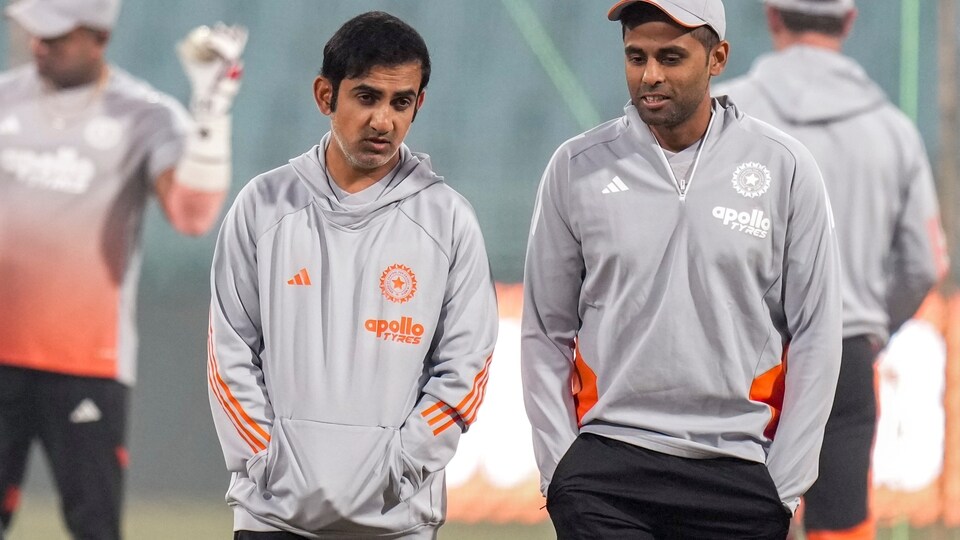
In a cricket ecosystem addicted to “series win = progress”, Gambhir is pushing a different scoreboard: tournament readiness. Bilaterals, in his world, are the laboratory. The results can be messy. Learning can’t be optional.
The evidence is uncomfortable. India’s ODI trip to Sri Lanka in 2024 ended in a series defeat. At home, New Zealand and South Africa handed India 3-0 defeats in Test whitewashes. In Australia, India lost the Border-Gavaskar Trophy 3-1. If you want a neat report card, this is where you throw the file at the wall.
But here’s the counterpoint: India won the Champions Trophy in 2025, and Gambhir’s messaging has been consistent in one crucial way - he’s choosing ceiling over comfort. In T20 cricket especially, he has spoken about chasing totals that alter the psychology of the game, even if it means accepting collapses. That is a coach telling you, upfront, that there will be days when the method looks reckless. He isn’t promising you a higher peak.
This is the first pillar of his blueprint: a defined identity that survives failure. Champion teams don’t panic when the plan hits turbulence; they refine. That is how you create repeatability under pressure, by treating volatility as feedback, not betrayal. It is also why bilaterals can look like a zigzag: you are not optimising for the next match; you are training for the next moment that decides a trophy.
The second pillar is the role clarity, especially around senior “ceiling” players. Tournament cricket is ruthless because the margin for experimentation shrinks fast. Gambhir backing veterans when it matters is not nostalgia - it’s a recognition that big tournaments are often decided by players with scar tissue and skill in equal measure. You can be future-facing without pretending experience is a liability. Use bilaterals for wider auditions, and arrive at tournaments with a hardened core.
The third pillar is adaptability - and this is where the losses, ironically, help. Two home whitewashes and an Australia defeat are painful, but they expose exactly what breaks under elite stress: batting time, coping when early wickets fall, and not letting one injury become a collective excuse. Gambhir’s public framing after setbacks has leaned toward application, sessions, and responsibility, not alibis. That doesn’t win you applause on the night. It can build the habits that win you knockout days.
So yes, you can argue Gambir’s India has dropped bilateral series. You can question timing of experiments, selection calls, and whether the ODI/Test blueprint is as clearly articulated as the T20 one. The critique is fair - because “tournament-first” doesn’t mean “bilaterals don’t matter.” It means bilaterals must serve a purpose beyond collecting trophies for the cabinet.
Also Read: Sanjay Manjrekar sells Virat Kohli's genius short: Are ODIs really easy?
The danger, though, is not losing bilaterals. The danger is normalising defeat. A risk-heavy ideology only works if the team also learns how to switch gears. If you want to play for 250, you must also know how to win when 160 is par in a T20. If you want to attack spin, you must also know how to squeeze it when the pitch demands patience. A fearless template needs a safety valve - a repeatable Plan B that doesn’t feel like surrender.
That is the next evolution India must show under Gambhir: range. Not just range of shots, but range of modes. Tournament winners aren’t one dimensional; they are shape-shifters. They know when to punch and when to choke. They know when to gamble and when to bank.
If Gambhir gets the balance right, the bilaterals will keep looking like noise to some - and deliberate calibration to others. But trophies don’t care about narratives. They care about readiness. And right now, India’s method feels less like a committee response and more like a coach-owned blueprint.
It may cost a series here and there. It may bruise egos. It may annoy a fanbase raised on dominance.
But if the trade-off is a team that arrives at tournaments with a clear identity, deeper adaptibility, and the emotional muscle to survive a bad hour without collapsing into fear - then Gambhir’s bet is not reckless at all. It is the kind of bet serious teams make.


