


 Live Score
 Cricket Teams
 Cricket Players
How much will Dravid influence things in a captain's team
Superb commitment, can counsel but has no experience as senior team coach, writes former India batsman Sanjay Manjrekar.

 Prefer HTon Google


It was an Irani Cup game in Patiala in 1993-94. Rahul Dravid was picked for the Rest of India side I was leading. It was a tough pitch and Punjab, the Ranji winners of that year, had a very good bowling attack.
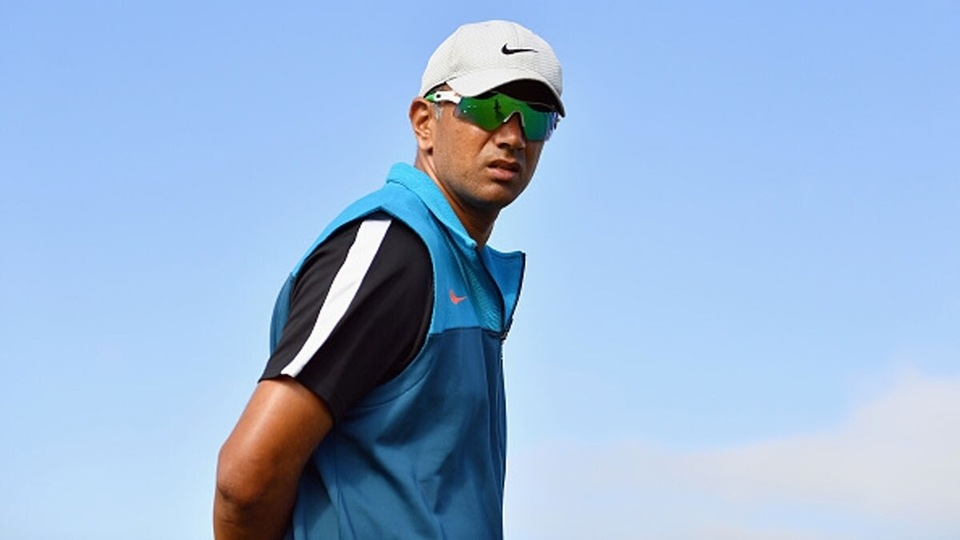
Dravid top scored with 93 (in keeping with his early affliction of getting out in the 90s) and I was thoroughly impressed seeing him play the drives and pulls on that dicey pitch. I was now a Dravid fan!
Like most Mumbai players do, I started telling everyone how good this kid is and how he is an obvious Test prospect. Why? Well, he had the defence and the shots against pace and bounce. He played the pull shot against seamers, a rarity in those days amongst Indian batters. He had good technique against swing too.
Following that Irani game, when we were in Rajkot to play a Duleep Trophy match, I told Ravi Shastri about Dravid. Like me, he too did not care where the talent came from as long as it was special. Dravid failed in that high scoring match, so Shastri could not see the product, one I had marketed with such enthusiasm, in its glory.
There was no stopping Dravid of course, and soon he was playing for India. We shared a room in England in 1996 and I got to know him better as a person too. Since those days I have teased Dravid about how it’s just a matter of time before a halo emerges behind him. I found him almost saintly in the way he conducted himself.
There have been many occasions during his long India career where he displayed this pure, heroic quality, always putting the team first and him later. He played a reverse sweep in a Test match and got out on 270 in Rawalpindi when India needed to score quick runs and declare. Interestingly, in the same series, another Indian great was crawling to a 200 and Dravid the captain declared the innings because India had the runs on the board and time was of the essence. Dravid set an example to Tendulkar in Rawalpindi, I thought in my mind.
In 2011, when India was having one of its worst phases overseas, going down 4-0 to England and then 4-0 down to Australia, Dravid had a phenomenal series in England, scoring three hundreds. A classic case of runs in ruins. He had all the right, on grounds of sheer seniority as well as the form he was in, to bat at the number of his choice. But no, Dravid stepped up yet again for India by opening the innings because there was a team crisis at the top.
This is of course Rahul Dravid the 10 out of 10 cricketer, who ticked all the boxes.
How is Rahul Dravid the Indian coach going to be? Well, I have no idea! In fact, none of us have a clue. Why? Because we have not seen Dravid coach a senior national team before. Coaching a junior team as against coaching a senior team are two vastly different things. Sandeep Patil, for example, was a brilliant state level and junior team coach but fell way short of the mark as coach of senior Team India.
I have a theory: successful captains have the potential to be great coaches. That’s because coaching a senior team is not about putting them through drills of how to play on the front foot and back foot. It’s mostly man management and getting the most out of every player in the side.
I have not seen anyone better than Imran Khan in this regard. MS Dhoni too is right up there and to an extent Sourav Ganguly too, for his one quality to pick the right talent and then use his captaincy powers to help the talent reach his peak.
We haven’t seen Dravid the captain long enough to apply the “good captain = good coach” theory. We can hazard a guess about his potential as coach because we know he has given his sweat and blood to every team he played for and even as a junior coach and director of the NCA.
A friend of mine who attended the BCCI level 2 coaching course conducted by NCA was floored by the commitment he saw Dravid put into that event. So, Indian cricket is extremely lucky to have someone like Rahul Dravid who offers his services when needed, but that does not guarantee his performance as India coach. A great cricketer does not necessarily make a great coach.
First, we must be realistic about how much influence the coach has on the Indian team. The Indian coach does not select the team, the selectors do. The captain and the coach can only make suggestions but let’s also concede here, what are the chances of a Chetan Sharma putting his foot down and not giving Virat Kohli and Dravid the player they want?
But it’s still different from being a one-man selection committee like England’s coach Chris Silverwood is. In cricket, the captain still has a massive impact on the actual cricket that happens on the field and that’s where matches are won and lost. The coach has minimal influence there, until cricket allows constant communication between captain and coach whether it’s by an audio system plugged into the captain’s ear or by sheer shouting or making gestures while the game is on from the side lines.
Of course, this kind of change of culture and team hierarchy has to be clearly defined and accepted by all concerned. It’s actually not that big a deal, new systems of operation are introduced all the time in other spheres of our lives.
If the coach is allowed to direct what happens on the field, then he becomes the No 1 power man and the captain comes after him. One of the possible advantages of this system is that you will have a wiser 40 or 50-year-old head managing young, exciting talent on the field.
Every cricketer, including myself, realise a few years into retirement how we could have done things differently for better results.
With this kind of hierarchy, you get the best of both worlds. The quality of cricket seen on the field may improve and who would not want that, right?
It will take care of some weaknesses that captains always have when marshalling their troops on the field. The coach on the sidelines will cover up those flaws. I have always believed that there is also conflict of interest between the player within the captain and the captain.
India would have batted first in that 2003 World Cup final at the Wanderers in a coach-led system..
Coming back to Dravid, with Virat as captain, who knows how much influence he will have on the matters that really matter, like picking the playing XI, deciding on the batting order, bowling changes, field placement etc.
Yes, Dravid could be a great counsellor, for he is the most intelligent cricketer I have seen, and Ajinkya Rahane could benefit (if it’s not too late) from Dravid’s presence.
But still, these are all peripheral components. In Indian cricket, the captain still calls the shots, so let’s not get too starry eyed and expect Dravid the coach to come and wave a magic wand and conjure the greatest cricket team ever.


