Rejoice. Fifty-over cricket isn’t always boring. It has finally taken a World Cup to establish one-dayers are not only about flat-track bullies. Bowlers too can hit back, with slowers, cutters, knuckle-balls and yorkers. Batting need not be brutal or mindless but can involve meticulous planning, blunting fast bowlers and rotating strike till the time is ripe to go full tilt. The elements have played a sneaky role too, changing within hours to provide completely contrasting playing conditions.
All of them combined have produced equal contests between bat and ball, thrilling chases and the prominence of technically gifted batsmen. In short, a celebration of skills.
Till Tuesday’s India-Bangladesh match, only four matches produced victory margins of 100 runs or more. In the 2015 World Cup, it was 13, including three with margins of 200 runs and above.
ALSO READ: The story so far: India’s smooth journey to the semi-finals
Contrast 2015
Last edition, albeit there being some weak teams such as Scotland, Zimbabwe and the UAE in the 14-team competition, 28 times had teams finished with totals of 300 or above, including three 400-plus scores.
This time, the 400-run barrier is yet to be breached despite pre-tournament talk that a batting-heavy team such as England may even score 500. Overall though, 22 times have a team crossed 300 runs, with only four totals surpassing 350 as opposed to seven in 2015.
Now contrast the size of grounds in England with that of the colossal cricket stadiums in Australia and it tells you how bowlers have been more successful in restricting batsmen, especially in the slog overs.
{{/usCountry}}Now contrast the size of grounds in England with that of the colossal cricket stadiums in Australia and it tells you how bowlers have been more successful in restricting batsmen, especially in the slog overs.
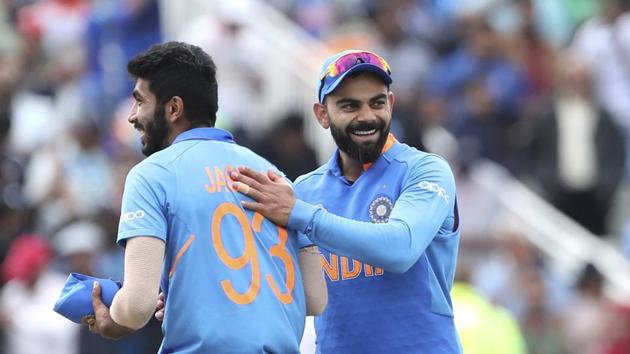
{{/usCountry}}With economies of 4.78 and 4.88 in the last 10 overs of an innings—the lowest in the tournament—Trent Boult and Mitchell Starc have clearly mastered the art. The next three— Jofra Archer, Jasprit Bumrah and Mark Wood—also underline the utility of quick but tight bowling. They have also brought yorkers back in fashion.
Dial Bumrah or Starc if you need someone to bowl those toe-crushers at will and at serious pace. It blew away the final resistance from Bangladesh and England after tormenting them throughout the death overs with pace variations.
The Pakistanis have been at it too, mixing deliveries with a hint of reverse swing. Wahab Riaz was a phenomenon, bowling his heart out but with 16 wickets, an eye-popping average of 20.43, an economy of 4.95 and control over the ball that one can only dream of, Mohammad Amir is making the world fall in love with left-arm fast bowling again. All’s well with the cricket world when you know that the left front is still helmed by a Pakistani.
ALSO READ: Hardik Pandya now the fab fifth bowler in India attack
Vintage Malinga
Lasith Malinga remains the greatest exponent of variations though. Fifty required off 48 and Ben Stokes still at one end, England had no reason to fear the worst. But then came a magical over—three yorkers, a slower bouncer and two back-of-the-length deliveries—that made it 48 from 42. With his concoction of variations, Malinga conceded just four runs in 12 balls and effectively won the match for Sri Lanka.
Better bowling towards the end of the innings is also why many teams couldn’t finish the way they had started. Despite reaching the 250-run mark around the 40th over, India couldn’t raise 100 runs in the next 10 overs against Pakistan and Australia.
Tight at the death
Against Bangladesh, India were set for at least 350 after they had raced to 200 in the 34th over but Mustafizur Rahman intervened with his crafty cutters.
With bulk of the wickets being lost in the slog overs, no wonder that the top 14 wicket-takers are all pacers.
The Shakib show
The first spinner on that list is all-rounder Shakib Al Hasan who has made a habit of breaking and stitching partnerships whenever Bangladesh are in crisis. Shakib isn’t a great batsman or bowler but his efficiency makes him a most dangerous opponent.
He has always been like this but owning the No 3 position in the batting order may have finally paved way for a new Shakib to emerge. That’s why, apart from taking a five-wicket haul against Afghanistan, he has featured in every partnership that helped Bangladesh etch famous victories against South Africa and West Indies and run Australia close.
As long as Shakib was batting, England didn’t rest in peace despite setting Bangladesh 387. Shakib did his part with a classy 121. All he needed was someone willing to put in the hard yards.
Consolidators
And it’s important to do that. Ask Joe Root, Kane Williamson or Virat Kohli. They are the consolidators turned crisis men. Kohli is yet to convert any of his fifties into a hundred but he has quietly done the job of maintaining the momentum with riskless batting: nurdling singles and piercing fields with impeccable placements.
Root’s batting is about a lot of flair in his strokeplay, especially in the two centuries against Pakistan and West Indies in good batting conditions but give it to Williamson for being the face of New Zealand’s resistance.
Batting first, New Zealand would have been in serious trouble staying alive in the tournament had it not been for his face-saving 148 after the openers were bowled out for ducks. But the Birmingham innings was worth its weight in gold.
That unbeaten 106 against South Africa was all about grit, technique and the resolve to stay at the crease no matter what was thrown at the New Zealand captain. The South Africans were coming hard at him every ball till Williamson finally swatted a six over midwicket.
Solid start
But know that the openers have often kept their promise when teams bat big. As long as this art form is discussed, Shikhar Dhawan and Rohit Sharma will be revered for their carefree, languorous but aggressive batting.
Expect no quarters when Jason Roy and Jonny Bairstow are in the mood to punish, maybe out of necessity or just pure spite at a few former players for being on their case.
Clean hitting takes centre-stage here
Some amount of belligerence too, especially when Roy or Bairstow is on fire. But Sharma makes it really unfair on bowlers by not even letting them realise his intent. Unhurried, he keeps pulling, hooking and driving imperiously till the game is well and truly beyond the opponents. It ultimately boils down to the clever use of skills that make watching ODI cricket so thrilling. Mere run feasts and a deluge of sixes can never be enough.
Unpredictable
For the first time has a World Cup been this exciting and unpredictable. That the semi-finalists’ lineup had to wait till the last week of round robin league shows how no team has been a pushover.
Winless Afghanistan know they could have beaten India, Pakistan and Sri Lanka with a bit of luck.
By upsetting England, Sri Lanka had started this enjoyable confusion in the race to the last four.
This tournament holds out a ray of hope for the fast-wilting format. The Champions Trophy has been discontinued with. Tri-nation series and quandrangulars are history.
For a venue that had hosted 198 ODIs between 1984 and 2003, Sharjah didn’t witness any cricket for the next seven years before adjusting to the reality of hosting Test matches for Pakistan and the T20 Pakistan Super League.
Australia used to host a tri-nation series every year from 1980 to 2008 before doing away with it. Since the advent of the Indian Premier League, the Indian cricket board don’t have to rely on these tournaments to fill its coffers.
The Asia Cup exists but bilateral series are more profitable since there are no eyeballs or sponsors for a tri-series match that doesn’t involve the hosts. T20 cricket and Tests, that’s the way forward in terms of bilateral engagements, feel experts. But it’s this kind of competition that makes a genuine case for a rethink on how one-day cricket is marketed.