Going into the Oval Test, skippers Virat Kohli and Joe Root face a dilemma—whether to go all out for victory with their best pace bowlers by ignoring their workload and risk injury or rest them for a game and unleash them in the fifth and final Test of the series.
In this age of non-stop cricket, it’s a challenge for all modern-day captains. Australia skipper Tim Paine and the selectors took the first option by not rotating the pace attack
Going into the Oval Test, skippers Virat Kohli and Joe Root face a dilemma—whether to go all out for victory with their best pace bowlers by ignoring their workload and risk injury or rest them for a game and unleash them in the fifth and final Test of the series.
In this age of non-stop cricket, it’s a challenge for all modern-day captains. Australia skipper Tim Paine and the selectors took the first option by not rotating the pace attack during the series against India. It backfired.
In a bid to blow away the Indian batting line-up, Paine persisted with main fast bowlers Pat Cummins, Josh Hazlewood and Mitchell Starc for all four Tests. As the series wore on, the trio lost their sharpness.
India, on the other hand, were forced to make changes almost every game due to injuries. They lost Mohammed Shami, Umesh Yadav and finally Jasprit Bumrah. In the final analysis, the forced changes worked well for India. Shardul Thakur and T Natarajan came in fresh and made an impact in the final Test with wicket-taking spells. Natarajan lacked the pace for Test cricket but showed that a fresh pair of legs is better than jaded ones, providing crucial breakthroughs on debut.
Australia’s pace bowlers started showing signs of fatigue from the end of the third Test at Sydney. It helped India’s lower order battle it out for a draw. The hosts were favourites going into the final day at Brisbane as well. Their fast bowlers just couldn’t produce the match-winning burst as India’s second string chased down a record 328 to win by three wickets and clinch the series.
It gets especially difficult for the pacers when the opposition bats well in the first innings and a big partnership develops. Then the game goes deep and the bowlers get fully stretched. That’s what happened in the last three innings of the Border-Gavaskar series. On the final day at Sydney, and in both the innings at Brisbane, India’s resistance didn’t end with the top-order. Rishabh Pant, Hanuma Vihari and R Ashwin batted out to force a draw at SCG. In the first innings at Brisbane, Shardul Thakur and Washington Sundar kept India in the match by taking the score from 186/6 to 309. Then on the final day, Pant bludgeoned a tired Aussie pace attack into submission.
ALSO READ | Moeen Ali named England vice-captain for fourth Test against India
The Oval Test being so crucial, Kohli would ideally want all his frontline bowlers on the park; but after three games, the team’s fitness experts will check on who is low on fuel. Given the short gap between the third and fourth Tests, some rotation of the fast bowlers is inevitable.
Ishant Sharma is a candidate for rest. He looked jaded at Headingley and was taken for runs. He bowled the least number of overs among the four pacers and had the highest economy rate. Shardul Thakur, who played the first Test and sat out at Lord's with a hamstring injury, is a ready replacement should India stick to four seamers. Jasprit Bumrah (14 wickets), Mohammed Shami (11) and Mohammed Siraj (13) all have excellent numbers but the number of balls they have bowled will be looked at by the physios. In case India feel the need to rotate them, Umesh Yadav, who hasn’t yet featured in this series, could get to play. Prasidh Krishna, who generates sharp pace and was a reserve member, was included in the main squad on Wednesday.
India bowling coach, Bharat Arun, said: “Prasidh Krishna has been included to manage workload issues. We’re looking at the fast bowlers with fresh legs who we can play at any given point of time. We are looking at the workload and availability of the fast bowlers in this series, not beyond that.”
Bumrah, Shami and Siraj have played all three Tests, bowling 648 balls (108 overs), 581 balls (96.5 ovs) and 605 balls (100.5 ovs) respectively. One good indicator of physical fitness is speed. From Lord’s to Leeds, Bumrah and Shami could maintain their pace, Siraj and Sharma could not. As per data available with CricViz, in their final spells, Siraj’s average speed at Lord’s was 131.79kph. At Leeds it was down to 126.37. Sharma’s speed fell from 130.39kph at Lord’s to 127.32 at Leeds.
England face the same dilemma.
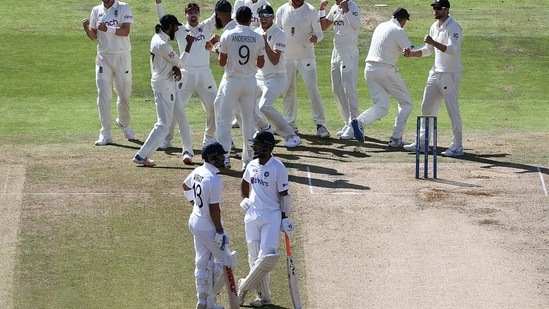
Star pacer James Anderson has been brilliant in providing crucial breakthroughs. But he is 39. They will have to reassess his fitness after three Tests. Even before this series, the focus of England’s rotation policy was to use him judiciously, almost in alternate games. It will be a tough decision for the hosts as the bowling attack is so reliant on their veteran player's skills.
ALSO READ | ICC Test Rankings: Joe Root becomes No.1; Rohit overtakes Kohli to grab 5th spot
Root has acknowledged that taking a call on rotation is tricky but said he won’t risk his bowlers. “It’s really important that we see where everyone is physically, it’s such a tricky balance to maintain. We have had to deal with so many injuries over this little period. Trying to manage workload alongside performances with games coming thick and fast is always going to be tricky. You come off a win like that and the continuity of confidence and trying to replicate (the) performance and balancing that with making sure you don’t blow someone out, injure is really tricky.”
One Subscription.
Get 360° coverage—from daily headlines
to 100 year archives.
Archives
HT App & Website