


 Live Score
 Teams
Teams Players
INR 3.47 crore performance in losing cause: Suryansh Shedge generated 92x profit but could not lead his team to 2 points
Despite Suryansh Shedge's explosive 57 off 29 balls, leading to a recovery for Punjab Kings, they lost to Gujarat Titans.

 Prefer HTon Google


A ₹3.47 crore performance should usually give a team control of the night. Suryansh Shedge gave Punjab Kings that level of value against Gujarat Titans, but it still did not carry them home.
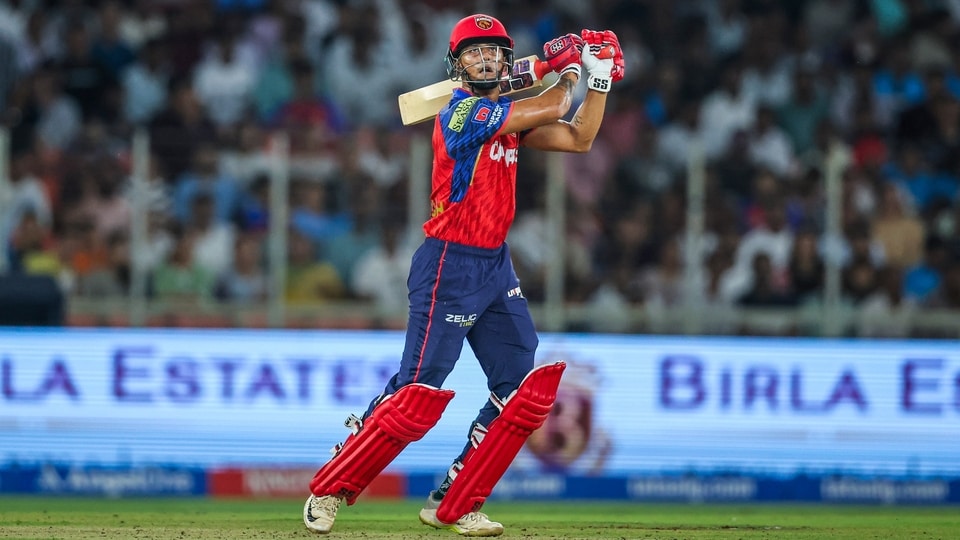
That is what made the innings sharper than a normal rescue act. Shedge did not merely make a fast half-century. He took a broken PBKS innings, repaired it under pressure, dragged it into competitive territory and still watched Gujarat chase the target with one ball left.
Suryansh Shedge’s rescue act came from a wreckage point
Punjab’s innings had nearly collapsed before Shedge could properly shape it. The top order gave Gujarat the opening they wanted. Priyansh Arya and Cooper Connolly fell inside the first over. Prabhsimran Singh could not turn his start into a repair job. Nehal Wadhera was consumed by the early squeeze. Shreyas Iyer’s 19 off 21 added some resistance, but his dismissal left PBKS at 47 for 5 in 8.4 overs.
That score is the core of the valuation.
A player walking in during a clean platform innings has a different job. Shedge walked in with Punjab already bleeding wickets. At 47 for 5, PBKS were not thinking about dominance. They were trying to avoid a sub-par total that would leave their bowlers with almost nothing to defend.
Suryansh Shedge changed that equation. His 57 off 29 balls came with three fours and five sixes, but the weight of the innings sat in its timing. Punjab were not chasing luxury runs. They needed survival runs first, then “momentum” runs. Shedge gave them both.
He started with control. He did not swing blindly at the first sign of pressure. He held the innings long enough for Punjab to breathe. Then he found the acceleration phase and changed the tempo of the innings almost on his own.
The Manav Suthar over turned survival into a contest
The decisive passage came against Manav Suthar. Shedge attacked him for six, six, four, four and six across five balls, a burst that transformed Punjab’s innings.
That sequence was not only a boundary cluster. It was the point where PBKS moved from recovery to relevance. Gujarat had held the innings down through early wickets. Shedge’s assault broke that hold and gave Punjab a route towards 160.
His innings followed a valuable pattern. The first part was about absorbing the collapse. The second part was about changing the scoreboard speed. He made 11 off his first 11 balls, then 46 off his next 18. That split explains why the monetary worth rose so sharply. The knock carried pressure, absorbed it, and caused high-speed damage in the same innings.
By the time Shedge was dismissed, Punjab had reached 126 for 6. From 47 for 5, that was a major recovery. PBKS eventually finished at 163 for 9, a total that looked far better than their early collapse deserved.
The innings was worth ₹3.47 crore by our model. His match cost was only ₹3.75 lakh. That gave PBKS a net profit of roughly ₹3.43 crore from his performance alone, with a profit margin of over 9,100 per cent. In performance terms, he returned more than 92 times his match cost.
That is the kind of number franchises hope to find at the bottom end of an auction sheet. Shedge’s season price was ₹30 lakh. On this night, he delivered a performance valued at more than 11 times his full-season price.
Why ₹3.47 crore still did not become two points
Punjab’s problem was that Shedge had saved the innings, not finished the match. There is a difference.
A rescue act from 47 for 5 can create a defendable score. It rarely creates a dominant one unless another batter extends the damage deep into the final overs. Punjab reached 163 for 9, which was competitive after the collapse, but not secure.
That left the bowlers needing a near-perfect defence. They had to protect a total that was rebuilt from damage, not built from control. Gujarat’s chase found enough stability to deny them.
Sai Sudharsan’s 57 off 41 balls gave Gujarat the base that Punjab never had. His innings prevented the chase from becoming frantic too early. Washington Sundar’s unbeaten 40 off 23 then settled the final stretch and took Gujarat to 167 for 6 in 19.5 overs.
Punjab stayed alive in the game because Shedge had made 163 possible. They lost because Gujarat had enough batting depth and enough calm at the end.
That is the clean reading of the match. Shedge’s value was real. The result did not erase it. It only changed the label.
This was not a match-winning ₹3.47 crore performance. It was a high-end rescue performance in defeat.
The correct value of the innings
Shedge’s performance should be viewed as one of Punjab’s most profitable individual efforts of the season. A ₹3.75 lakh match cost turning into ₹3.47 crore worth of impact is an extraordinary return. The profit was around ₹3.43 crore.
The cricket value was equally clear. He gave PBKS a total. He made Gujarat chase under pressure. He kept Punjab in a match that could have disappeared before the halfway stage of the first innings.
The limitation was also clear. Punjab needed one more decisive contribution. Either another batter had to stretch the total closer to 180, or the bowling group had to convert 163 into a winning defence. Neither happened.
Shedge left Punjab with a strong individual ledger and a painful team result. His innings created value, momentum and evidence. It showed PBKS that they had a lower-cost player capable of handling a severe collapse and still producing explosive scoring. It did not give them the two points.
That is why the final line should carry both weight and restraint: Suryansh Shedge delivered a ₹3.47 crore performance for Punjab Kings, but even that was not enough to take PBKS home.
Method note
This valuation is based on a cricket impact model developed by the author. The model studies batting, bowling, fielding, match situation, phase pressure, role difficulty, manual performance rating and captaincy impact, then converts that contribution into a rupee value using the player’s auction/retention price and expected season usage. It is not an official IPL metric, salary calculation or franchise accounting figure.


