


 Live Score
 Cricket Teams
 Cricket Players
Ishan Kishan opens up on Ravi Bishnoi over that turned the 2nd T20I in Manchester: ‘Those free hits made it easier’
India's bowling collapse in the 17th over allowed England to swing the match in their favour, with Jacob Bethell capitalising on free-hits.

 Prefer HTon Google


India had dragged England to the edge, only for one over to rip the game away from them. For nearly 36 overs in Manchester, the second T20I had moved India’s way despite Jacob Bethell’s resistance. England needed 49 runs from the last four overs, a requirement that still looked steep against a bowling attack that had already struck early and repeatedly forced the hosts into recovery mode.
Then came Ravi Bishnoi’s 17th over, and with it came the kind of collapse T20 cricket rarely forgives. The spinner conceded 29 runs in the over, with two no-balls turning into two free-hits and both being launched for six by Bethell. From a chase that still needed control, England suddenly found release, rhythm and belief. Bethell, who had spent enough time in the middle to understand the pace of the surface and the scoring pockets, used the gifts brutally.
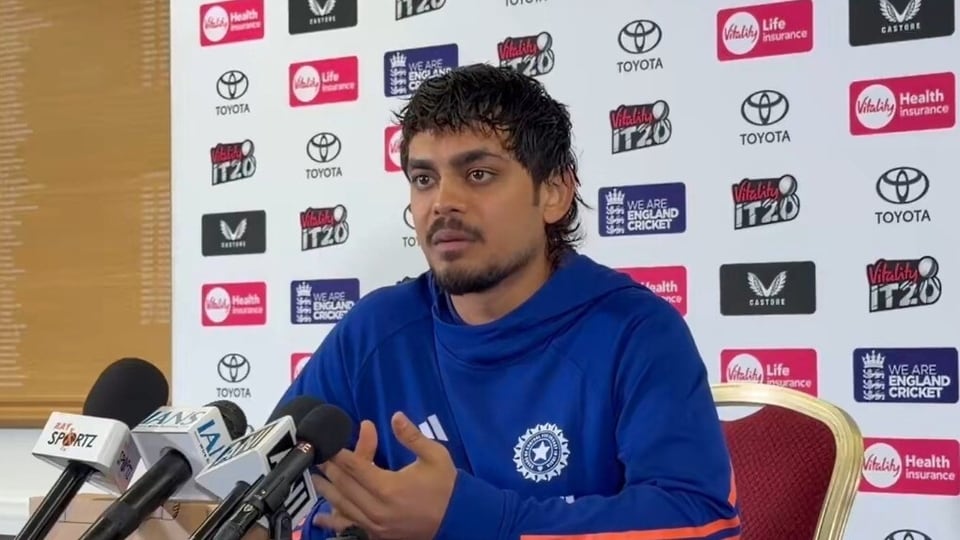
India captain Shreyas Iyer avoided pointing fingers after the match, but there was no hiding where the contest shifted. Wicketkeeper-batter Ishan Kishan was also careful with his words, but while speaking to reporters, he admitted that the free-hit balls made the chase far easier for Bethell at a decisive stage.
Ishan Kishan admits free-hits released the pressure
“We were always in a situation where, we thought we had the game. But getting those free hits made it easier for him to get relief, get the pressure out of him,” Ishan told reporters after the match.
“I think we bowled pretty well. We had our plans, but at the same time, we have to give that credit to Bethell because he took his time, he was in the middle for a very long time, and he understood when to charge the ball and who to charge.”
That was the heart of India’s problem. Bethell did not have to manufacture risk in the 17th over; India handed him two deliveries where there was no dismissal pressure attached. In a format where margins are already razor-thin, 12 runs from two balls without the batter having to worry about losing his wicket can destroy an innings of disciplined work.
Ishan underlined exactly that, making it clear that India’s biggest regret was not merely the runs conceded, but the nature of those runs. “We could have done better, maybe not just give him those free balls where he scored two sixes out of it. So, 12 runs and two balls without making any mistakes. It’s a big thing in these T20 games because it’s a very short format and we might not bowl those extra balls to him next time,” he added.
India eventually lost by four wickets with an over to spare, allowing England to take a 1-0 lead in the five-match series. For a side already trying to move on from a poor run in T20Is, the defeat hurt because it was not a game where they were outplayed from start to finish. They had the contest. They had the pressure. They had England needing almost 50 off 24.
What they did not have was discipline at the moment that mattered most.
Still, Ishan refused to frame the result as a crisis. India have now lost three of their last four completed T20Is, but he insisted the dressing room remains united and aware of where the improvements must come.
“Yes, we did not win but I think we have been playing good cricket. The most important thing is how we realise in each of these games where we can get better,” Ishan said. “The best part is we are all together. We are all trying to improve. Not winning makes a huge difference in your mindset as well. But I think all of us are mature here who will understand what’s going on and where we can get better as a group,” he added.


