


 Live Score
 Cricket Teams
 Cricket Players
KKR hit by injury and uncertainty: IPL 2026 season depends on a disrupted pace attack finding answers
Kolkata Knight Riders are grappling with a fast-bowling dilemma ahead of IPL 2026, having lost key players to injuries and departures.

 Prefer HTon Google


Kolkata Knight Riders are heading into IPL 2026 with the kind of fast-bowling problem that can distort a season before the first ball is even bowled. This is not simply about one injury or one replacement. It is about a pace attack whose original design has been repeatedly interrupted. Harshit Rana is out of the season, Matheesha Pathirana is still in rehabilitation, and KKR have had to move for Blessing Muzarabani after already losing Mustafizur Rahman from the squad.
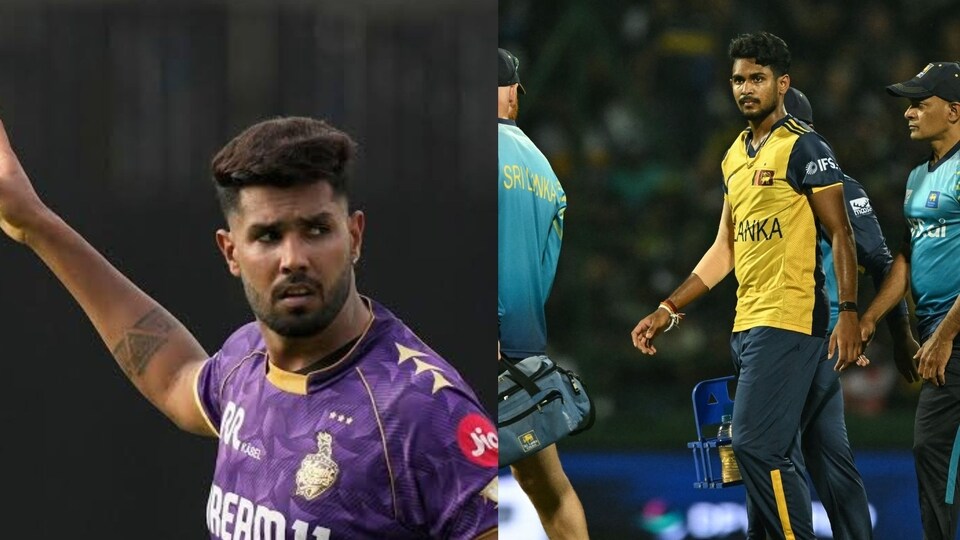
When that much churn hits one department, the issue is no longer personnel alone. It becomes a question of whether the attack still has shape. KKR begin their campaign on March 29 against the Mumbai Indians, with their spin core intact but their seam blueprint still being rebuilt.
In T20 cricket, the pace units are not merely judged by numbers; they are judged by whether they can cover all phases of the game cleanly. One bowler sets the powerplay tone, another absorbs pressure through the middle overs, one closes, and ideally another offers tactical variation. KKR’s problem is that all three of those boxes have been disturbed before the 2026 season. Harshit’s absence removes an Indian quick who has become central to their structure. Pathirana’s rehab clouds the premium overseas role. Mustafizur’s exit stripped away the tactical variance that would have made the rest of the group more complete.
Harshit Rana’s injury hurts more than headline suggests
The easiest way to read Harshit Rana’s absence is as the loss of a key cog in the mechanism. The more accurate reading is that KKR have lost one of the few Indian seamers in the squad who could have allowed them to build combinations with freedom. Reports say Rana suffered a knee injury ahead of the T20 World Cup, underwent surgery on February 9, and will not recover in time for IPL 2026. This is a huge setback, as KKR is not only losing a pacer but a key Indian pacer. Indian seamers protect overseas slots, make selection more flexible, and reduce the need to overload specialist roles onto two or three bowlers.
Once Harshit is taken out of the equation, the attack becomes harder to trust. Vaibhav Arora, Akash Deep, Kartik Tyagi and Umran Malik all remain options, but that group now has to provide more than depth. It has to provide certainty. That is a very different ask. In strong IPL attacks, depth supports the first-choice plan. In an unstable one, the depth is forced to become the plan.
Mustafizur was the balance piece KKR never got to use
Mustafizur Rahman was not bought as a decorative overseas name. He was bought for INR 9.20 cr because he gave KKR something the rest of the pace group did not naturally offer: a left-arm release point, pace-off skill, cutter-heavy control, and a different kind of death-overs threat. KKR later confirmed that they had been instructed to release him before the season, leaving a clear tactical gap in their squad.
Without Fizz, KKR lost more than just one bowler. They lost contrast. In modern T20 cricket, contrast matters. Right-arm pace can be dangerous, but when a batting side sees similar angles repeatedly, match-ups become easier to plan. Mustafizur would have changed sightlines, lengths and release patterns. He would have also reduced the pressure on Pathirana to be the only specialist death overs option in the group. Once he exited, the attack became more dependent on Pathirana’s fitness and on Indian quicks stepping into larger roles.
Pathirana’s fitness cloud is why Blessing had to happen
Matheesha Pathirana remains one of the most important figures in this story because he was clearly bought to raise the ceiling of KKR’s fast-bowling unit. But the latest update is that he is still undergoing rehabilitation following the injury he sustained during the T20 World Cup. That does not automatically rule him out, but it does leave KKR without full clarity around the bowler who was supposed to lead their overseas pace charge.
That is exactly why Blessing Muzarabani should read as a solution. His arrival is KKR’s corrective move. He brings height, bounce, hard lengths and an excellent recent T20I form. He does not replicate Mustafizur’s left-arm variation, but he gives KKR an immediate seam option at a moment when waiting would have been riskier than acting. In other words, Blessing is evidence that the franchise understands the damage and is trying to restore structure before the season starts.
Can KKR restore clarity quickly enough?
KKR will still rely heavily on their spin base, and that remains a major strength. But even elite spin attacks need fast bowlers to create shape around them. Seamers must prevent clean starts, avoid feeding pace-on deliveries, and close innings without panic. Right now, KKR’s pace attack still has talent, but its original balance has already been altered by Harshit’s injury, Mustafizur’s release and Pathirana’s uncertain readiness.
So KKR’s pace-bowling issue ahead of IPL 2026 is not that they have no options. It is that their options no longer fit together as originally intended. Harshit was the Indian stabiliser, Mustafizur was the variation piece, and Pathirana was the high-end strike answer. Blessing Muzarabani is now the repair job. The season may hinge on how quickly KKR can turn that repaired attack into a coherent one.


