


 Live Score
 Cricket Teams
 Cricket Players
Mahela Jayawardene interview: Mumbai Indians coach on what it takes to make the best T20 team in the world
IPL 2021: Mumbai Indians head coach Mahela Jayawardene speaks in detail about just what it takes to make a near-invincible outfit in this exclusive interview with Hindustan Times.

 Prefer HTon Google


Winning is a habit for Mumbai Indians. Five-time champions and the only team to have played more than 200 IPL matches, they are raising the bar every season not just in terms of winning but also in every other parameter. Are they the best T20 team in the world? Why have they pulled ahead of every other franchise? How are they doing it so consistently?
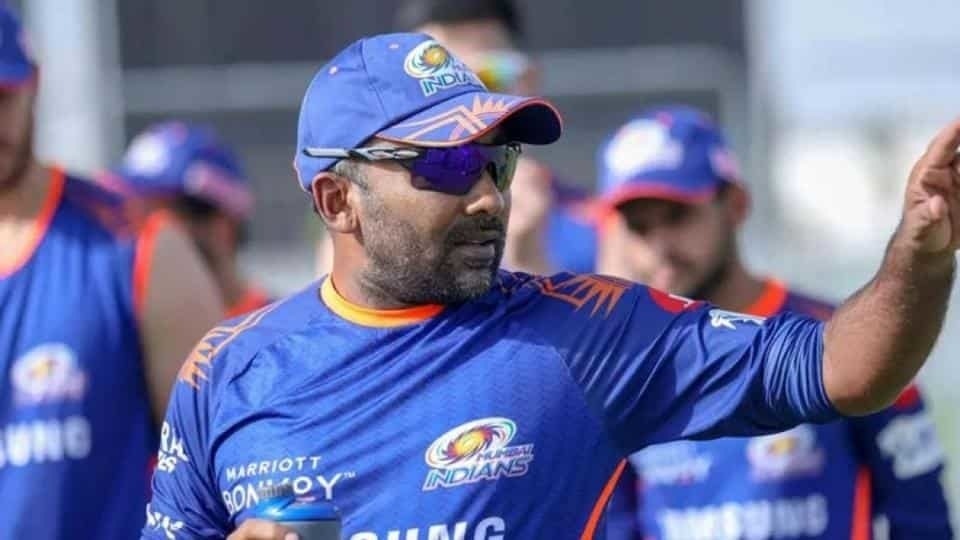
One man who has all the answers is the team's head coach Mahela Jayawardene. He won the league immediately after taking over in 2017 from Ricky Ponting, repeated the feat in 2019, and then led Mumbai to their third in 2020, becoming the only team to defend the IPL title.
The soft-spoken Sri Lankan legend speaks in detail about just what it takes to make a near-invincible outfit in this exclusive interview.
Excerpts
Mumbai Indians are the most successful IPL team with back-to-back titles. Beyond aiming to win the IPL this season too, where do you go from here?
If we are not motivated to keep getting better, keep evolving and keep challenging ourselves, I think there is no point for us getting together as a group. We will keep challenging the players. In sport, there is always room for improvement. You can’t be complacent. Every year, we are thrown different challenges. Playing the tournament in UAE was a challenge because that’s a place Mumbai Indians haven’t done well in the past. We had to adjust to all those conditions. This year as well, we don’t get to play at our home venue. That itself throws a different challenge to us. So we will adapt to all that. I think every season these are the challenges that motivate each and every individual in the group. We create those challenges and we try our best to go through those processes. As a group we try and keep it very simple. It’s all about competing on a daily basis and trying to do our best.
Also Read | Dawid Malan interview: 'Being world No. 1 does not mean you can score 40-ball tons every time'
If you look back at, say the last three-four seasons, where do you think MI did better than other IPL teams, especially CSK?
We try to be consistent across the board with our bowling, batting and fielding. When you have a longer tournament, when you are playing very good opposition day in day out, you have to be consistent. In that process we have had youngsters coming in, seniors taking responsibilities and we also emphasised a lot on being an attacking bowling unit. There are a lot of things we focused on and managed to execute. If you see the 2017 and 2019 finals, we barely won. That was how close those matches were. It’s a tough competition, the margins are small. You have to make sure you reduce your mistakes and understand the game awareness, the game situation and play to that. So that’s probably what we have done slightly better than other franchises.
Last season, Mumbai Indians were way ahead when it comes to clearing boundaries. How big a factor is a batsman’s six-hitting ability in the death-overs when you pick him for the squad?
We emphasise a lot on different aspects. Power-hitting is also part of that. We do have some amazing hitters batting at No 5 and 6 for us (Hardik Pandya and Kieron Pollard), and even the top order guys like Quinney, Rohit, Surya, Ishan, they all have the ability to hit sixes. In T20 cricket, it’s an advantage but what we have done well is while getting those big hits going, we managed to stick to the basics as well--rotating the strike and getting those gaps. So the risk management has been pretty good as well. When you do that, the ability to go big at the back-end of any innings gives you a better advantage.
Also Read | Rahul Dravid's guide for haters to enjoy the IPL
Can you give an idea on how Mumbai Indians’ scouting network works?
We have a group of individuals who work throughout the year, watching games, spotting players. Not only locally but we do have the same kind of network overseas as well. And it’s not just instant decision-making. Marco Jansen (South African left-arm pacer) is a classic example. We have monitored him for the last three years. Then he was a 17-18 year old. We kept monitoring him and picked him the same time he was picked for South Africa (Test squad for Pakistan in January). I don’t think there are secrets to scouting. It’s just pure hard work and finding the right people who have the ability to pick talent. You have to trust their instincts and their hard work needs to be acknowledged. It’s a process. For me, it’s brilliant to have that input coming in, knowing that they are turning each and every stone to find this talent. We monitor them and when we decide we need to invest in them, we go ahead and do that.
What role has data played in the evolution of Mumbai Indians?
Quite a bit. Data is obviously being used by pretty much all the teams. But for us, we realised that finding that data that makes us different or gives us the edge is the key. There is plenty of stuff out there. You need to customise the data for the group of players you have and make sure that DNA runs through the entire squad. Those are things we look at.
Can we say that Mumbai Indians are the best when it comes to tapping into the exact potential of the player?
I think so. We look at a lot of aspects, not just the skill set or the overall package of a player. Because it’s important that those players have that cricket intelligence at a certain level as well. We push them to think about the game, think about the situation and then the skill set comes into play. We always feel certain players add value to the squad. We have options and we go with that instinct and try and get players (in auctions). That’s how we got Quinton de Kock from RCB or Trent Boult (from Delhi Capitals). We spent a lot of money on Ishan (Kishan). I still remember my first question at the press conference after that 2018 auction was that if we were mad to spend ₹6 crore on a young Indian wicketkeeper batsman who wasn’t proven at that time. But we saw the potential. Those are the things the Mumbai Indians franchise always try to do. These are collective thought processes. We go through a lot of discussions to come to those kinds of decision-making processes and we back ourselves once we make those decisions to make sure those players get to that potential and add value to the team. That’s the most important thing.
Also Read | 'No one thought RCB would let him go': Punjab CEO reveals captain Rahul's story
Mumbai Indians have this habit of picking players (Jasprit Bumrah, Hardik and Krunal Pandya, Ishan Kishan) who go on to become India players. Are we in that phase where a franchise is doing more player development on an individual basis than a state association?
I don’t think we can take full credit for that. I think we are also part of that process. Everyone is part of the process. Our focus is only T20 cricket. Player development happens on various aspects as well. I think we are just contributing to that cause and process. Most of the player development on our part is when domestic Indian players come in to a squad like this, they are surrounded by a lot of experienced players. Associating them, the way the mindset is set up, tactically how we do things, that is an advantage for any young player. Then they start seeing the game in a much different way.
Kieron Pollard has been with MI since 2009. Tell us about your player retention policy because it’s rare for a player to spend over a decade at any franchise.
Not just KP, we have Lasith (Malinga) as well who has spent over a decade at Mumbai Indians. We like to have that core group, guys who have those leadership qualities, who are going to add value on and off the field. It’s not just about their personal performances. They have made other players better with their influence and challenged the younger players to improve. When they are adding value, it’s a much easier decision to keep those leaders in the group. Because you need leaders on the field. It’s difficult if you don’t have guys that understand the culture that we have created. I have been here for only four years but there are other coaches with the franchise for the last 10 years who have done this type of work, I’m just adding value. That’s the culture Mumbai Indians wanted.


