


 Live Score
 Cricket Teams
 Cricket Players
Prithvi Shaw is ready for the next step, with a little help from Greg Chappell
The former Australian great gave crucial inputs after Shaw's failures during India's tour of Australia. The Mumbai batsman put those lessons to work with a record 827 runs in eight games at the Vijay Hazare trophy.


In the first match of Mumbai’s 2019-20 Ranji Trophy season, Prithvi Shaw got his team off to a roaring start. Playing away from home, Shaw’s shots pinged off his bat at Baroda’s Reliance Stadium, where the sound of ball hitting the bat is clear and loud as it is located in the middle of a thick green cover.
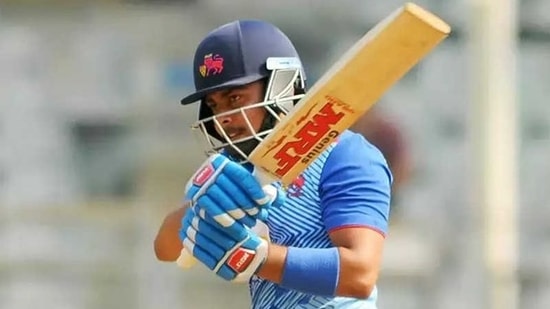
He was on song, racing away to 66 off 62 balls. Then, just as suddenly, Shaw was bowled. Baroda’s first-change bowler, Abhimanyu Rajput, could have hardly believe what he had done, castling the in-form batsman through the gate. It was well against the run of play, for, until that point, Shaw was not even beaten. But Rajput had produced the incoming ball -- the only chink in the young man’s batting technique.
Also read: 'It’s Rahul today, it’ll be Ishan tomorrow and Pant day after': Aakash Chopra hits out at KL Rahul's critics
That match, Shaw went on to strike a double century in the second innings, but it didn’t camouflage the exposed weakness. Shaw continued to score big runs across platforms but he also continued to get out to the incoming ball constantly. Enough for the word to spread. A year later, that chink was exposed on the world stage with one such delivery by Pat Cummins in Adelaide. This, after having chopped Mitchell Starc on to his stumps to be dismissed for a duck in the same match, meant his tour of Australia ended after the first Test itself.
Observing Shaw closely was former India coach Greg Chappell. As a man manager in a dressing room full of superstars, Chappell didn’t have much success. But as a batting technician, he is still rated highly, having been the standout Australian batsman of his era. So, just when everyone began writing Shaw off, Chappell got in touch with the young opener while he was still in Australia to share his observations, according to a source close to Shaw.
Chappell believed it to be a simple mental block that Shaw had to overcome when facing a bowler with considerable pace. Technically, the advice was to get his weight on the front foot, expecting the full ball and be ready to get a good stride forward to meet it. Shaw wasn’t doing that, according to Chappell, because he was worried about genuine pace. That was the crux of it – fear of raw pace was making Shaw hang back, which meant his weight was behind him and not on the front foot. So, when the weight hangs back and the hands are pushed forward, a gap appears between bat and pad. If the front knee bends and the weight goes forward over the front foot, the bat and pad stay together. It was as precise and simple as that.
Chappell suggested that Shaw deal with the mental block first. His technical tip to Shaw was he has to expect the full ball (which is the first point of release) and deal with what comes (in case of a short ball) by trusting his experience and reflexes. Because, if a batsman worries about the bouncer, he will never get his weight forward. Like in Adelaide’s second innings, where his feet simply didn’t move against Cummins’s pace.
Shaw’s transformation began to show long before he returned to India – it was first spotted in the Indian team nets itself after the Adelaide debacle. More technical nuances were corrected by coach Ravi Shastri and batting coach Vikram Rathour as Shaw spent long hours. But, Subhman Gill’s impressive start to his Test career and Rohit Sharma’s return into the team meant there was no chance for Shaw to be considered for the rest of that tour.
So, with nothing else to do but warm the bench and make technical changes in the nets, Shaw looked ahead to the Vijay Hazare Trophy to announce his return. And what a statement it was – amassing a record 827 runs for title-winners Mumbai in eight games, including a double-hundred. Now, according to his Mumbai coach Ramesh Powar, as well as the assistant coach of Delhi Capitals Pravin Amre, the problems against the incoming ball have been sorted.
“Earlier, he was slightly late for the ready position. Now he gets there early so he can react to inswing or outswing or any late movement,” says Powar, who has seen further improvement since he held Mumbai’s first net session in preparation for Vijay Hazare on February 11. “He seems to know exactly what he is doing, since we started these sessions in February. I once asked him what he had changed and he shook his head and said ‘nothing, only the mindset is a little different’.”
Shaw is also said to have told his Mumbai coach that he is now ready to do what it takes – from drills in his room to visualising the downswing of his bat (visualisation is a mantra Chappell advocates as well). Amre, however, began the process of working with Shaw a little differently. He showed his IPL ward footage from the video analysts and asked him what he would like to work on.
“I believe that when you play with the full face of the bat, there is more chance of middling the ball. In this Vijay Hazare, he has not got out bowled in any of the matches, (which means) he is protecting his wickets (well),” says Amre, who spent close to five days working one-on-one with Shaw in the lead up to Vijay Hazare. “The bat swing is the key -- how the down swing comes -- and your footwork.”
Both his bat swing and bat speed have stood out for those who watched Shaw bat in the domestic 50-over tournament. “The big change I am seeing is the bat flow. The way he was hitting the ball over covers, both his bat speed and downswing have been amazing. I have rarely seen such bat speeds,” says Powar. “Once your mind is fine, then it is easy for positive changes to take place.”
The IPL is just a month away and for Delhi Capitals, an in-form Shaw is crucial for their campaign. DC coach Ricky Ponting had done Shaw’s confidence no good by openly dissecting his technical weaknesses in the media, but behind-the-scenes, the IPL franchise continued to put in work on the lad. Amre noticed that Shaw’s confidence was down and addressed that first, before holding that proverbial mirror in front of him and reading him the riot act.
“At that moment, I felt he needed emotional support. And Delhi Capitals is always up to providing help to its players. And Prithvi is our key player,” says Amre. “As a coach I first wanted to understand what he needed. Cricket wise, the best medicine for any batsmen out of form is always runs under the belt.”
Those runs have now arrived in abundance in domestic cricket and may yet translate into a comeback in international cricket. But Shaw will know that his true test will be to face the likes of Cummins in Australia – with his natural incoming ball and his control over the landing – if he gets that opportunity again. Until then, though, the lesser bowlers are in trouble for a fully flowing Shaw has a wide range of strokes, where the bowler's margin for error is nearly zero. But even more dangerously, in full flow, Shaw is near unstoppable.


