


 Live Score
 Cricket Teams
 Cricket Players
Right time for a clear rotation policy and safeguard against burnout
Especially because India's male stars don't have the luxury of an indefinite break on grounds of mental health, writes Snehal Pradhan.

 Prefer HTon Google


The bowling has all the ingredients to be incisive. The batting in the warm-up games was decisive. But after the first two matches of the T20 World Cup, we were left asking, ‘Won’t the real Indian team please stand up?”
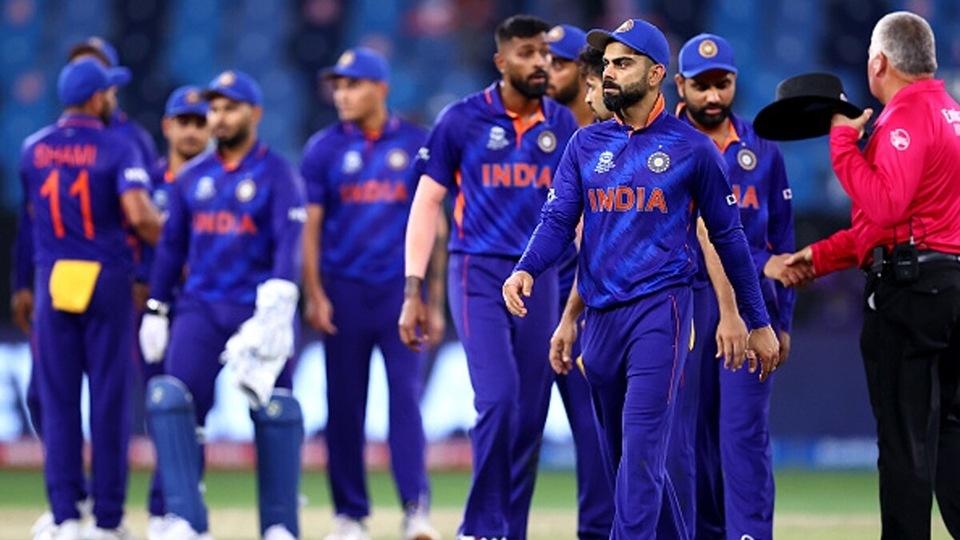
The law of averages catching up. A misfit T20 template. The short stick of the tosses at the pointy end. These are all real, tangible reasons for India’s losses. But let’s consider the intangibles too. India stand on the threshold of a reset, with a new coach and captain incoming. In contemplating future formulae, burnout needs to be accounted for. Its subtle symptoms are hard to spot, especially among people doing what they love. But the probable causes are apparent, and have been stacking up since cricket resumed after the pandemic.
The mere mention of burnout, in the context of India’s male cricketers, drives fans to point out how much these men are paid to do what they love. But look at India’s schedule for the last few years. Or look ahead. Even without factoring in quarantine, isolation, and bubbles, it is relentless. Speaking to a source who has worked within the IPL, I was told of how overseas players view India’s calendar. “I don’t know how they do it”, is the common sentiment.
“Doing something you love on a schedule you can't control can feel the same as doing something you hate”. This line from a book I read recently has stuck with me. No matter how much one may like to bat, I assure you that no cricketer voted to play a bilateral series two days after a World Cup final where India were among the favourites.
Now, I hear your counter argument. Other major teams play pretty much non-stop too. England, for instance, resumed playing cricket well before India did, and have played back-to-back series across formats since. But unlike India, the England Test squad, let alone XI, looks very different to their limited overs squads, giving most players breaks. And the all-format players are subject to a rotation policy. Vitally, their culture allows for their star players to take indefinite breaks on mental health grounds. We have to wonder whether India’s cricketers have the same luxury.
The Indian cricket economy is a flywheel with star power at its centre. Remember the Asia Cup of 2018, where Virat Kohli was rested? Broadcasters Star did not just grumble, they wrote to the Asian Cricket Council complaining that the “best available teams” were not on show. Remember the outrage when Kohli missed a few games for something as normal as paternity leave? It’s hard to see an Indian cricketer, no matter how powerful, take time away from the game for mental health reasons.
Mental health and the effects of bubble-life on the players is something that multiple Indian players have addressed at various points over the last year, none more eloquently or frequently than Kohli. “These periodic breaks are very important for cricket and for cricketers, because if you don’t have players fit then the quality of cricket is hard to maintain,” he said after enjoying a rare break in England.
But as Kapil Dev has said, “If you play good cricket, a lot of bad things get hidden”. India has played some legendary cricket over the last 12 months, especially in whites, despite the unique challenges of a pandemic. The IPL concluded after all, amid much drama, most of it cricketing. All’s well that goes well? Look inside the gilded cage and the clues are there. A source who has worked inside IPL bubbles revealed the most common phrase among the players: “Pak gaye. Aur kitna?” (“How much more?”)
As a former athlete, I can tell you that there are parts of the job that we can hate, while still loving the game. For me, it was playing through pain. The demands on India’s male marquee players are exponentially higher than anything I faced. They sign up to play cricket, but also to endless video calls with sponsor representatives, TV commercial shoots that take half the day, and press commitments. It is normal for hair and make-up artists to share the players’ bubbles, but good luck finding a mental health professional there.
As India face a rejig of their coaching structure, a clear rotation policy will certainly be on Rahul Dravid’s mind. These two defeats, and a possible first-round exit, might provide the right moment for India to systematically safeguard against player burnout, in a world still living by the rules of engagement set by a virus.


