


 Live Score
 Cricket Teams
 Cricket Players
SC directs BCCI to disclose stand on criminalising match-fixing
The Supreme Court directed BCCI to clarify its stance on criminalizing match-fixing, which undermines cricket's integrity and impacts regulation.

 Prefer HTon Google


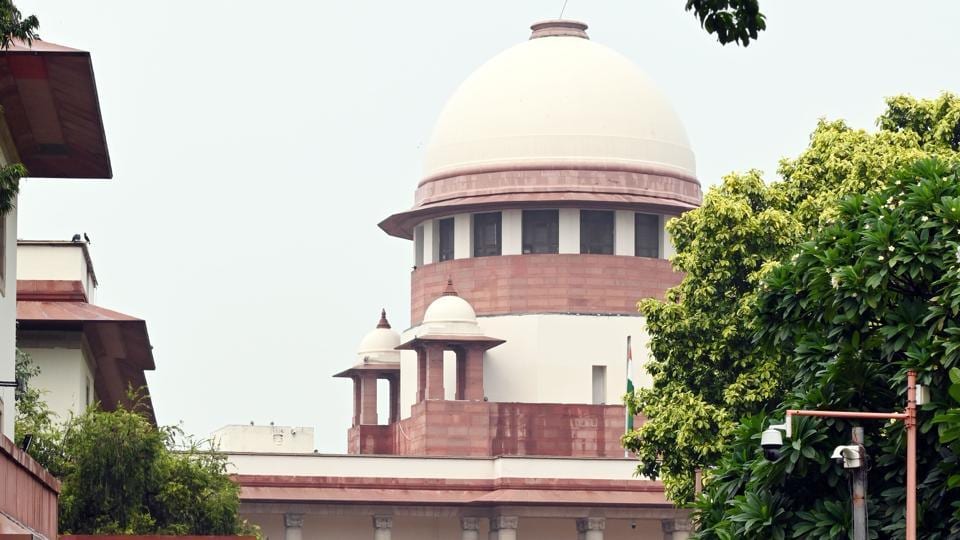
New Delhi: The Supreme Court on Thursday directed the Board of Control for Cricket in India (BCCI) to disclose its stand on criminalising match-fixing after the cricketing body sought permission to intervene in a matter where this issue is under consideration.
The Board in an application moved two days ago said that the prevalence of corrupt practices in cricket matches has an adverse impact on the game and undermines the integrity of the sport and any decision by the court will impact the regulation and administration of the game, with which BCCI is directly concerned.
The application said, “The issues raised in the present matter directly and substantially affect the interests, functions and regulatory responsibilities of the applicant in relation to the cricket administration and the anti-corruption enforcement.”
A bench of justices Surya Kant and Joymalya Bagchi allowed the application and granted BCCI four weeks to file its response.
The application by BCCI was filed in a pending appeal by Karnataka government challenging a 2022 decision of the Karnataka high court which quashed a case involving match-fixing by players in Karnataka Premier League (KPL). The high court had held that match fixing is not a crime and at best, it is an issue of impropriety that will invite disciplinary action against the players under BCCI’s Anti-Corruption Code of 2019.
‘The top court differed with this view of the HC and on April 22 sought the Centre’s view on whether match fixing could be made a criminal offence.
Advocate Shivam Singh assisting the court as amicus curiae informed that the Centre has not responded despite the last opportunity of four weeks granted by the court on July 22. The bench asked Centre to file its response before the next date of hearing.
In its application seeking impleadment, BCCI said that an act of match fixing clearly constitutes an offence of cheating under the Indian Penal Code or the Bhartiya Nyaya Sanhita 2023 (BNS). It said, “The act of match fixing clearly constitutes an offence of cheating, as it attracts all the ingredients of cheating, i.e., deception, fraudulent or dishonest inducement, intentional inducement to do or omit anything causing damage or harm.
In the present case before the court, the Karnataka high court by an order of January 10, 2022 quashed criminal proceedings against players and bookies caught for match-fixing in KPL’s 2018 and 2019 seasons.
The high court held that that match-fixing is not an offence of cheating under section 420 of the Indian Penal Code but amounts to “breach of the Code of Conduct prescribed by the BCCI.
The BCCI application said that the accused, by concealing their prior arrangements of match-fixing between themselves, induced the spectators to spend money to buy tickets and the sponsors to invest money in the teams and KPL, which clearly amounts to an offence under section 420 of IPC. It further stated that the issue being considered by the court is subject matter of the Law Commission of India’s Report No. 276 submitted in July 2018 recommending match-fixing and sports fraud to be made criminal offences with severe punishments.
“The prevalence of corrupt practices in cricket matches has an adverse impact on the game and undermines the integrity of the sport,” the BCCI told the court. Entrusted with the task to promote and develop the game of cricket in India, the Board said, “The outcome of the present case would have a serious impact on the interests, functions and regulatory responsibilities of the applicant in relation to the cricket administration and the anti-corruption enforcement.”
The top court had even noted the damaging effect of match fixing and betting on innocent families as young men indulge in placing huge bets on the game’s outcome.
This aspect was not examined by the high court which had said, “”It is true that if a player indulges in match fixing, a general feeling will arise that he has cheated the lovers of the game. But this general feeling does not give rise to an offence.”
The state in its appeal filed by advocate DL Chidanand had opposed these findings by the high court as it argued that when the public purchases the ticket for the match, there is an underlying promise from the players and organisers that the match will be played fairly and honestly. “Any failure to play the game honestly will result in cheating within the meaning of Section 420 of the IPC,” the state submitted, adding that match-fixing amounts to cheating the general public of their hard-earned money. The state argued that if it is told in advance that the results of a match is rigged, nobody will go to watch the match. It further submitted that the BCCI’s anti-corruption code is a separate issue and action taken by BCCI cannot be a bar on the state to prosecute the accused.


