Seniors in Indian women’s team shouldn’t stifle growth of young talent
Like the men’s cricket team of the 90s, this Indian women’s team wins on individual brilliance, which unfortunately is never a guarantee for consistency, writes Sanjay Manjrekar
The 2022 edition of the Women’s World Cup reaffirmed my observation. The graph is going up, the standard of women’s cricket is going up. Women’s cricket is now a product that commands its own place and needs no piggybacking on men’s cricket to be commercially viable.
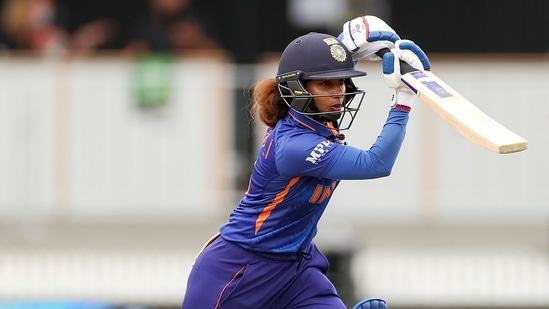
India's skipper Mithali Raj (ANI )
The viewing experience for the general cricket fans from men’s to women’s is getting more and more seamless every year. It’s been a fantastic World Cup for its quality and the dramas that ensued from close finishes; obviously, the big takeaway was the unstoppable Australia.
(Australia beat England by 71 runs in the final at Christchurch on Sunday).
This Australian team is like its men’s team of the post 1990s, one that dominated world cricket for two decades after the great reign of West Indies. These Aussie women play the exact brand of cricket Australia played under Mark Taylor and Steve Waugh—an attacking game no matter what.
The rest of the world now has one simple agenda, to close the gap between themselves and Australia, while Australia go about trying to better themselves. This was especially evident in their semi-final against WI. They would have quickly realised that even their 40% was enough to beat the opponents. Alyssa Healy, Rachel Haynes and Co were clearly trying to raise their own level; beating West Indies seemed irrelevant to them for that would have been a smaller goal to chase.
India’s 1990s feel
Interestingly, the Indian women’s team is also like the Indian men’s team of the 90s, which is not a compliment but a statement that it’s a ‘work-in-progress’ kind of situation. Like the men’s team of the 90s, this Indian women’s team wins on individual brilliance, which unfortunately is never a guarantee for consistency.
If Australia had lost Healy and Haynes early in that semis they would have still most likely reached 300 in 45 overs, because they had Meg Lanning and Beth Mooney to take over with the same effect.
With India and most other teams in this World Cup, if their two star players didn’t click, the team lost. WI is the most glaring example of this.
Like the team of the 90s this Indian women’s team has a few players that are just exceptional, world class really; Harmanpreet Kaur for example, she is just unbelievable!
In the last league game of the WC, one could see the tremendous value she brings to the team. After making yet another vital contribution with the bat, she got a couple of wickets to get India back in the game when it seemed SA was cruising to an easy win. It was the first time she bowled in the competition, by the way.
I follow old Indian cinema music quite passionately. It is said the great Mohammed Rafi was often given some of the most difficult compositions to sing. The composers knew Rafi had the ability to pull it off. It’s the same with Harmanpreet—Indian cricket gives her some of the toughest challenges possible.
Her innings against Australia and SA were of great impact. On both occasions she came to bat post 30 overs, can you believe that? It’s like Virat Kohli in his pomp, coming into bat at No 5 with just 20-odd overs left. And like Rafi, Harman too pulls it off brilliantly.
Concern for India
I have one important concern for Indian women’s cricket though.
Like the men’s team of the 90s needed to be, seniors in the women’s team have to be mindful that they don’t stifle the growth of young talent in the team. This is an important obligation they have to Indian cricket.
I believe when you have vast experience and are an ageing player in a team you must take the responsibility of doing the more difficult job, and not the opposite.
Both Mithali and Jhulan are at a stage where they have to ensure they give the youngsters the best platform to grow. Long term, great teams have always had captains and seniors who did this.
The one thing I realised in my six weeks of watching the Indian team in New Zealand is that there is talent, in fact awesome talent.
Pooja Vastrakar, Sneh Rana, Yastika Bhatia, to name a few. I see some potential in Meghna Singh too, but the one that bowled me over was Shefali Verma.
I believe she is a rare gift to Indian cricket. On a good day she can surprise even the mighty Australians single-handedly, just like Harman did in the 2017 WC semis. This player was dropped from the playing XI after two failures at the start of the WC. It was a shocking call.
And this is the bit that worries me about Indian’s women’s cricket, the handling of its talent.
If selection and planning is done with maturity, with no bias other than cricketing, there is nothing stopping Indian women’s cricket from reaching great heights.
Get live cricket scores, match updates, schedules, results and ICC rankings. Follow the latest news, statistics and performances of top teams and players on Hindustan Times.
Home/Cricket News/Seniors In Indian Women’s Team Shouldn’t Stifle Growth Of Young Talent


 Live Score
 Cricket Teams
 Cricket Players