


 Live Score
 Cricket Teams
 Cricket Players
Shreyas Iyer's damning IPL 2026 - INR 14 crore profit by the captain, yet PBKS failed to make it to playoffs
Shreyas Iyer's standout performance with 498 runs and a century was not enough to save PBKS from missing the IPL 2026 playoffs.

 Prefer HTon Google


PBKS arrived at the final week of IPL 2026 as a franchise held together by one man's stubbornness. Six consecutive losses had reduced their playoff prospects to arithmetic prayer, and then Shreyas Iyer walked out against LSG and hit 101 off 51 balls - the kind of innings that makes a ₹26.75 crore price tag look like a discount. Punjab won by seven wickets. The streak snapped. The season breathed again, briefly.
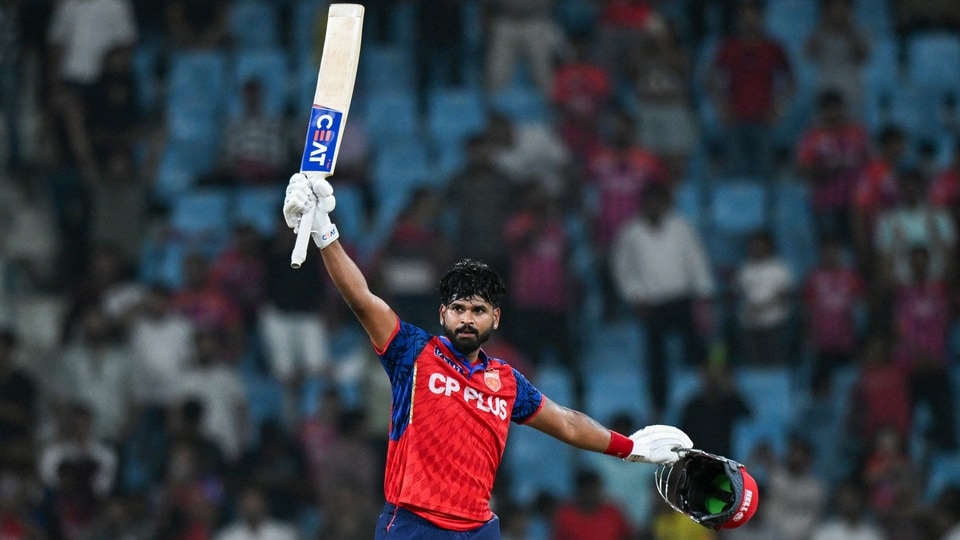
Twenty-four hours later, the Rajasthan Royals beat the Mumbai Indians, claimed the fourth playoff berth, and the brief became permanent. PBKS were out. Their captain had just produced the most commanding performance of his season, and it counted for precisely nothing in the standings.
That gap, between individual excellence and collective failure, is the defining fact of Punjab's 2026.
The ledger says Shreyas delivered
Strip away the result, and the numbers are unambiguous. Shreyas Iyer scored 498 runs across 13 innings at a strike rate of 168.81, reaching three figures once and fifty-plus five times. He struck 39 fours and 30 sixes - 69 boundaries from 295 balls, one every 4.27 deliveries. For a player carrying the heaviest contract in the squad, the value lay not just in accumulation but in velocity.
His batting-only ledger showed a profit of ₹2.65 crore. Modest, but honest: a ₹26.75 crore base cost has no interest in near-500-run seasons unless they arrive at this tempo. Shreyas cleared the bar.
The real swing came from the captaincy. His leadership contribution generated a calculated worth of ₹18.41 crore against a captaincy cost of ₹6.69 crore - a surplus of ₹11.72 crore that entirely transformed the contract's shape. PBKS paid for a captain-batter. The bat contributed. The captaincy carried.
Total worth: ₹41.12 crore. Total profit: ₹14.37 crore. No. 1 on the overall worth chart. 11th on profit. An expensive asset that justified the expense.
Also Read: ‘I want to score 200 in T20s’: Vaibhav Sooryavanshi vows to shatter Chris Gayle’s record
Five nights that held the contract together
Shreyas had a season of spikes rather than a slow burn. Five innings did the structural work.
The 101 not out off 51 against LSG - Match 68, season's end, backs against the wall - produced ₹8.36 crore in worth and a ₹6.31 crore single-match profit. His 71 off 36 in Match 35 added ₹7.76 crore in worth and ₹6.35 crore in profit. The 69 off 33 in Match 17, 66 off 34 in Match 24, 50 off 28 in Match 7 - each returned worth north of ₹4.75 crore, each generated a positive margin against cost.
On those nights, Shreyas won games and moved ledgers simultaneously. Without them, the contract becomes a liability. With them, it becomes a case study in how a franchise's most expensive player can carry his price tag without quite making the whole thing feel inevitable.
The innings that cost him
He was not flawless. Scores of 30 off 27, 19 off 21, 5 off 5, 4 off 2 and 1 off 3 created negative match-level outcomes and prevented his batting profit from scaling further. At ₹26.75 crore, a soft stretch is not a minor inconvenience - every slow innings costs money the ceiling barely had room for. Those matches were the reason his batting ledger ended up at ₹2.65 crore rather than a considerably larger figure. The criticism has its basis. The final verdict still favours him heavily.
The number that condemns everyone else
PBKS closed the season with a total team-level surplus of ₹ 27.29 crore. Shreyas accounted for ₹14.37 crore of that - 52.7% of the franchise's entire positive return, from one player.
Read that again. More than half of Punjab's profit came from their captain. The rest of the squad - every other bat, every bowler, every allrounder - combined to produce the other 47.3%. Shreyas did not play in a system that amplified him. He played in a system that depended on him, and when the support gave way during the six-match collapse, there was nothing structural to arrest it.
That is the real indictment of Punjab's 2026. Prabhsimran Singh and Cooper Connolly returned stronger value relative to their prices, and both were genuine contributors. But the franchise needed distribution of impact, not its concentration. They got the opposite.
An expensive success. A failed campaign
Shreyas Iyer gave PBKS everything the auction ticket demanded: 498 runs, a maiden IPL century under elimination pressure, a strike rate touching 170, and a captaincy ledger that pulled the contract well past breakeven. His ₹14.37 crore profit is a clean return on a bet that could easily have gone the other way.
The franchise still missed the playoffs. The captain repaid the contract in full. The squad could not convert the surplus into a qualification. Punjab bought the right player at the top of the auction and got the composition wrong around him - and that, not the man at the top of the worth chart, is where their 2026 really ended.
Method Note
This analysis uses the IPL 2026 monetary workbook. Player worth is calculated through performance impact and rating-adjusted value, with captaincy contribution tracked separately. Profit/loss compares total worth against seasonal cost. The model is an analytical framework designed exclusively designed by the author, not an official IPL valuation.


