


 Live Score
 Cricket Teams
 Cricket Players
Women's ODI World Cup 2025 Team of the Tournament: 3 Indian players make the cut, no Harmanpreet Kaur
The Women's ODI World Cup 2025 saw many impressive performances from players of all the participating teams. Here is a look at the team of the tournament.

 Prefer HTon Google


India’s maiden Women’s World Cup title in Navi Mumbai felt much bigger than a trophy. It felt like a reset of the global pecking order. A home side finally going all the way, a South African captain rewriting record books, and established powers Australia and England pushed but not erased - this tournament had everything.
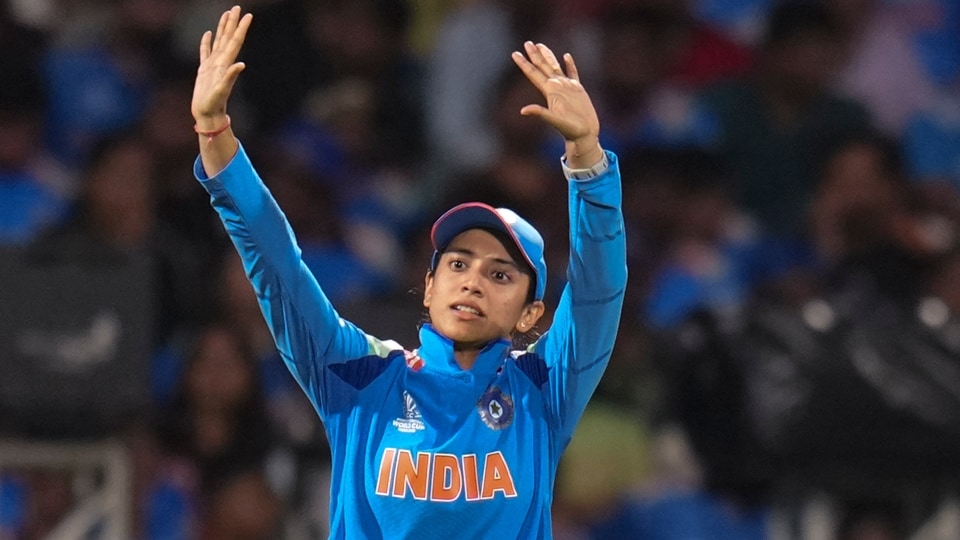
Picking a Team of the Tournament from that chaos means weighing hard numbers against big moments. League stage dominance versus knockout nerve, and balance across roles, a perfect eleven from the tournament must have it all.
Alyssa Healy (Australia) (WK)
Alyssa Healy signed off the ODI World Cup 2025 with 299 runs in five innings at an average of 74.75 with a strike rate of 125.10. Her campaign included a brutal 142 in the record chase against India and an unbeaten 113 against Bangladesh. These were two tournament-defining knocks at the top, and along with this, she displayed leadership from the front to take the team to the semi-final of the tournament.
Smriti Mandhana (India)

The Indian opener stacked up 434 runs in nine matches at an average of 54.25 with a strike rate of 99.09. Smriti Mandhana’s 80 (88) vs Australia, 88 (94) vs England, and 109 (95) vs New Zealand defined her campaign. She was consistent throughout, and even in the final, she played a vital knock of 45 runs, setting up the tone for India’s iconic victory.
Laura Wolvaardt (South Africa) (C)
The South African skipper was the standout batter in the tournament. Laura Wolvaardt notched up 571 runs in nine matches at an average of 71.38 while scoring at the rate of 98.79. The opener scored centuries in the semi-final and final, almost dragging South Africa to history on her own. Wolavaardt also captains the side for leading the team from the front and making them the runners-up.
Natalie Sciver-Brunt (England)
The veteran English player displayed peak all-rounder energy. Nat Sciver-Brunt scored 262 runs in 8 matches at an average of 43.67 and also picked up nine wickets in the tournament. Her presence provides solidity to the batting line-up and also gives flexibility to the bowling attack.
Also Read: Deepti Sharma's fight to Richa Ghosh's resilience: 5 unsung moments from India's World Cup 2025 win
Ashleigh Gardner (Australia)
Ashleigh Gardner emerged as the game-changer for her team in the tournament. She scored 328 runs in five matches at a strike rate of 130.16. Along with the powerful finishes, Gardner also picked up seven wickets. Her presence is a must in the team of the tournament.
Deepti Sharma (India)
When you are building the team of the tournament, you cannot ignore the best performer. With 215 runs and 22 wickets, Deepti Sharma was at the center of India’s championship run. Her presence adds depth and solidity to the batting line-up while providing an attacking option for the middle-overs bowling.
Marizanne Kapp (South Africa)
Marizanne Kapp left a high impact on the tournament with her all-round performance. The all-rounder picked up 12 wickets at an average of 20.25 and also scored 208 runs in the tournament. Kaap’s five-fer in the semi-final was at the core of their brilliant show and their qualification to the summit clash of the tournament.
Annabel Sutherland (Australia)
The seam-bowling engine drove Australia’s bowling effort. Annabel Sutherland picked up 17 wickets in seven games at an average of 15.82 while maintaining an economy of just 4.45. She also showed her ability with the bat and her 98* vs England was an example of a resilient show.
Sophie Ecclestone (England)

The world’s No.1 ODI spinner delivered exactly what her team needed from her. In seven matches, Sophie Ecclestone picked up 16 wickets at an average of 14.25, with an economy of 4.05. Her control through the middle-overs and four-fer in the semi, even as Wolvaardt was going ballistic, was vintage Ecclestone.
Nonkululeko Mlaba (South Africa)
Nonkululeko Mlaba quietly picked up 12 wickets in 8 matches at an average of 20.67 with an economy under 5. She picked up the key wicket of Harmanpreet Kaur in the final. A left-arm spinner who attacks both edges of the bat, Mlaba complements Ecclestone and Deepti Sharma in this line-up perfectly.
Also Read: Indian women's cricket's 1983 moment: World Cup victory a vindication of ongoing revolution
Shree Charani (India)
On her World Cup debut, the 21-year-old left-arm orthodox took 13 wickets in 8 matches at an average of 26.08. Shree Charani showed brilliant control while bowling the tough overs for her team. Her discipline let India stack their batting and still control the opposition batting.
This XI is heavy on spin, loaded with all-rounders, and built for modern ODI tempo. As the tournament was held in subcontinental conditions, the team had so many spinners. The team has the firepower in the batting position and the variety in the bowling that perfectly defines the best XI of a tournament.
World Cup 2025 Team of the Tournament
Alyssa Healy (wk)
Smriti Mandhana
Laura Wolvaardt (c)
Natalie Sciver-Brunt
Ashleigh Gardner
Deepti Sharma
Marizanne Kapp
Annabel Sutherland
Sophie Ecclestone
Nonkululeko Mlaba
Shree Charani


