Delhi’s air quality typically worsens before the onset of winter every year due to pollution from industrial emissions and farmers burning the stubble, a similar situation emerges in Haridwar but in summers for different reasons, a study has revealed.
Summers in the holy town pose major respiratory hazards as the Particulate Matter (PM) 2.5 micron metre and PM 10 micron metre increases manifold, found the study by Pollution Control Research Institute (PCRI). PM10 and PM2.5 are the two deadliest components of air pollution.
Haridwar has even defeated some of the populated cities like Dehradun, showed the study that was conducted at seven places around 10 km area around the town.
PM 2.5 -- the sum of solid and liquid particles suspended in air -- is linked to higher rates of chronic bronchitis, lung cancer and lung disease.
The shocking figures of PM 10, however, are a cause of concern which have increased 2-3 times against the standards of 100 micron metre.
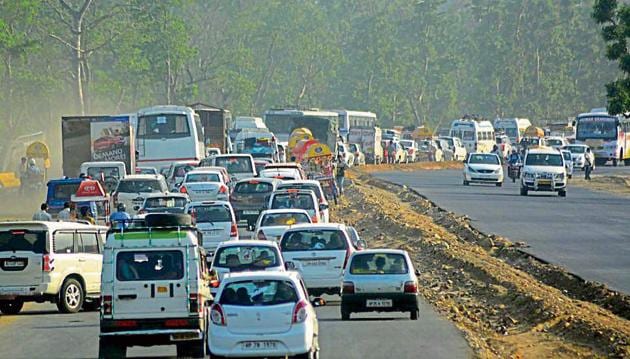
“The actual cause of increasing air pollution which is reported highest during summer season in Haridwar is vehicular emission. The tourist influx in the city leads to excessive movement of vehicles,” Ambrish Gupta, additional general manager of PCRI, told Hindustan Times.
{{/usCountry}}“The actual cause of increasing air pollution which is reported highest during summer season in Haridwar is vehicular emission. The tourist influx in the city leads to excessive movement of vehicles,” Ambrish Gupta, additional general manager of PCRI, told Hindustan Times.
{{/usCountry}}Contrarily, PM 10 in cities like Dedhradun are recorded above average but below 200 micron metre.
The study was conducted during three seasons -- summer, post monsoon and winter. And the statistics reported are variable.
During post monsoon, the PM is flushed out due to rainfall. In winters, the matter too does not suspends because of severity of climate and comparatively less vehicular emission. It’s the summers that are highly dangerous.
“There are few recommendations like phasing out vehicles that have completed 15 years cycle, restricting public transport with only four-stroke engines, modification of engines and others,” said SP Subuddhi, member secretary of the Uttarakhand Environment Protection and Pollution Control Board (UEPPCB).
The study’s recommendations will be submitted to the state government for action.
Haridwar, which is about 223 km from national capital Delhi, reports tourist influx round the year. But, during summer, the influx increases manifold.
Presence of PM 2.5 and 10 could pose serious implications on the health of people, claimed experts. “If PM 2.5 and 10 increases manifold, then it will lead to disastrous situations choking respiratory tract and causing asthma,” said Dr KK Tamta, medical superintendent of Doon District Hospital.
Notably, Delhi has become the epicentre of the country’s pollution crisis as toxic smog hovering over densely populated northern regions for the past few days, prompting health experts to declare a public health emergency in the national capital and its adjourning areas.