Little known to the outside world, this quaint hamlet tucked in the Uttarakhand Himalayas produces in equal measure juicy apples and juicier ghost stories — both linked to each other.
Orchards are the signs that nurture the legend of Pahari Wilson or Raja Wilson — the local names for British adventurer Frederick E Wilson, an army deserter from the mid-19th century, who introduced apples and timber trade to this sleepy Himalayan nook.
Wilson lies buried in an English cemetery in Mussoorie now but in this village, a pit stop for pilgrims on the way to Gangotri, locals see him almost everywhere.
“His ghost has been spotted on several occasions by villagers, especially on full moon nights,” says Dayaram Semwal, a Harsil native and priest at the Gangotri shrine.
But why does the spirit of an Englishman, who lived in a double-storey timber bungalow with his two local wives, haunt god-fearing villagers?
For many, he is the Holy Ghost of Harsil. Agrees Bahadur Singh, an apple grower, saying the sightings of “Raja Hulseyn (another of his local names) ka bhoot” are a reminder of the Englishman’s legacy; how much the village owes to him.
{{/usCountry}}For many, he is the Holy Ghost of Harsil. Agrees Bahadur Singh, an apple grower, saying the sightings of “Raja Hulseyn (another of his local names) ka bhoot” are a reminder of the Englishman’s legacy; how much the village owes to him.
{{/usCountry}}His legacy came to the fore after the state recently announced a plan to promote tourism revolving around noteworthy British-era personalities who lived and died in the hills here.
These British figures, such as Wilson who lies buried in an English cemetery in Mussoorie, will be promoted as a separate tourism circuit with an aim to attract international travellers, says AK Dwivedi, the additional director of tourism.
Folk singer Rajanikant Semwal, who belongs to the region, recalls how as a child he grew up hearing tales about the man who brought rajma or kidney beans and the crunchy Wilson apples to Harsil. “He was a wealthy man who set the money rolling in the region.”
But the legend of Wilson has a dark side to it. Many people loathed him for his unrestrained loot of natural resources, untrammeled hunting of wildlife and the ruthless slave labour he encouraged to become one of India’s richest men of his time through timber trade with the railways.
Priest Semwal says a local deity cursed Wilson that his lineage will not survive because of his sins — looting the region’s natural splendour. “In fact, even his huge wood mansion was gutted in a fire, perhaps a result of that curse.”
Uttarakhand-based historian Lokesh Ohri disagrees on this count. “Locals were happy with the crunchy cash crop he had given, saved many from the tyranny of the Tehri Raja of Garhwal. His anti-environment activities gained traction only in the modern times.”
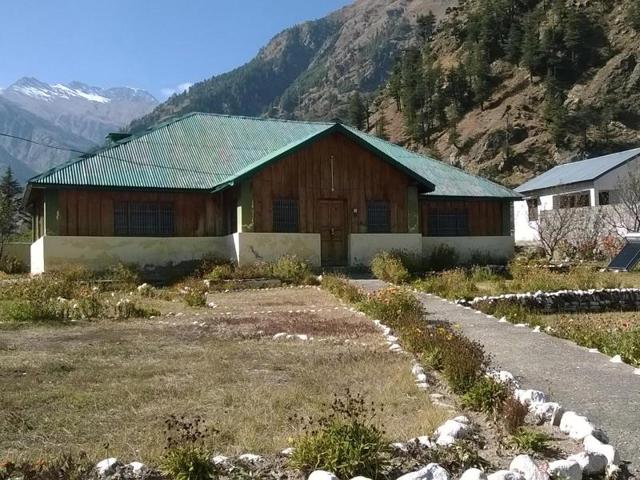
The Englishman’s gutted bungalow gave way to a forest department cottage, named Wilson House, but the orchards he introduced continue to bear fruit. “A hero or a villain, he certainly brought this nondescript village to prominence,” says hotelier and apple grower Jogendra Rana.
Harsil’s juicy apples and natural beauty have spun Bollywood dreams too. Showman Raj Kapoor chose this place to shoot his Ram Teri Ganga Maili in the 1980s.