A 2.1 magnitude earthquake, too mild to be felt by most people, occurred near Delhi on Monday afternoon, according to the National Center for Seismology. The earthquake had its epicentre 13 km from Haryana’s Gurugram, the center said.
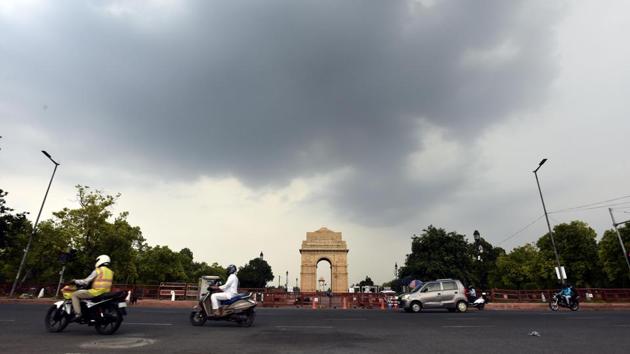
This is the sixth earthquake to have its epicentre around Gurugram-Rohtak over the last 10 days. And the 16th quake to be reported in Delhi’s neighbourhood since April this year.
Most of these, however, were very mild and only recorded by seismographs.
The string of earthquakes or tremors have sparked concerns that a bigger quake could strike the national capital region. Seismologists say the increased frequency does not necessarily imply that a major one is coming but stress that monitoring them is key to being prepared. Unlike many other natural disasters, earthquakes cannot be predicted with any degree of certainty.
The 2.1 magnitude earthquake on Monday occurred at a depth of 18 km, also one reason why it wasn’t felt by most people. Shallow earthquakes that occurred at a depth of a few kilometres often lead to greater damage than more powerful deep ones.
AP Pandey, a seismologist at the NCS, last week told Hindustan Times that there had been numerous small earthquakes in Delhi and Haryana over the last three years.
{{/usCountry}}AP Pandey, a seismologist at the NCS, last week told Hindustan Times that there had been numerous small earthquakes in Delhi and Haryana over the last three years.
{{/usCountry}}“The Himalayan plate is moving in the north-northeast direction and subducting beneath the Eurasian plate. So, there is a lot of energy along weak zones which are sometimes released through fissures and lineaments,” he said.
A fissure is a crack or a fracture; a lineament is a linear feature corresponding to a fault -- such as a valley or a mountain range. There are several faults in and around Delhi: Mathura fault, Moradabad fault, Delhi-Haridwar ridge, Delhi-Sargodha fault, Mahendergarh and Dehradun fault.
The NCS says most of the small earthquakes recorded around Delhi since April this year were along lineaments. “It is good that energy or stress is being released through these lineaments. Otherwise, there can be a big release which can cause widespread damage,” Pandey said last week.
Delhi falls under the fourth-highest zone in India, making it vulnerable to earthquakes. But there haven’t been too many earthquakes which have its epicentre in the national capital. Delhi mostly experiences tremors when a quake hits regions as far as central Asia or the Himalayan ranges, known to be a high-seismic zone.
Stay updated with all top Cities including, Bengaluru, Delhi, Mumbai and more across India. Stay informed on the latest happenings in World News along with Delhi Election 2025 and Delhi Election Result 2025 Live, New Delhi Election Result Live, Kalkaji Election Result Live at Hindustan Times.
Stay updated with all top Cities including, Bengaluru, Delhi, Mumbai and more across India. Stay informed on the latest happenings in World News along with Delhi Election 2025 and Delhi Election Result 2025 Live, New Delhi Election Result Live, Kalkaji Election Result Live at Hindustan Times.