The minimum temperature dropped to 4°Celsius on Thursday, making it the coldest December night in the national capital since 2014 as frosty winds originating from snow-clad mountains swept the region.
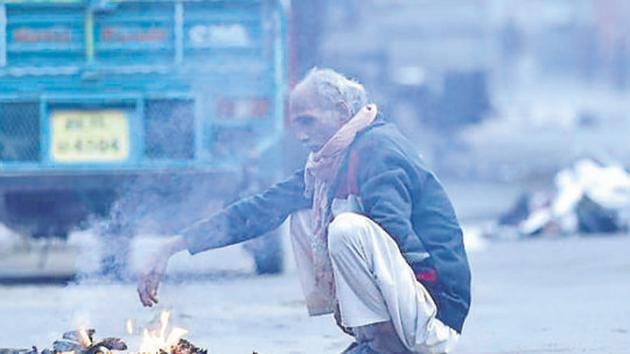
Officials of the India Meteorological Department (IMD) said this is the first cold wave of the season, making Delhi colder than Shimla, Nainital, and even London (see box). In Gurugram, the minimum temperature dropped to 1.8°C.
“This is a cold wave. The minimum temperature was four degrees below normal. It is likely to remain around 4°C till Saturday. Cold wave conditions will continue till then,” said BP Yadav, deputy director general of IMD.
With the dip in temperature, the air quality also deteriorated. The overall Air Quality Index (AQI) value of Delhi was 370 on Thursday, considered ‘very poor’, while areas such as Narela, Wazirpur, Mundka and DTU hit 400+ ‘severe’ levels of pollution.
“A clear sky and north-westerly winds that are bringing in the chill from hilly region of north India are pushing down the mercury level,” said Kuldeep Srivastava, head of the regional weather forecasting centre.
Some parts of Rajasthan, Punjab and Haryana could experience ‘severe cold wave’ on Friday - a condition in which the temperature could drop below 2°C.
{{/usCountry}}Some parts of Rajasthan, Punjab and Haryana could experience ‘severe cold wave’ on Friday - a condition in which the temperature could drop below 2°C.
{{/usCountry}}The IMD said that there were reports of ‘ground frost’ from Haryana, Punjab and Rajasthan, an indicator that the temperature close to the ground dropped below the freezing point.
The temperature at the thermometer level, which is placed around five feet above the ground, is usually 4-5°C higher than the ground level. Ground frost in north India is common during winter but harmful for winter crops.
The maximum temperature recorded during the day at Safdarjung was 22.3 degrees Celsius, which was normal.
Throughout the National Capital Region (NCR) and even within Delhi, the minimum temperatures were spread over a wide range. The 4°C low was recorded at the Safdarjung observatory, which is taken to be a representative of Delhi’s weather, while other observatories such as Palam showed a higher 6.5°C.
“Local conditions such as open spaces, greenery and pollution levels play important roles in determining the weather conditions,” said Srivastava.
With high relative humidity in the air and a dip in temperature, Delhi is also recording moderate to shallow fog early morning. This is followed by haze during the day, a pattern that is likely to continue. Chances of dense or very dense fog are less for the next three to four days at least.
According to IMD data, the temperature hasn’t dropped below five degrees in the last three years. It was on December 28, 2014, that the low was recorded at 2.6°C.
Stay updated with all top Cities including, Bengaluru, Delhi, Mumbai and more across India. Stay informed on the latest happenings in World News along with Delhi Election 2025 and Delhi Election Result 2025 Live, New Delhi Election Result Live, Kalkaji Election Result Live at Hindustan Times.
Stay updated with all top Cities including, Bengaluru, Delhi, Mumbai and more across India. Stay informed on the latest happenings in World News along with Delhi Election 2025 and Delhi Election Result 2025 Live, New Delhi Election Result Live, Kalkaji Election Result Live at Hindustan Times.