E-Paper



Delhiwale: The Basti’s best-kept secret
With its ornate calligraphy and chipped blue-green tiles, Atgah Khan’s tomb is like a beautiful faded dream

 Prefer HTon Google


Although made of stone, it almost looks soft. We have never seen anybody here. It stands in all its glory like a perfect city secret.
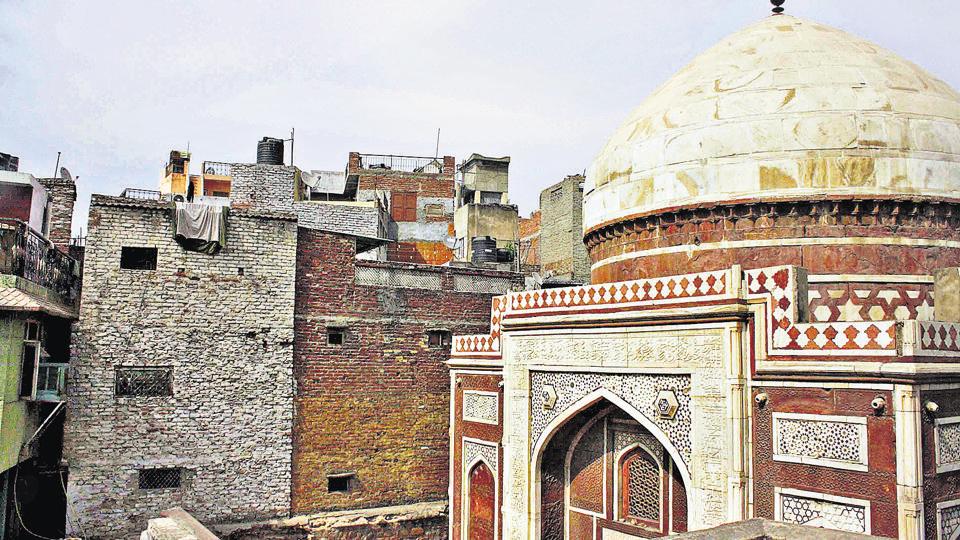
Most visitors to central Delhi’s Hazrat Nizamuddin Basti are either interested in the Sufi shrine of the same name or in poet Ghalib’s grave tucked within a quiet courtyard. Nobody cares for Atgah Khan’s tomb. A Mughal-era noble, he was murdered by a rival in king Akbar’s court.
Encircled by multi-storied shanties, the mausoleum’s 16th-century grace contrasts sharply with the makeshift nature of modern-day brick structures. The way to this monument is through a small courtyard that could be mistaken for a private residence.
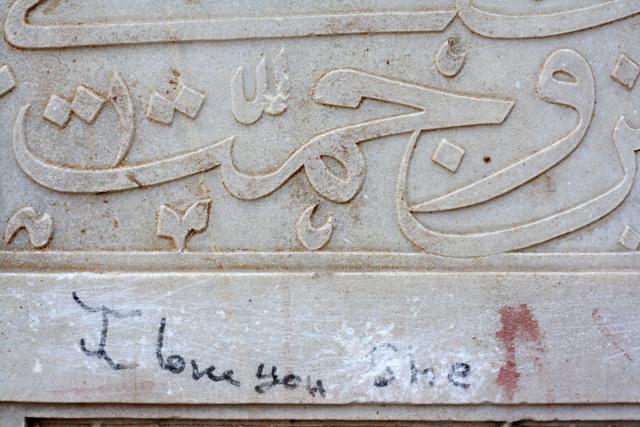
Except for its marble dome, the red sandstone edifice is embellished with floral patterns and marble inlays of Islamic calligraphy — someone has scrawled ‘I love you’ below a carved inscription. Thankfully, the monument is currently being restored.
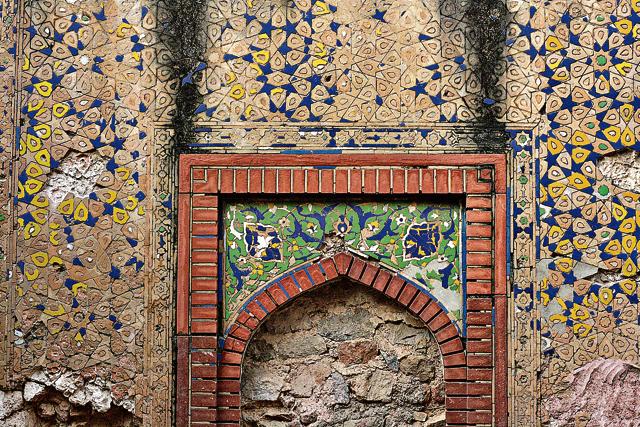
While here, do not forget to look out for a west-facing wall. It shows remains of yellow, blue and green tiles; they impress upon the senses like recollections of a faded dream. Next to it is an arched courtyard; its slender flute-shaped columns have blackened with time.
Inside the tomb‘s dark chamber, daylight enters through lattice screens. There are three graves — each ornately inlaid with calligraphies and floral patterns.
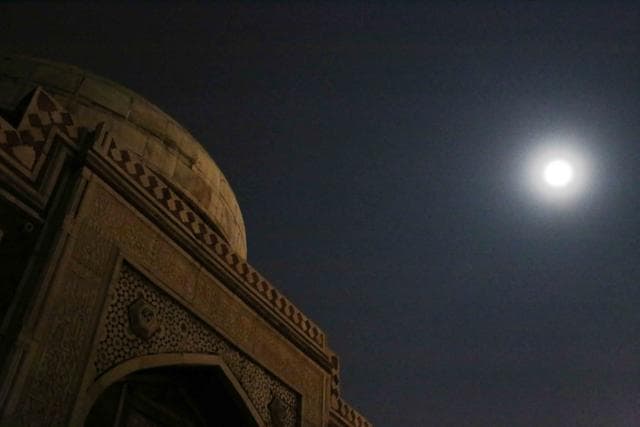
Rarely visited by lovers of old buildings, the tomb’s forsaken stones are craving for attention. Come on a moonlit night when the monument seems as intangible as a poem.