How many tourists are too many? There is no easy answer when a destination’s economy rests on tourism. The “Queen of Hills” in Uttarakhand, Mussoorie, receives around 8,000 vehicles every summer day, nearly doubling to 15,000 on weekends. Tourist numbers have surged — from 1.2 million in 2022 to 2.1 million in 2024 — a 75% increase in just two years. In absolute terms, annual visitors now number nearly 50 times Mussoorie’s resident population. Authorities anticipate an even larger influx
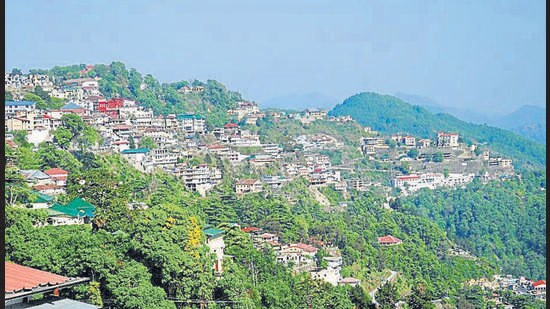
How many tourists are too many? There is no easy answer when a destination’s economy rests on tourism. The “Queen of Hills” in Uttarakhand, Mussoorie, receives around 8,000 vehicles every summer day, nearly doubling to 15,000 on weekends. Tourist numbers have surged — from 1.2 million in 2022 to 2.1 million in 2024 — a 75% increase in just two years. In absolute terms, annual visitors now number nearly 50 times Mussoorie’s resident population. Authorities anticipate an even larger influx this season. While this is a boon for local businesses, accommodating the rush may push the already overbuilt town to build further. The result is unchecked construction on fragile, earthquake-prone hills, despite court orders to halt such activity. The bearing capacity of the hill slopes is critical, and land subsidence in Joshimath, another hill town, serves as a stark warning for Mussoorie. In the midst of a climate crisis — cloudbursts and landslides — such disregard for ecological limits is a recipe for disaster.
Mussoorie’s situation reflects a broader trend across India’s hill towns. Whether it is Manali in Himachal Pradesh, Darjeeling and Shillong in the east, Mahabaleshwar in the west, or Munnar and Ooty in the south, India’s hill stations are grappling with excessive solid waste and sewage, water shortages, traffic congestion, deforestation, and slope instability. Evaluating each town’s carrying capacity is essential for regulating development and tourist footfall. Shimla, for instance, was forced to turn away tourists in 2018 due to a severe water shortage. But knee-jerk measures are often too little, too late. It’s time for pragmatic, informed, and location-specific tourism policies — and, once formulated, these have to be enforced. For instance, Mussoorie’s carrying capacity was assessed back in 2001, but the state government has shown little intent in adhering to it.
One Subscription.
Get 360° coverage—from daily headlines
to 100 year archives.
Archives
HT App & Website