The contentious farm laws were repealed by both Houses of Parliament on Monday. Their repeal may be a victory for farmers and Opposition parties — but only to the extent that the three laws pushed through by the government, and on which the ruling Bharatiya Janata Party expended a great deal of political capital, have been withdrawn. This is undoubtedly a setback for the government, but it is important to understand that the scrapping of the laws does not leave
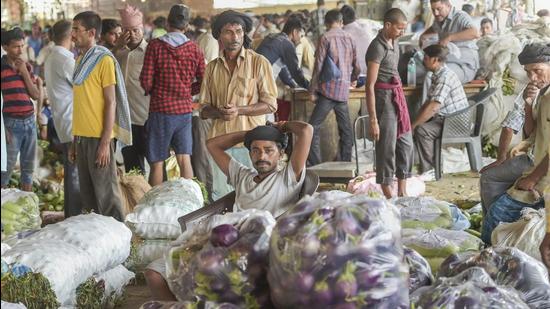
The contentious farm laws were repealed by both Houses of Parliament on Monday. Their repeal may be a victory for farmers and Opposition parties — but only to the extent that the three laws pushed through by the government, and on which the ruling Bharatiya Janata Party expended a great deal of political capital, have been withdrawn. This is undoubtedly a setback for the government, but it is important to understand that the scrapping of the laws does not leave farmers any better off. The agrarian crisis in the country continues. The unremunerative nature of farming has seen once-dominant landholding agrarian communities take to the streets demanding quotas in admission to educational institutions and in government jobs. Indian agriculture also remains uncompetitive, and the minimum support price (MSP) regime has wreaked havoc with cropping patterns and destroyed water tables.
Agriculture needed a new deal before the farm laws were passed, and while arguments over the contours of the three laws the government passed (and the way in which it did so) can continue, the fact remains that it still needs a new deal. A return to the status quo is no cause for celebration. It’s a deal that needs to factor in economic realities, environmental concerns, the climate crisis, and, most importantly, political considerations, and it is a deal that needs to be supported (in fact, led) by the states, not the Centre.
That may mean hard choices. Encouraged by their success at having the laws repealed, farmer groups are holding out for the codification (and expansion) of support prices. That makes little economic sense, and, the move (if the government gives in) could result in spiralling inflation. The government has already given in to one demand from the protestors that stubble burning be decriminalised (despite the environmental toll taken by the practice). A new deal will mean radical change — in what farmers grow, how and when, and the extent to which the state regulates every part of the agri-supply chain, from agri-inputs to the output. Unfortunately, the next election cycle is now upon us. Five states (including two whose farmers were an active part of the protests, Uttar Pradesh and Punjab), go to the polls early next year, and two more in late 2022; and 2023 will see nine state elections. It will be difficult to get all stakeholders on the same page when there are political considerations at play, but it is important that the Centre and the states create a window for farm reforms. The country, and its farmers need it.
One Subscription.
Get 360° coverage—from daily headlines
to 100 year archives.
Archives
HT App & Website