With a set of changes in its top leadership over the weekend, the Rashtriya Swayamsevak Sangh (RSS) now has a new team in place, under the continued leadership of Mohan Bhagwat. This team will lead the Sangh’s centenary celebrations in 2025; take forward its mission of “uniting Hindu society”; expand its organisational footprint; and play a key part in the coordination between the Bharatiya Janata Party (BJP)-led government at the Centre and in states and other institutional affiliates. Among the changes, the most significant is that of Dattatreya Hosabale’s elevation as the sarkaryavah (general secretary), the de facto executive head of the organisation with the responsibility of day-to-day management of the Sangh’s vast activities.
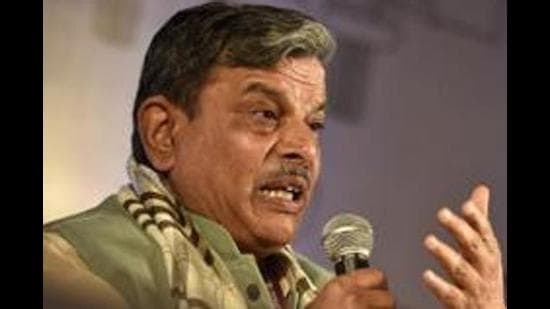
A protege of Sangh veteran Madan Das Devi, Mr Hosabale is the first functionary who served as the national organisation secretary of the Akhil Bharatiya Vidyarthi Parishad (ABVP) to rise to the Sangh’s second most important position. This background gives Mr Hosabale several advantages. He has a wide network of close associates from his ABVP years, who are today in key positions in the Sangh, in the BJP and in BJP governments. He also has a good working relationship with Prime Minister Narendra Modi and home minister Amit Shah, and has known BJP president JP Nadda for decades. The fact that he is from Karnataka, and the Sangh and the BJP are focused on southward expansion, will mean a focus on newer geographies. And the fact that while being wedded to the Sangh’s ideological framework, Mr Hosabale is among its more suave and modern faces may also mean a slight shift in Sangh’s external projection.
There is, of course, close ideological convergence between the Sangh and the BJP, reflected in the government’s push on Kashmir and the construction of the Ram temple, and reports of divergence are often exaggerated. But, at the same time, there remains a difference in outlook on some economic issues — for instance, it will be instructive to see how the Swadeshi Jagran Manch and Bharatiya Mazdoor Sangh respond to the government’s privatisation plans. Mr Hosabale will have a key role in keeping various elements of the Sangh on the same page. But he can play an even more crucial role if he helps the Sangh evolve into a more inclusive body, ensure a firm line against religious extremism in principle and practice, and recommit to constitutional principles.
{{/usCountry}}There is, of course, close ideological convergence between the Sangh and the BJP, reflected in the government’s push on Kashmir and the construction of the Ram temple, and reports of divergence are often exaggerated. But, at the same time, there remains a difference in outlook on some economic issues — for instance, it will be instructive to see how the Swadeshi Jagran Manch and Bharatiya Mazdoor Sangh respond to the government’s privatisation plans. Mr Hosabale will have a key role in keeping various elements of the Sangh on the same page. But he can play an even more crucial role if he helps the Sangh evolve into a more inclusive body, ensure a firm line against religious extremism in principle and practice, and recommit to constitutional principles.
{{/usCountry}}