In an interview to Hindustan Times, Union power minister (independent charge) RK Singh said the Centre is considering providing subsidy for those buying electric vehicles (EVs), and that a committee of cabinet secretaries will come up with recommendations on this shortly. This statement comes on the heels of another news report that said the government plans to impose a on-etime charge of ₹12,000 on the purchase of new petrol and diesel cars to raise money for incentivising EV and battery manufacturing. It has also issued guidelines for setting up charging infrastructure across the country.
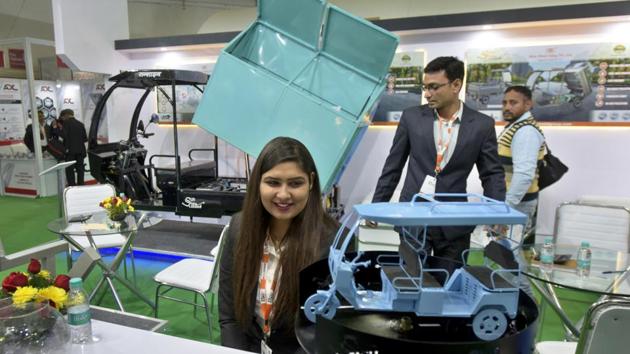
These are potentially far-reaching moves for the country’s mobility, energy and environment needs. The government has ambitious plans for a mass scale shift to EVs by 2030, which means that all vehicles on Indian roads by then, personal and commercial, will be powered by electricity. This sector is also an area of huge interest to the country since it holds the potential of reducing the demand for fossil fuel.
While the transformative push for electric vehicles has become a cause of great hope, the roll out of these critical plans has been slow in the country -- even though India started walking this path early. The first electric three-wheeler was developed by Scooters India limited in 1996, and by 1999 M&M had matched it. By 2000 BHEL had produced 18 electric buses. In 2001, the Reva car (now made by M&M) entered the race. But the country could not build on this start mainly due to challenges in battery technology, limited range, lack of infrastructure and prevailing consumer mindset.
The earlier plans did not have the desired level of synergy, continued top level support and ownership both in government and industry, says the National Electric Mobility Mission Plan 2020. Today, technology is no longer a stumbling block; there are various power train technologies ---- hybrid electric vehicle, plug in hybrid electric vehicle, extended range electric vehicle and battery electric vehicle -- that companies can choose from . Consumer mindset is changing and several companies are interested in investing in the sector.
{{/usCountry}}The earlier plans did not have the desired level of synergy, continued top level support and ownership both in government and industry, says the National Electric Mobility Mission Plan 2020. Today, technology is no longer a stumbling block; there are various power train technologies ---- hybrid electric vehicle, plug in hybrid electric vehicle, extended range electric vehicle and battery electric vehicle -- that companies can choose from . Consumer mindset is changing and several companies are interested in investing in the sector.
{{/usCountry}}One of the key roadblocks is batteries, which rely on host of rare materials—from lithium and nickel to cobalt. Battery-makers around the world are struggling to secure the supplies of these key ingredients as demand outstrips supply, according to the AT Kearney Energy Transition Institute. The report says that cobalt is in particularly short supply and its current global reserves will be exhausted by the time 300 million large battery-operated vehicles are produced.