
 E-Paper



Big churn in the Capital
Kejriwal resigning can reshape Delhi politics, but governance must not become secondary

 Prefer HTon Google


Arvind Kejriwal’s dramatic announcement on Sunday that he will quit as Delhi’s chief minister in two days and someone else from the party will be nominated to take over the chair has stoked a fresh churn in the national Capital, barely months before it is scheduled to hold assembly elections. The declaration came two days after the Supreme Court gave Kejriwal bail and ended his months-long incarceration, but barred him from visiting the CM’s office, signing official files or making public statements about his role in the excise case.
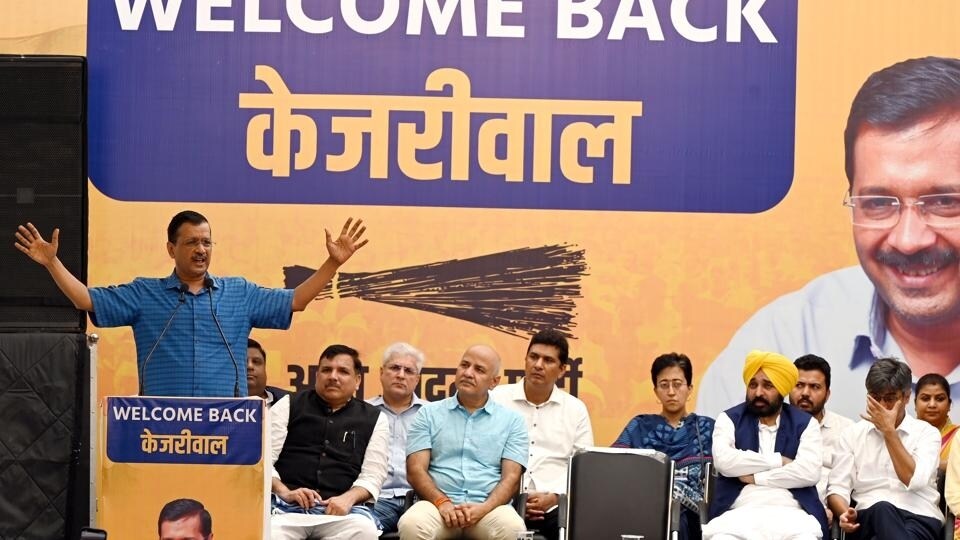
The backdrop of the development is instructive. Over the last 20-odd months, virtually the entire frontline leadership of the AAP has been behind bars at some point or the other, dealing a severe blow to its ability to mobilise voters. Additionally, the party is battling complaints over crumbling civic infrastructure in Delhi — especially after the death of three civil service aspirants who were marooned inside a flooded basement following heavy rainfall —even as the BJP has attempted to chip away at the party’s core USP, its pledge of clean politics. Kejriwal’s statement that he will seek justice in the “people’s court”, and that he will go to every house to seek public support, indicates that he is aware that the party needs an extensive grassroots campaign to triumph a third consecutive time in Delhi — particularly since governance suffered due to a tussle between the elected government and the lieutenant governor. The recent dysfunction in the Municipal Corporation of Delhi only underscored this chaos, which is a far cry from the AAP’s early push for transforming civic amenities such as schools and health care.
This was a critical moment in the evolution of the AAP, which captured power in Delhi and later swept Punjab but was unable to expand in other states. The way ahead isn’t clear — after all, early elections may not be possible because the assembly has not been dissolved, and summary revision of electoral rolls takes time. The AAP will also be aware of the unhappy history in the Janata Dal (United) (involving Jitan Ram Manjhi) and the Jharkhand Mukti Morcha (involving Champai Soren), where temporary CMs picked by party chiefs led to more dissidence.
As important as this moment may be, the political class on both sides of the aisle must remember that the primary responsibility they have towards the Capital’s residents is governance. For too long, political tussles have hamstrung policymaking in Delhi, hurting its development and even exacting a tragic human toll. Kejriwal’s decision holds the potential to upend the Capital’s politics and reshape the AAP’s future, but it shouldn’t triumph over concerns of governance.


