Climate Central, a non-profit news organisation that analyses climate science, recently released a set of stark, interactive images that show what will happen to some of the most iconic landmarks in coastal cities worldwide, if sea levels rise. The images are based on the outcomes of 1.5°C of warming and the 3°C excess rise. Users can toggle between a number of scenarios, look at current conditions, and compare where water levels could end up after 1.5°C of warming versus up
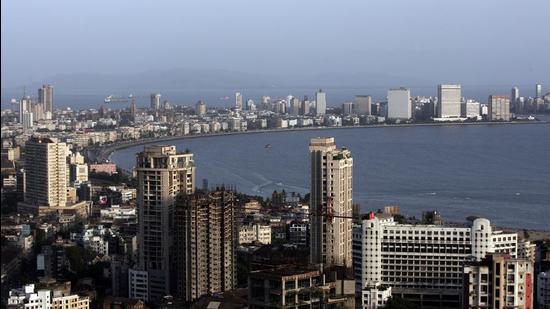
Climate Central, a non-profit news organisation that analyses climate science, recently released a set of stark, interactive images that show what will happen to some of the most iconic landmarks in coastal cities worldwide, if sea levels rise. The images are based on the outcomes of 1.5°C of warming and the 3°C excess rise. Users can toggle between a number of scenarios, look at current conditions, and compare where water levels could end up after 1.5°C of warming versus up to 3°C. One of the landmarks that the photorealistic illustrations show is Mumbai’s famous Chhatrapati Shivaji Maharaj Vastu Sangrahalaya, which will be under water if warming goes unchecked. According to Climate Central, the scenarios showing 1.5 degree of warming is possible only if we make “deep and immediate” cuts to climate pollution. The interactive platform was developed by the Climate Central team in collaboration with researchers at Princeton University and the Potsdam Institute for Climate Impact Research in Germany.
The stark warnings about the threat and the impact of sea-level rise are not new. In August, a Nasa report said that Indian coastal areas would face a sea-level rise of 0.1 metre to 0.3 metre in the next two-three decades due to global warming. The sea-level rise and its impact will be experienced in varying degrees in other coastal cities and ports such as Mumbai and Chennai, among others.
Even though cities such as Mumbai are affected by the climate crisis, they are also well-placed to plan mitigation and adaptation strategies. In recent months, Mumbai has taken a few positive climate steps. For example, in August, the Brihanmumbai Municipal Corporation (BMC) launched the first Mumbai Climate Action Plan. It will focus on waste management, sustainable mobility, clean energy, urban floods and water management, urban green cover and biodiversity, and air quality. In September, the Maharashtra government announced that 43 cities in the state will join the United Nations-led “Race to Zero” campaign, which aims at committing to net-zero emissions by 2050. Mumbai is one of them. Through these initiatives, the city shows that it means business. Hopefully, the political and civic administration will shower equal attention and show real interest in implementing these critical plans so that Mumbai becomes a climate-resilient city in the true sense of the term.
One Subscription.
Get 360° coverage—from daily headlines
to 100 year archives.
Archives
HT App & Website