
 E-Paper



Dollar challenge to Brics nations
Trump's economic policies, aimed at maintaining dollar dominance, face contradictions as tax cuts may lead to rising national debt and market risks.

 Prefer HTon Google


Donald Trump will only take over the White House in January next year. However, his policy pronouncements have already started. A lot of his disruption, for good or bad, will be aimed at domestic institutions in the United States (US). But his economic policies, thanks to the US being the dominant economic power in the world, have global bearings.
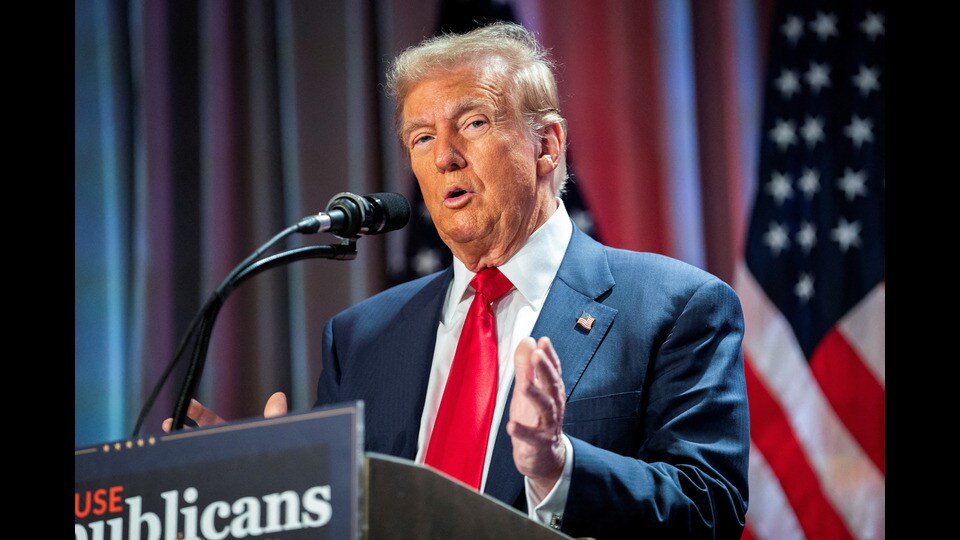
After his proclamations of imposing tariffs on countries such as Canada and Mexico on his first day in office, Trump has now warned Brics countries against attempts to float any other currency to challenge the dollar’s hegemonic status. Trump might well be trying to make himself look good by raising a bogey. Talks of floating another currency to replace the dollar have gone on for too long without anything materialising. Brics countries today, especially China and India — the former is the world’s second-largest economy, and the latter will become the third largest soon — have far too many strategic differences to trust each other enough to enter a currency union. The others are not exactly best friends and almost all of them except Russia have deep economic ties with the US. Such statements might be good to boost Trump’s optics of a strong leader in the eyes of him and his supporters, but the markets know better.
Not all of Trump’s economic designs, however, are empty rhetoric. At the heart of them is a belief that the US can continue to enjoy its position as the global capitalist leader without fulfilling the obligations that this role requires. And this is exactly where Trump and the US economy under him will face their biggest contradictions. To give an example, if the Trump administration were to continue its promised tax cuts and do little to control the fiscal deficit and, more importantly, national debt, there will come a threshold when financial markets will start raising their risk premium vis-à-vis their US investments. Add to it the already growing talk of a big bubble building up in high-tech stocks in the US, and things could get more complicated for the American financial markets and the dollar.
When seen in the backdrop of these real constraints, Trump’s threats against (as of now) imaginary attempts to float another currency vis-à-vis the dollar seem like a strategy to convince outside governments and markets that America can have its cake and eat it too. This has not been attempted since the 1950s. We are in uncharted waters now.


