
 E-Paper



Draining the Capital’s woes
The Yamuna flooding shows why short, medium and long-term changes are needed

 Prefer HTon Google


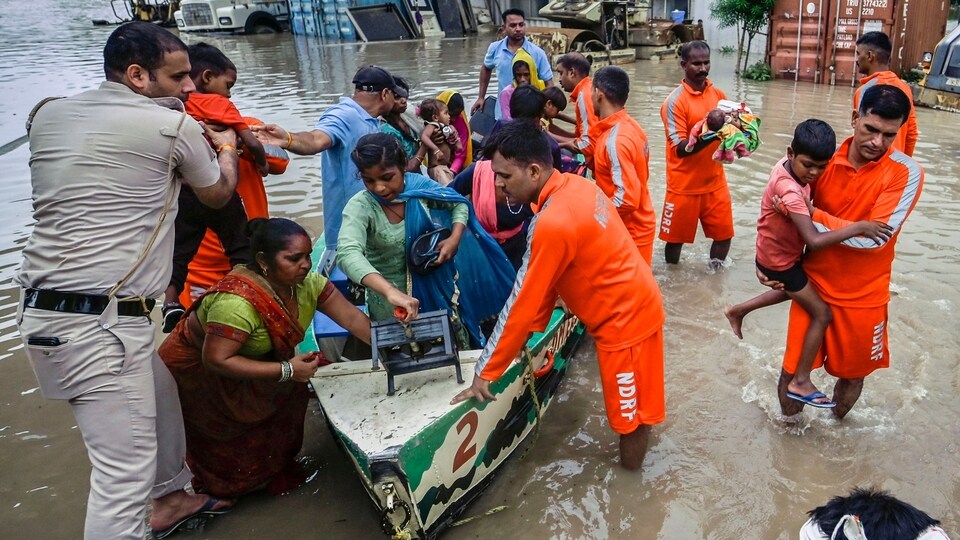
It has been known for some time that the drainage systems in Indian metropolises are woefully inadequate to deal with the intensifying vagaries of the climate. If there was any more evidence required, it came in the form of the worst flooding of the national capital in 45 years. The otherwise polluted and moribund Yamuna swelled to its highest level in the city since 1978, thanks to heavy showers pounding the hill states and sending torrents of water downstream. The government evacuated 16,000 people as water marooned vast swathes of the Capital. Despite the sun being out for the fourth consecutive day, the surging river was enough to bring Delhi to its knees. This is a sorry state of affairs for any city, let alone the national capital. And not all of it can be chalked up to natural causes, because administrative apathy, myopic planning and poor interstate coordination also contributed to the deluge.
In the short term, the authorities must look downwards — at the choked and outdated drainage system in the Capital that is designed for water levels far below what has become normal for the Yamuna during the monsoon season. The authorities need to create transparent benchmarks for stormwater drain cleaning and de-silting, widen the existing network and bring many parts of the city still not covered by the system under its ambit. Moreover, a drainage master plan update has been in the works for decades and a prototype already exists in the form of a drainage blueprint designed by IIT-Delhi, with a dire need for progress on this front. Steps such as better management of existing drains, crackdown on drain encroachments, and banning the dumping of sewerage in stormwater drains must be implemented post-haste. Even the best drainage system, however, can only lessen the impact of an overflowing river.
Therefore, in the medium term, upstream and downstream states should work on a regulatory and management schema that is not affected by political and electoral developments, which will forestall unsavoury controversy. Such an authority will help in better management of dams and forestall the cascading effect of extreme weather events.
Finally, in the long term, planners will have to change their outlook. Policies are still made looking at the mean, or the long-term average of weather behaviour. It is increasingly clear that predictability is the first casualty of the climate crisis, and governments will have to plan for the worst-case scenario. Delhi’s 2023 predicament is only a snapshot of a future world.


