If there was a semblance of hope for queer people after the Supreme Court had refused to accord legal status to same-sex unions two years ago, that door was firmly shut on Thursday. A five-judge bench, comprising justices Bhushan R Gavai, Suryakant, BV Nagarathna, PS Narasimha and Dipankar Datta, concluded in chamber proceedings that petitions asking for a review of the 2023 Constitution bench verdict lacked sufficient merit. The bench — which comprised only one judge who was part of
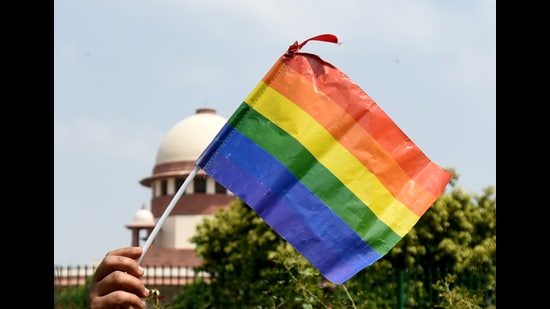
If there was a semblance of hope for queer people after the Supreme Court had refused to accord legal status to same-sex unions two years ago, that door was firmly shut on Thursday. A five-judge bench, comprising justices Bhushan R Gavai, Suryakant, BV Nagarathna, PS Narasimha and Dipankar Datta, concluded in chamber proceedings that petitions asking for a review of the 2023 Constitution bench verdict lacked sufficient merit. The bench — which comprised only one judge who was part of the 2023 judgment – said it didn’t find any error apparent in the earlier decision and said no interference was warranted. More importantly, since this was a unanimous decision of a five-judge bench that confirmed a 3-2 verdict by a Constitution bench, the possibility of a successful curative petition — the only legal recourse left for the petitioners — appears slim.
This is a moment imbued with disappointment, especially for members of the lesbian, gay, bisexual, transgender, queer (LGBTQ+) communities who continue to battle bias in structural and everyday situations. Their lives hang in a bizarre if extraordinary liminality; their existence is legal, but their relationships are not. This means battling bias and helplessness in everyday situations — opening a bank account, admitting a loved one in a hospital, buying a home together, or planning a future together. That the courts, and the government, have chosen to do little to remedy this situation is disheartening.
Still, as this newspaper has noted before, the world over, the journey from decriminalisation of queerness to recognition of marital rights has been arduous. If successful, India would have become among the quickest to allow same-sex unions.
Therefore, granting full marriage rights to the community was always an outlier, especially due to the tangle of secular and faith-based laws that regulate marriage, divorce and inheritance in India. It is in the realm of limited rights — akin to the civil union arrangement that is considered a stop-gap between decriminalisation and marriage rights — that immediate progress seemed more realistic.
Unfortunately, the progress on that front is far from satisfactory. In 2023, the Union government promised to set up a committee headed by the cabinet secretary to investigate these issues. But progress has been slow and deliberations not wide-ranging. As a consequence, a bouquet of rights — the minority judgment in 2023 by the then Chief Justice of India Dhananjaya Y Chandrachud and Sanjay Kishan Kaul had specifically mentioned medical, jail visitation and financial rights, in addition to questions of succession, maintenance, and pensions — hang in limbo. Even the encouraging moves — some changes in government forms, passport applications and recognition of transgender people — have come after judicial nudges.
In many ways, the question of queer rights is one of the litmus tests of modern democracy because these communities don’t form a numerical majority. Therefore, fulfilling the promise of dignity and respect made by the Constitution to every citizen — including queer ones — needs authorities to rise above myopic considerations and election-focussed politics. The ball is in the court of the political class which populates the executive and the legislature. It must do all it can to ensure queer people are not treated like second-class citizens in any walk of life.
One Subscription.
Get 360° coverage—from daily headlines
to 100 year archives.
Archives
HT App & Website