Fifty hours without food or water, dangling midair in steel boxes, waiting for a daring rescue operation that would involve hauling them up into a helicopter. This was the fate of 63 people in Jharkhand’s Trikut hills this week. Sixty of them were brought to safety by rescuers but two fell to their death during the challenging rescue operation. A third person died when a cable car swung wildly while developing a snag on Sunday.
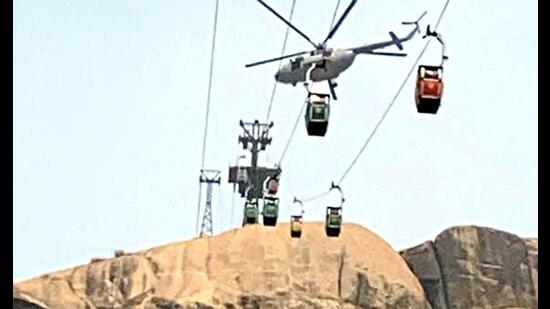
Over the last two decades, ropeways have become a favourite of tourist operators and government tourism departments but, as the Jharkhand incident shows, safety regulations, audits and enforcement haven’t kept pace. The government has blamed the private company running the facility, saying its contract expired three years ago; the company claims it was given an informal extension. Either way, it underlines a serious breach of rules and the lax manner in which such facilities are regulated. Serious concerns must also be raised about the rescue operation, the preparedness of personnel for such operations, and whether standard operating procedures exist for these kind of contingencies.
After the incident, the Union home ministry issued an advisory, asking all states to adhere strictly to the norms set by the Bureau of Indian Standards for all ropeways operating under their jurisdiction. But much more must be done to ensure the safety of all tourists and passengers. This should include a set of national guidelines for the maintenance and safety regulation of ropeways, periodic and impartial safety audits, regular rescue drills for emergencies and publicly available maintenance reports. Most of all, if the Trikut hills tragedy occurred due to mismanagement and safety compromises, heads must roll.