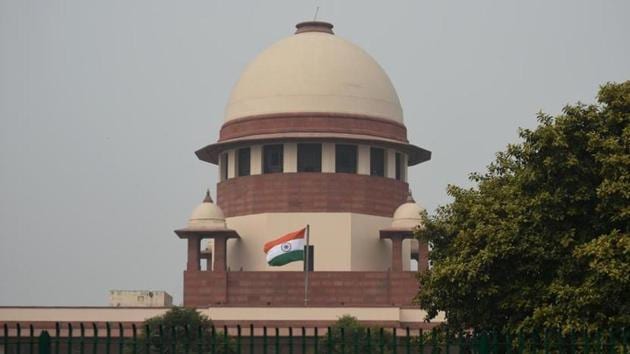
In a significant order on Monday, a two-judge bench of the Supreme Court (SC) — comprising Justice AM Khanwilkar and Justice Sanjiv Khanna — laid out the theoretical basis for distinguishing free speech and hate speech and mounted a strong defence of the former while outlining the dangerous implications of the latter. The bench was considering a petition by journalist Amish Devgan to quash multiple First Information Reports (FIRs) against him for his remarks against the Sufi saint, Khwaja Moinuddin Chisthi. The SC refused to order the quashing of the FIRs, but the real import of the order lies in its pronouncement on the nature of free speech and its limits in India.
Based on an extensive comparative study of how diverse jurisdictions deal with free speech, India’s own constitutional provisions, and the existing academic literature on the subject, the order puts up a robust defence of free speech and adopts, rightly, an expansive view of what free speech constitutes. In its view, the “freedom to express and speak” is the most important condition for a political democracy. It adds that laws and policies are not democratic unless subject to questioning and criticism and that dissent and criticism of the government’s policy — even if it was false — would be ethically wrong but not invite penal action. Importantly, it says governments should be left out of adjudicating what’s right or wrong, true or false, for these are matters of open discussion in the public domain and that political speech on government policies requires “greater protection” for preservation of democracy. Finally, it points out that instead of being an elite indulgence, free speech has empowered the marginalised. By firmly standing in favour of the constitutional principle of liberty and the fundamental right of free speech, the SC — at a time when these values are often subject to arbitrary action — has done well and must observe it consistently in its own treatment of matters.
The order also, once again rightly, takes a position against hate speech, defined in terms of context, content, and impact. The order refers to the greater onus on “persons of influence” — which may include political, social, media leaders — while highlighting the need greater latitude to those oppressed groups who may, due to their experiences, resort to a degree of harshness in utterances. At a time when along with the greater threat to free speech, there is proliferation of hate speech, the SC’s observations deserve careful attention and adherence.
{{/usCountry}}The order also, once again rightly, takes a position against hate speech, defined in terms of context, content, and impact. The order refers to the greater onus on “persons of influence” — which may include political, social, media leaders — while highlighting the need greater latitude to those oppressed groups who may, due to their experiences, resort to a degree of harshness in utterances. At a time when along with the greater threat to free speech, there is proliferation of hate speech, the SC’s observations deserve careful attention and adherence.
{{/usCountry}}