June 15 marks a year of the Galwan clash, the bloodiest encounter between India and China at the border in over four decades. 20 Indian armed forces personnel, and an unknown number of People’s Liberation Army (PLA) personnel were killed as India bravely sought to repel Chinese encroachment. China had already breached all border-related understandings between the two countries when it crossed the Line of Actual Control (LAC) in May. But with Galwan, the entire framework of maintenance of peace and tranquility at the border was shattered. The understanding that India and China would proceed to deepen other elements of their bilateral relationship, and agree to disagree on the border, broke down comprehensively. There was renewed nationalist consciousness on the question of Chinese aggression, with the Indian street and the Indian State realising that it was time to confront the question of China’s designs.
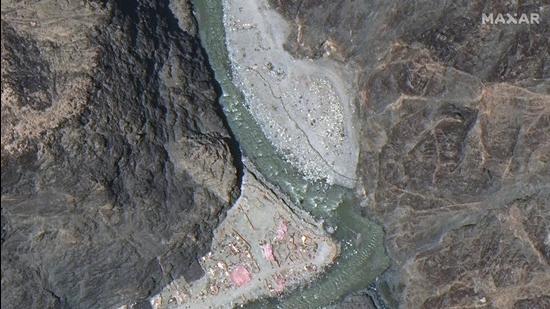
Galwan introduced strategic clarity in India. To be sure, China is a close neighbour. India wants friendly relations, not a conflict. There remains room for deep developmental cooperation, equitable economic exchange, even political cooperation. And New Delhi’s establishment is acutely conscious of the power asymmetry that exists between the two countries and has no desire to be a frontline State in a new geopolitical battle. But Galwan showed harmony cannot come at the cost of territorial integrity and sovereignty. India attempted a mix of four measures — economic restrictions on Chinese companies; international opinion-building and diplomatic mobilisation about China’s actions, including giving momentum to Quad; acquiring a military edge by occupying the Kailash heights (in August 2020); and constant bilateral negotiations with Beijing across the military and diplomatic domain — to drive home the message that restoring status quo ante was essential. This strategy partially succeeded when China agreed to pull back in the Pangong Tso area, and there was both a degree of de-escalation and demobilisation.
But while there is greater strategic clarity, it has not translated into consistent policy. There have been attempts to underplay the extent of Chinese aggression, especially at the political level. There are questions about tactical wisdom of letting go of India’s advantage in Kailash range in exchange for concessions at Pangong Tso — has India left itself with no leverage to push the Chinese back from other areas such as Gogra, Hot Springs and Depsang? And there remains the absence of an overarching framework to deal with the new reality of a more competitive and perhaps even adversarial relationship. Galwan is a reminder that India cannot let its guard down on its northern borders.
{{/usCountry}}But while there is greater strategic clarity, it has not translated into consistent policy. There have been attempts to underplay the extent of Chinese aggression, especially at the political level. There are questions about tactical wisdom of letting go of India’s advantage in Kailash range in exchange for concessions at Pangong Tso — has India left itself with no leverage to push the Chinese back from other areas such as Gogra, Hot Springs and Depsang? And there remains the absence of an overarching framework to deal with the new reality of a more competitive and perhaps even adversarial relationship. Galwan is a reminder that India cannot let its guard down on its northern borders.
{{/usCountry}}