Whichever way one looks at it, the 13.5% growth in India’s Gross Domestic Product (GDP) in the April-June quarter is disappointing. Absent context, the number is high and the fastest pace of growth in four quarters; but factor in the base-effect (the first quarter of last year saw India being roiled by the Delta variant of the coronavirus), and estimates — including the Reserve Bank of India (RBI)’s 16.2% — and it is evident that something didn’t really go to
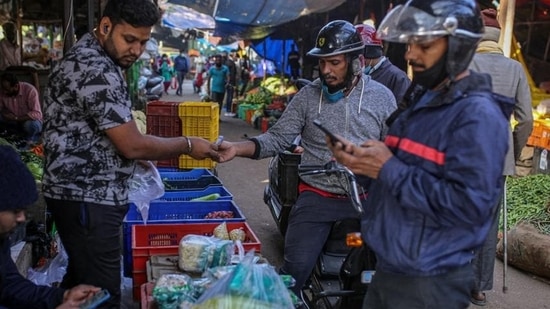
Whichever way one looks at it, the 13.5% growth in India’s Gross Domestic Product (GDP) in the April-June quarter is disappointing. Absent context, the number is high and the fastest pace of growth in four quarters; but factor in the base-effect (the first quarter of last year saw India being roiled by the Delta variant of the coronavirus), and estimates — including the Reserve Bank of India (RBI)’s 16.2% — and it is evident that something didn’t really go to script. Still worse, the buoyant 4.5% growth that agriculture showed in the quarter seems removed from the reality of lower output on account of an unseasonally warm March, and it is likely the number could be revised down the line. Indeed, factoring the 13.5% into RBI’s growth projections for 2022-23, leaving growth in other quarters untouched, results in a sub-7% number (6.7%). The government said after the numbers that India is still poised to grow at 7-7.5% this year.
So, what explains the number? Should we be worried? And what should the policy response be? It is a fact that GDP for the quarter marks a 3.8% growth over the corresponding quarter of 2019-20 (pre-pandemic). But it is also a fact that in the first quarter of 2021-22, the economy contracted 8.5% when compared to the corresponding quarter of 2019-20. This supports arguments that there has been real growth, but belies arguments that claim there was no base effect on account of last year’s number. Two factors may have contributed to the lower-than-expected number: One, the travails of the country’s informal sector (which has significantly lagged behind the formal sector, in terms of its recovery trajectory); and two, a rise of 1.3% in the government’s final consumption expenditure.
It is clear that the economy, while on the growth path, still needs a fiscal push — especially because the monetary policy stance has changed with RBI increasing interest rates to combat inflation. The good news in the numbers, though, is that both fixed capital formation and private final consumption expenditure numbers look healthy. Seen along with high frequency data, this suggests that the economy will continue to expand — perhaps not as rapidly as previously expected, but still at a significant rate. With inflation already having peaked, and with geopolitical headwinds on the horizon, the GDP numbers point to the need for a nuanced and balanced policy response, both on the fiscal side and the monetary one.
One Subscription.
Get 360° coverage—from daily headlines
to 100 year archives.
Archives
HT App & Website