The National Council of Educational Research and Training (NCERT) is giving final shape to a new school curriculum that will shift the focus from rote learning to experiential learning. According to a report in Hindustan Times, the curriculum committee of the NCERT has decided to make textbooks thinner and school bags lighter to reduce the current workload of students. This is a welcome move because, in today’s infotech-rich environment, cramming has little utility. The more critical thing, as the NCERT itself says, is to develop the cognitive abilities of students to help them better discern and analyse what they learn. While NCERT books are mainly used by the Central Board of Secondary Education (CBSE) schools (most state boards use books developed by their own State-run institutions, at least till Class 8), any positive step taken by the body percolates to the state boards too, and private publishers are also known to quickly fall in line. In that sense, NCERT is the gold standard when it comes to textbooks in the country.
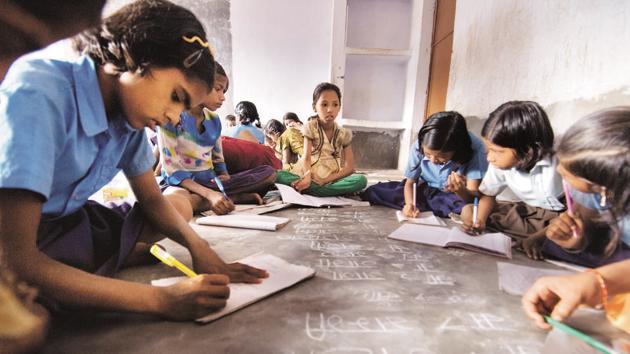
Having said that, there are some states where the quality of textbooks is poor, and too many glaring mistakes crop up at regular intervals. But in a country such as India, which has large class sizes, a high proportion of unqualified teachers and a shortage of instruction time, it becomes critical to ensure that textbooks adhere to a certain standard of quality. But this does not happen because states cut corners when it comes to spending on things that impact the quality of textbooks: good authors and publishers, and a strong peer-review system. Instead, they opt for authors and publishers who have little understanding of either pedagogy or how children’s books should be written. Last year, the Union human resource development (HRD) ministry too accepted that there is no method to evaluate the quality of textbooks by private publishers in the country.
If the quality of textbooks is so uneven across states and there is no system of evaluating them, what can be done to ensure that students don’t bear the brunt of such institutional failure? One way would probably to use technology to make the content richer and interesting. Another would be to find a way to reach the improved content to students. Several states are now using Edusat to beam improved content to their schools, and using mobile phones to help students connect with teachers who deliver these additional classes from studios in cities. It is true that even this format often fails to deliver, thanks to inadequate hardware, power failure and low uptime on satellite links. But states must not shy away from opting for such out-of-the-box solutions when existing mechanisms to deliver quality content are facing so many challenges.
{{/usCountry}}If the quality of textbooks is so uneven across states and there is no system of evaluating them, what can be done to ensure that students don’t bear the brunt of such institutional failure? One way would probably to use technology to make the content richer and interesting. Another would be to find a way to reach the improved content to students. Several states are now using Edusat to beam improved content to their schools, and using mobile phones to help students connect with teachers who deliver these additional classes from studios in cities. It is true that even this format often fails to deliver, thanks to inadequate hardware, power failure and low uptime on satellite links. But states must not shy away from opting for such out-of-the-box solutions when existing mechanisms to deliver quality content are facing so many challenges.
{{/usCountry}}