After a gruelling March-May season, marked by back-to-back heatwave days in parts of India, the country confronts another challenge: An uneven spread of the southwest monsoon. In July, there was 16.9% excess rain over the country, with 10.8% excess over northwest India; 42.7% excess over central India; 60.4% excess over peninsular India, according to the India Meteorological Department. But the Gangetic states, the east and Northeast had deficient rains. More rainfall is in the offing. But if this geographic disparity
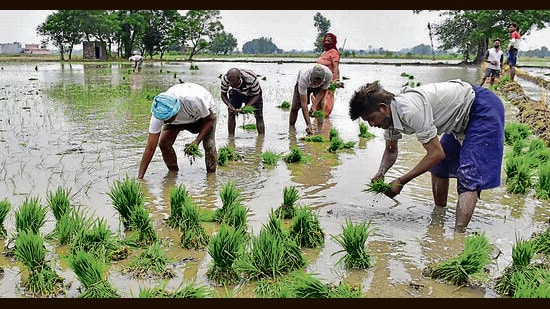
After a gruelling March-May season, marked by back-to-back heatwave days in parts of India, the country confronts another challenge: An uneven spread of the southwest monsoon. In July, there was 16.9% excess rain over the country, with 10.8% excess over northwest India; 42.7% excess over central India; 60.4% excess over peninsular India, according to the India Meteorological Department. But the Gangetic states, the east and Northeast had deficient rains. More rainfall is in the offing. But if this geographic disparity persists, it may be detrimental to crop production, negatively impacting growth, said a Nomura report. This is because the July rains were critical for kharif crops, and India recorded a monsoon deficit of 8% in June.
For farmers, rising temperatures and erratic rainfall — both imprints of the climate crisis — are challenging since it not just impacts income, but also their ability to invest it back into their farms as well as the health and education of their family. For a while now, there has been a lot of discussion on educating farmers about climate-resilient farming, but plans have remained on paper. There has also been a decline in investment in climate-resilient agriculture. The government promised to spend ₹55 crore on the Climate Resilient Agriculture Initiative in the 2021-22 budget but then reduced it to ₹40.87 crore in 2022-23. Erratic weather events could also lead to a decline in the nutritional quality of grains. This is bad news for a country of 1.3 billion people, many of whom depend on the public distribution system; a decline in nutritional quality can impact their health and development and hinder the country’s long-term growth potential.
One Subscription.
Get 360° coverage—from daily headlines
to 100 year archives.
Archives
HT App & Website