One structural challenge in Indian foreign policy continues with the present government — the inability to seal trade agreements. In three months, New Delhi has failed to conclude two deals, the Regional Comprehensive Economic Partnership (RCEP) and a trade deal with the United States. Undeterred, India has reopened trade talks with the European Union and has several bilateral trade agreements in its sights. But whether these talks will indeed translate into pacts is unclear. India, initially out of design and now increasingly out of incoherence, has not finalised a trade deal for over a half-a-decade. The failure to bring the US trade deal to closure is particularly telling. By trade standards, it was a relatively small deal, worth a few billion dollars. Both sides wanted to arrive at a deal because of larger strategic concerns and the pressure of a pending presidential visit. Nonetheless, negotiators failed to make it to the finish line.
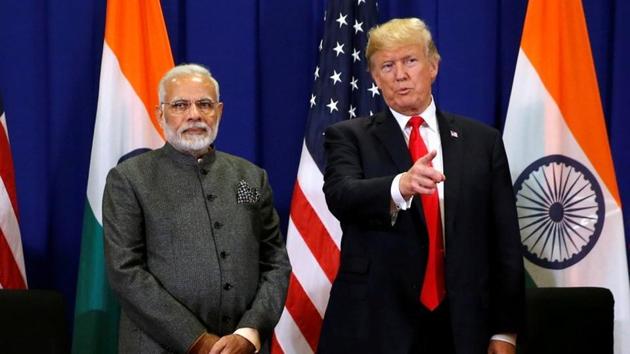
Irrespective of whether India was right to stick to its “redlines” with the US on the trade deal, there is a larger, disturbing pattern. India’s inability to finalise trade deals is undermining its claim that it will uphold the crumbling World Trade Organisation. Its Act East and Neighbourhood First policies are effectively running on one leg because of the absence of a trade element. India is experiencing a slow but steady loss of export earnings, as other countries negotiate to take away the overseas market share of Indian firms. While foreign investment continues to flow into the country, very little is oriented towards manufacturing and sectors which are tied to global supply chains. In contrast, exports are driving Bangladesh and Vietnam to grow at enviable rates.
The failure to put together trade agreements shows up other flaws in India’s approach to trade. One, the commerce ministry lacks the authority to override the numerous industry and labour lobbies who favour protectionism. Institutionalising a structure that handles these forces is needed. Two, the future of international trade will revolve around technology standards and digital policies. The undercurrent of technology nationalism that defines this government’s policies will mean an inevitable and potentially dangerous conflict with the US. Washington has called for a broad dialogue on these issues with New Delhi. There is little reason for India not to accept this. Three, if the international trading regime is fragmenting into a mosaic of plurilateral and bilateral agreements, India, which lacks such back-up agreements, will suffer the most.
{{/usCountry}}The failure to put together trade agreements shows up other flaws in India’s approach to trade. One, the commerce ministry lacks the authority to override the numerous industry and labour lobbies who favour protectionism. Institutionalising a structure that handles these forces is needed. Two, the future of international trade will revolve around technology standards and digital policies. The undercurrent of technology nationalism that defines this government’s policies will mean an inevitable and potentially dangerous conflict with the US. Washington has called for a broad dialogue on these issues with New Delhi. There is little reason for India not to accept this. Three, if the international trading regime is fragmenting into a mosaic of plurilateral and bilateral agreements, India, which lacks such back-up agreements, will suffer the most.
{{/usCountry}}