April 13 marks the 100th year of the Jallianwala Bagh massacre, one of the most inglorious chapters of British rule in India. On that day, in 1919, the British Army killed over 1,000 peaceful protestors in a walled public garden (Jallianwala Bagh) in Amritsar, Punjab. Over the years, there has been a growing demand from many, including several British historians, and parliamentarians, and Indian political parties, for the British government to formally apologise in Parliament and commemorate the Jallianwala Bagh massacre with a memorial day.
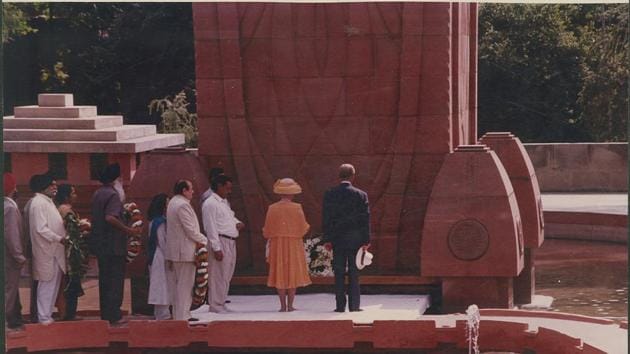
But even in the centenary year of the massacre, Britain has refused to do take that important step. On Wednesday, Prime Minister Theresa May reiterated the UK government’s long-standing expression of “deep regret” over the massacre, calling it a “shameful scar” on British Indian history. Ms May said: “The tragedy of Jallianwala Bagh in 1919 is a shameful scar on British Indian history. As her majesty the Queen said before visiting Jallianwala Bagh in 1997, it is a distressing example of our past history with India”. The PM’s statement is perhaps qualitatively a notch stronger from what other British representatives, including Queen Elizabeth II and former Prime Ministers Tony Blair and David Cameron, had said, but is far from enough. In fact, an apology would not have been a step without precedence. Britain acknowledged its culpability in another colonial-era atrocity: the crackdown on the Mau Mau uprising in Kenya in the 1950s, and apologised for the killing of 13 protesters in Northern Ireland by British troops on Bloody Sunday in 1972.
While a verbal apology would have been in order, considering that the extent of Britain-India relations in all sectors (social, economic and political), the Jallianwala Bagh massacre is actually one of many such misdemeanors of the colonial British government during their long rule in India. For example, what about the 1943 Bengal famine? Researchers, a report in The Guardian says, in India and the US have now used weather data to simulate the amount of moisture in the soil during six famines in the subcontinent between 1873 and 1943 to show that the one in Bengal was the only one in modern Indian history that did not occur as a result of drought; it was born of Winston Churchill’s policies. His cabinet, writes Madhushree Mukerjee in Churchill’s Secret War, was warned that the excessive use of India’s resources for the World War II effort could result in famine. But it opted to continue exporting rice from India to elsewhere in the empire.
{{/usCountry}}While a verbal apology would have been in order, considering that the extent of Britain-India relations in all sectors (social, economic and political), the Jallianwala Bagh massacre is actually one of many such misdemeanors of the colonial British government during their long rule in India. For example, what about the 1943 Bengal famine? Researchers, a report in The Guardian says, in India and the US have now used weather data to simulate the amount of moisture in the soil during six famines in the subcontinent between 1873 and 1943 to show that the one in Bengal was the only one in modern Indian history that did not occur as a result of drought; it was born of Winston Churchill’s policies. His cabinet, writes Madhushree Mukerjee in Churchill’s Secret War, was warned that the excessive use of India’s resources for the World War II effort could result in famine. But it opted to continue exporting rice from India to elsewhere in the empire.
{{/usCountry}}There are many such reported and underreported episodes that will be evaluated as more research happens. Hopefully, Britain will not shy away from acknowledging them, and one way of doing so would be to ensure that its schoolgoing students start learning about these brutal and shameful aspects of colonial rule.