If Mandal altered the grammar of politics in the heartland, Mulayam Singh Yadav was its shining mascot — rising from the muddy wrestling pits of Uttar Pradesh (UP) to successfully claim the mantle of the agrarian, socialist politics of Ram Manohar Lohia and Chaudhary Charan Singh. His successes marked the high noon of backward caste assertion made possible by the mobilisation around the Mandal Commission report — whether it be stitching together a new political coalition, displacing upper castes from
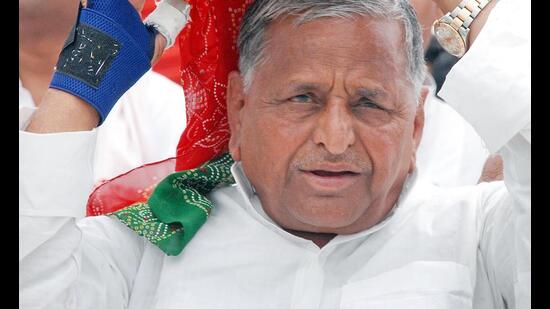
If Mandal altered the grammar of politics in the heartland, Mulayam Singh Yadav was its shining mascot — rising from the muddy wrestling pits of Uttar Pradesh (UP) to successfully claim the mantle of the agrarian, socialist politics of Ram Manohar Lohia and Chaudhary Charan Singh. His successes marked the high noon of backward caste assertion made possible by the mobilisation around the Mandal Commission report — whether it be stitching together a new political coalition, displacing upper castes from the seat of political power (despite the Brahmin-Muslim-Dalit combine’s potent force, it was always the former that was in the driver’s seat) or harnessing its numerical strength to enter institutions to which these communities were hitherto denied access.
But when he died on Monday, aged 82, the style of politics espoused by him has never been on a weaker wicket. If Mandal managed to successfully subvert religious mobilisation in the 1990s, Mandir politics has been fused with caste-based outreach into a formidable political strategy today. The politics of Bahujanwad that created new political constituencies has been corroded by the cynical exploitation of State resources, allowing narrow patronage networks to thwart development for personal gains. Most importantly, it has met with resistance from below — with a number of communities such as weaker backward groups and Dalits complaining that the politics meant to emanc-ipate them was instead oppressing them. The problem is most pronounced in the original Mandal playground — UP and Bihar — and has limited the potential of parties such as the Samajwadi Party (SP). In the last assembly elections, the SP posted its best vote share but failed to defeat the Bharatiya Janata Party because of the tags of goondavad (lawlessness) and the perception that it will only work for some groups. Worse still, for many minority groups that backed it, the failure has come with the realisation that so-called secular parties delivered little social or economic development.
Can this change? In Mr Yadav’s life, there are some lessons — in his grassroots connect, his early years of bringing together disparate communities on to a common platform and his tactical manoeuvring of parties and issues. But just as importantly, one has to learn from his missteps and ensure that patronage networks don’t create parallel governance structures, family members don’t become synonymous with power and aspirations of communities are not thwarted in the name of political assertion. In his death, this is the challenge Mr Yadav has thrown — not only to his political successors, but also to those claiming the mantle of Mandal’s unfinished project.
One Subscription.
Get 360° coverage—from daily headlines
to 100 year archives.
Archives
HT App & Website