In its long-range forecast, the India Meteorological Department (IMD) announced that this year’s monsoon is likely to be “normal” at around 98% of the long period average (LPA). The 2020 and 2019 monsoon were “above normal” at 110% and 109% of LPA, respectively. The monsoon is not just important because it is responsible for a remarkable 80% of the total rainfall in India. It is also essential for the economy, and has been termed India’s real finance minister. Rains are crucial for agricultural productivity, food security, farm employment, and rural income. Additionally, a normal monsoon rejuvenates arid lands, restores water sources, and provides much-needed relief from the summer heat.
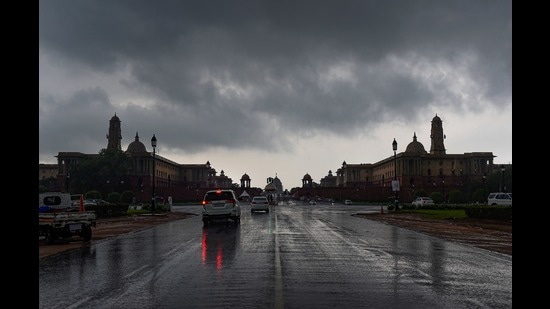
However, all is not well with the monsoon rains. A study by scientists at the Ludwig Maximilian University shows that the monsoon season will turn stronger and more erratic due to the climate crisis. Apart from damaging crops, the highly wet weather can also impact health, as the season becomes a breeding ground for epidemics and vectors. That its spatial distribution may not be optimal is also clear from IMD’s last week’s forecast that Jharkhand, Odisha, Bihar, and the northeastern states may not receive adequate rain. If one reads this warning along with a report released last week by Indian Institute of Science, Bengaluru and Indian Institute of Technology at Mandi and Guwahati, which says that Assam, Bihar, and Jharkhand are the most vulnerable due to the climate crisis, then the link between the climate crisis, monsoon and economic growth is visible. These are some of India’s poorest regions. The State must strengthen them against associated risks such as drought and floods. India must also develop a climate-risk index based on hazards faced by and the vulnerability of states.