“To the earth-worn, suffering man, Rome is the city of visible history, where the past of the whole world seems moving in funeral procession with strange ancestral images and trophies gathered from afar.” George Eliot could have easily written the above about Delhi. A capital for many regimes in history, Delhi is a city of monuments, each a trophy of its era. It is also a city of migrants, each wave adding its colour to the city’s landscape — some living in posh bungalows and upscale colonies and others cheek by jowl in tenements that dot urban villages.
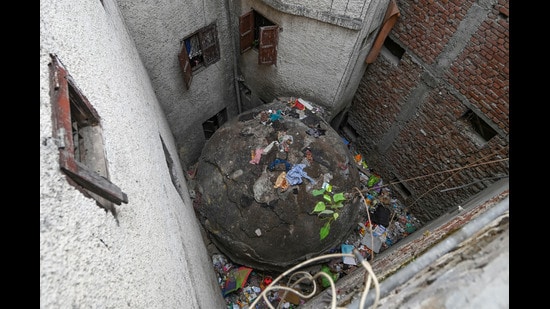
It is in the jostling between these two populations — one inert (the city’s monuments) and the other human — that Delhi grows and groans. HT reported on August 10 on how encroachment at varying scales, squalor, and official apathy have come together to swallow four Lodhi-era tombs in Zamrudpur in southern Delhi. All four are recognised by the Delhi government as top-tier heritage buildings, which come with a long list of protections — at least on paper. Unplanned housing abutting their walls, usage of space as cattle-shed, and integration of one tomb’s structure into the construction of a tenement, however, underlined how official mandates are crushed by everyday apathy.
Of course, this is not the only instance of encroachment on heritage monuments in the Capital — the protracted litigation over the unauthorised taking over of a Lodhi-era monument in Defence Colony is just one example of how such behaviour is not limited to one geography or class. Sketchy definitions, lax regulation, and limited implementation have enabled such practices.
For a country where history holds such pride of place in the national consciousness, not enough attention is given to actually protecting this heritage. This must change.
{{/usCountry}}For a country where history holds such pride of place in the national consciousness, not enough attention is given to actually protecting this heritage. This must change.
{{/usCountry}}