Those constellations that the very first astronomically curious humans were able to spot with their naked eyes were named after mythological heroes and objects that those early astronomers could identify with — depending on which civilisation they lived in. There’s no reason why that trend should not be followed in the present day as well. NASA appears to agree. In commemoration of the tenth anniversary of the Fermi Gamma-ray Space Telescope, NASA has named 21 constellations after present day mythical heroes and objects. From The Hulk to Doctor Who’s TARDIS, Godzilla to Thor’s hammer Mjolnir to the Starship Enterprise, all of those things have now been memorialised in the stars.
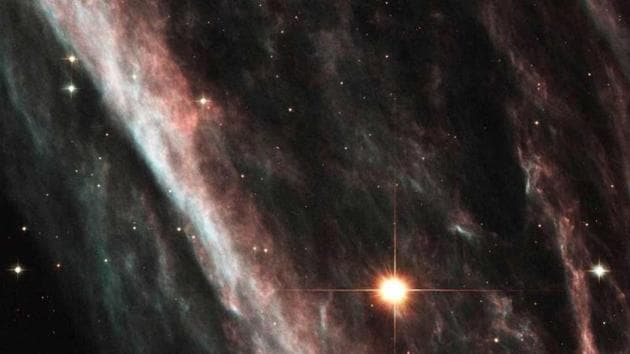
These constellations are not regular stars, but are groups of gamma-ray sources that scientists have discovered using the Fermi Gamma-ray Telescope, the most sensitive gamma-ray telescope in orbit around the earth. The Fermi has been in orbit for a decade now and has helped scientists understand the mysteries of objects that emit gamma-rays such as supermassive black holes, merging neutron stars, and streams of hot gas moving almost at the speed of light. The Fermi maps the entire sky every three hours, and studies some of the universe’s most extreme phenomena such as pulsars, supernova remnants, and gamma-ray bursts. Gamma-ray radiation is a high energy radiation billions of times more energetic than visible light. Studying these phenomena using the Fermi can give us more insight into the birth and the early evolution of the universe. Bringing together cosmologists and particle physicists, the Fermi has helped scientists test the very fundamentals of science, such as the speed of light, what sort of particles dark matter is made of, and to study younger, and more high-energy pulsars in the Milky Way.
Since all good science fiction is rooted in actual science, it is hardly surprising that most of the fictional heroes and objects that these gamma-ray constellations have been named for are linked in some way to gamma-ray radiations too. Godzilla’s trademark “heat ray” weapon “bears at least a passing resemblance to gamma-ray jets associated with black holes and neutron stars” according to NASA ; while the Hulk is famously a result of Dr Bruce Banner’s experiments with gamma-rays going horribly wrong. The Starship Enterprise’s engines were powered by the annihilation of matter and antimatter, a process that produces energy in the form of gamma rays. Immortalising such symbols in scientific endeavour is as much an acknowledgement of modern day mythologies as it is of the power of science fiction to inform real science.
{{/usCountry}}Since all good science fiction is rooted in actual science, it is hardly surprising that most of the fictional heroes and objects that these gamma-ray constellations have been named for are linked in some way to gamma-ray radiations too. Godzilla’s trademark “heat ray” weapon “bears at least a passing resemblance to gamma-ray jets associated with black holes and neutron stars” according to NASA ; while the Hulk is famously a result of Dr Bruce Banner’s experiments with gamma-rays going horribly wrong. The Starship Enterprise’s engines were powered by the annihilation of matter and antimatter, a process that produces energy in the form of gamma rays. Immortalising such symbols in scientific endeavour is as much an acknowledgement of modern day mythologies as it is of the power of science fiction to inform real science.
{{/usCountry}}