
 E-Paper



‘One for all’ in Spain’s big win
In the country’s second World Cup win, the team and its method are the real stars

 Prefer HTon Google


We all talk about the stars. From Lionel Messi to Kylian Mbappe, Erling Haaland to Cristiano Ronaldo, Jude Bellingham to Mo Salah — the football world revolves around them. Teams, often, are part of the background, the secondary artist. Some may argue that every team is propped up by a star or two, but who stands out in Spain, which relied on the collective to beat the individual geniuses? In many ways, the star of the show for Spain at the World Cup 2026 final is its method, a national football culture that works and has now seen them become the reigning European and World Champions. In case it got lost amid all the attention men’s football gets, they are also the women’s World Champions. Spanish kids who love the beautiful game start learning, passing and pressing at age six, until it becomes second nature. It is likely why France gave up in the semi-finals and why Argentina timidly parked the bus. Both had no idea how to stop this Spanish armada.
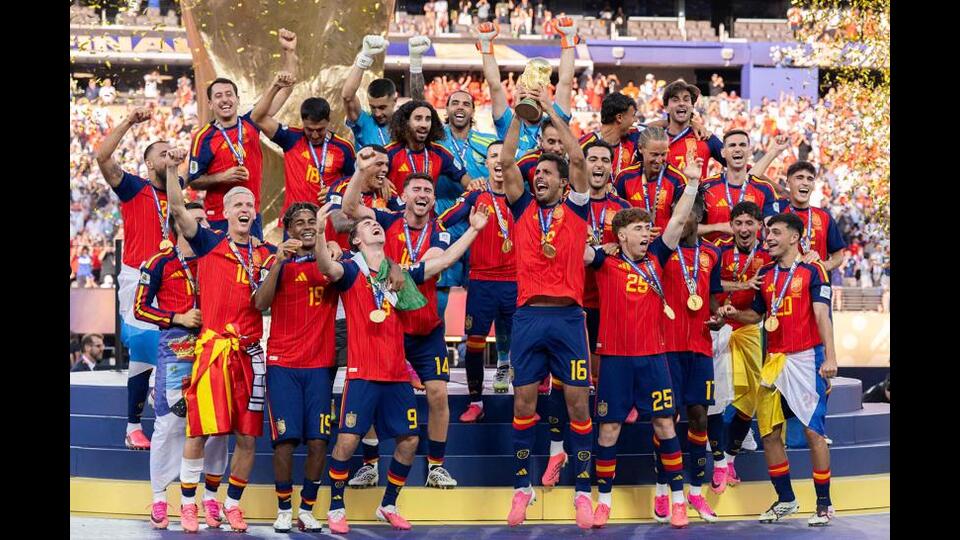
The Spanish Football Association prioritises coach education to develop players because it takes time to explain the underlying principles, and it takes a good coach to get the point across. Spain did not always favour this approach, but Luis Aragones, who coached the national team from 2004 to 2008, wanted a structure to be put it place that would help the team rise above the individual. So, a Spanish national team is one that can dominate the ball, create multiple scoring opportunities, defend competently in the opposition’s half, and recover quickly after losing the ball. It is their identity — one that has allowed a nation of almost 50 million to dominate the world’s most popular game.
Is it replicable? Can other nations do what Spain has done? To be fair, Germany’s Das Reboot at the turn of the century led to them winning the World Cup in 2014. They built things right from the school level. The great Brazil teams were not just skilful — they were also professional. In 1958, Brazil was the first nation to introduce a dedicated multi-disciplinary backroom staff, including a fitness coach, a doctor, a dentist, and a psychologist. By 1970, they introduced the concept of the False 9, wherein the striker drops deep into the midfield, and the rampaging fullbacks became a thing too. Italy’s four World Cup titles (1934, 1938, 1982, 2006) were built on tactical innovation and a system called catenaccio — which priortised defensive solidity.
The key for Spain now will be to somehow stay ahead of the curve. Tiki-taka (metronomic passing tactic) helped them win their first World Cup, tiki-taka-plus (same but a bit more direct) has given them their second. How they evolve from here is hard to say: Football is a team game and, currently, there is no better team in the world. The stars better take note.


