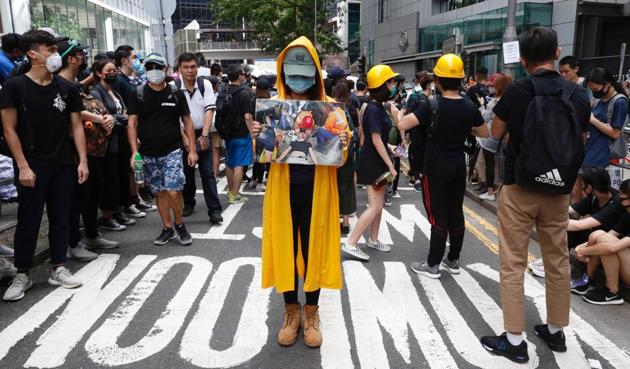
Last month, as nearly two million people thronged the streets of Hong Kong in a leaderless protest movement against a controversial extradition bill, it felt like something in the digital world had turned. For so many years, from the Arab Spring to the Occupy Movement, technology had been enabling protestors — to organise, to express solidarity, and to stay a part of a large anonymous movement. But in Hong Kong last month, protestors were being careful of this same technology. They were using separate burner phone numbers to communicate with each other, there were advisories to wear masks and large goggles to confound facial recognition tech, and people even bought one-way metro tickets with cash instead of using cards that were linked to their identities. Technology appears to have gone from being an enabler of democratic protest to the chief enemy of it.
Protests are a historical way of expressing discontent with authority. They are a legal and legitimate action that allow common people to register their dissent and dissatisfaction at the decisions and policies of those in power. The larger and more creative the protest, the more it is likely to make an actual impact. The farmers from Tamil Nadu who sat in protest in Delhi – bringing with them the skulls of their colleagues who had committed suicide because they were unable to repay their debts – was an evocative moment that highlighted the enormity of the problem and jolted the conscience of a largely apathetic middle class.
Also read : Hong Kong protests have dented China’s image of invincibility
In a democracy, protests are a barometer for the elected government to sense the mood of the people, and a way to transcend the majoritarian outlook and listen to the important voices of minorities. For people who join protests, it is a way to find and build solidarity for their cause, to know that they are not alone. To be together in protest is also a way to be safe — an individual expressing dissent is in danger of being targeted by individuals in power. But the anonymity of a crowd allows otherwise shy or scared voices to be added to the chorus of demand. The use of surveillance to track people in protests – facial recognition can identify every individual, surveillance of chat applications helps find moderators and members of large groups – has subverted the notion of anonymity that a crowd could provide.
{{/usCountry}}In a democracy, protests are a barometer for the elected government to sense the mood of the people, and a way to transcend the majoritarian outlook and listen to the important voices of minorities. For people who join protests, it is a way to find and build solidarity for their cause, to know that they are not alone. To be together in protest is also a way to be safe — an individual expressing dissent is in danger of being targeted by individuals in power. But the anonymity of a crowd allows otherwise shy or scared voices to be added to the chorus of demand. The use of surveillance to track people in protests – facial recognition can identify every individual, surveillance of chat applications helps find moderators and members of large groups – has subverted the notion of anonymity that a crowd could provide.
{{/usCountry}}Since ubiquitous surveillance can easily become the new normal, it will not be surprising that an entire generation might once again have to find a new vocabulary of dissent. In the space of a decade, protests have shifted from hashtags and posting photos and videos on social media at Occupy to radio silence and turning off mobile phones altogether in Hong Kong. Avoiding ubiquitous surveillance now means face masks, a ban on photos, and going analogue for the duration of protests. Does this signify the future of dissent?