
 E-Paper



Present and future of India-US ties
PM Modi’s prescription is the right way forward. Preserve India-US ties; investigate allegations; persuade West to act on terror

 Prefer HTon Google


In his interview with Financial Times, Prime Minister (PM) Narendra Modi rightly focused on the strength of the India-US relationship after the allegations implicating an Indian government official in an assassination plot on American soil. The PM said that the bilateral relationship was “broader in engagement, deeper in understanding, warmer in friendship than ever before” and a “few incidents” shouldn’t be seen as defining the relationship. On the specific charge itself, the PM said India was committed to the rule of law and it would examine any information if an Indian citizen had done anything illegal. At the same time, he said that India was “deeply concerned about the activities of certain extremist groups” overseas and warned that freedom of speech cannot be an excuse for intimidation and violence.
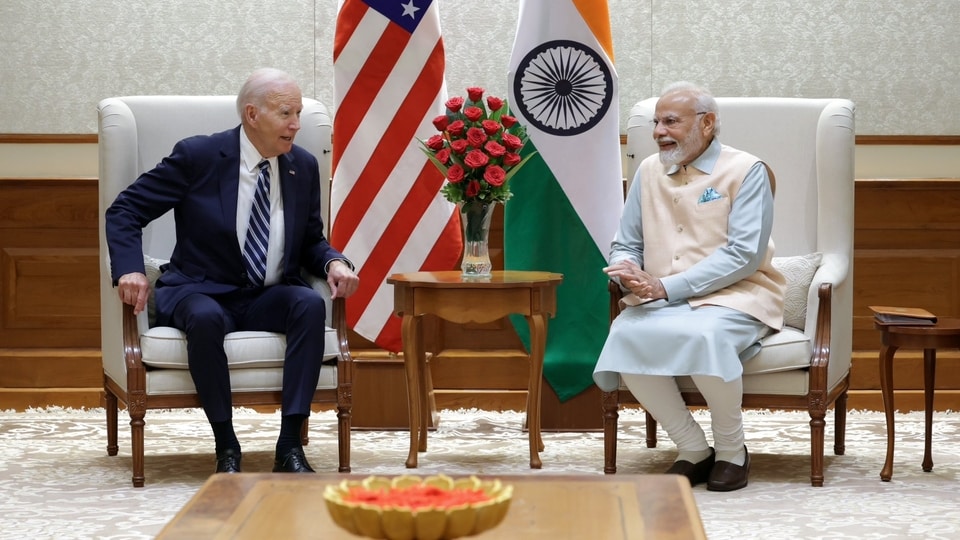
Modi’s responses outline the three features of India’s current diplomatic posture. The first is a recognition that 2023 has been a magical year for the India-US relationship. In January, the two national security advisors, Jake Sullivan and Ajit Doval, launched the initiative on critical and emerging technologies (iCET), which, as HT pointed out, was akin to the next steps in the strategic partnership that opened the doors for the nuclear deal. This formed the basis of one of the most successful Indian prime ministerial visits to the US ever when Modi travelled in June. In 11 months, iCET has already led to the most significant jet engine deal involving co-production and tech transfer between the two countries (the engines are made by GE). It has led to major investments in semiconductors (Micron, Applied Research, Lam), sealed a major drone deal (31 MQ-9B predator drones), inaugurated a new platform for collaboration among defence startups (Indus-X), sparked deeper collaboration in space (Artemis Accords; a mission to the International Space Station in 2024), kicked off the most serious set of negotiations on export controls (Strategic Trade Dialogue), and led to new initiatives on higher education collaboration and steps to ease mobility restrictions. And it has opened doors for deeper exchanges in Artificial Intelligence (AI) and working together both in AI and quantum. It was also a year when Quad delivered its most ambitious statement in Hiroshima, the Pacific islands came into play, China’s actions continued to pose separate and shared challenges, and India and the US together made G20 a success. All of this is in addition to the growing trade volumes and the continued rise in the importance of the diaspora.
So, while the first strand is preserving and consolidating these achievements, the second strand of India’s posture is taking the American allegations, unproven yet in a court of law, seriously. Irrespective of who sanctioned the operation and who executed it, India is right to commit to investigating the matter. It must also institute correctives to ensure this never happens again, as both a tool of internal intelligence reforms and external signalling to showcase its responsible character. And finally, Modi’s comments make it clear that there is an onus on others, including western democracies, to crack down on extremism, organised crime, threat and use of violence, and identity-based violent movements against the sovereignty and territorial integrity of friendly partners. This threefold prescription is the way out of the diplomatic challenge.


