
 E-Paper



Reward champions, men and women
In the Indian sporting system, a medal at the Olympics results in a windfall for the athlete, or in this case, a team. This rationale should also be extended to the Indian women’s hockey team, who did not win a medal and lost in the bronze medal playoff to Great Britain

 Prefer HTon Google


Minutes after the Indian men’s hockey team won an Olympic medal after 41 years, the Centre as well various state governments announced major monetary rewards for the players, and rightly so. In the Indian sporting system, a medal at the Olympics results in a windfall for the athlete, or in this case, a team. Most players in the bronze medal winning team had to struggle as young players to get access to the basic requirements of the game — gear, equipment, an artificial turf. And they deserve recognition and encouragement, both symbolic and material.
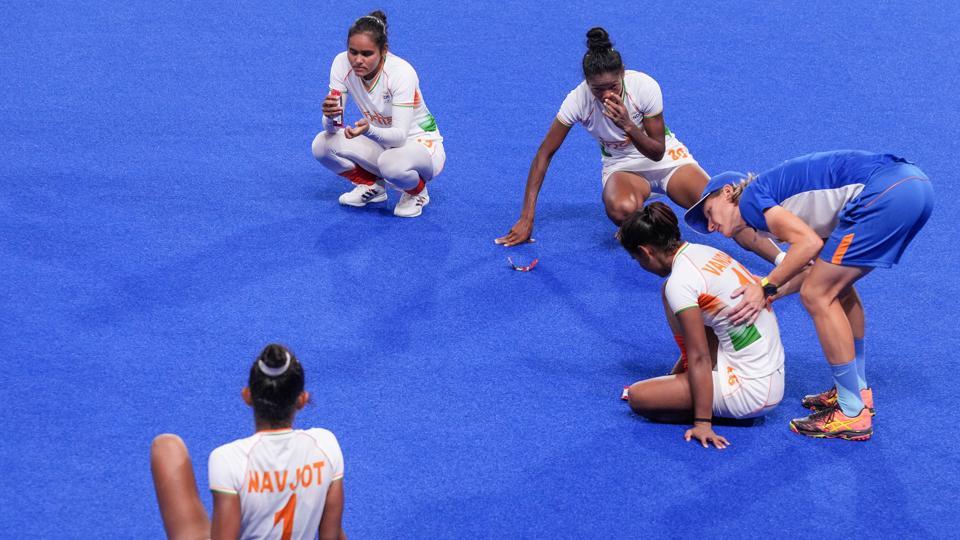
This rationale should also be extended to the Indian women’s hockey team, who did not win a medal and lost in the bronze medal playoff to Great Britain. But the players lifted a nation’s spirit with their grit, talent, and determination. There is good reason to treat the women as winners too.
Also Read | Women athletes and their journeys of grit
The women’s team only began getting attention and support — in terms of funding, coaching systems, facilities, tech support — in the last four years. Experts had predicted that the women won’t make it out of the group stages. The team was beaten in the first three matches. But then, there was a nearly miraculous turnaround. India beat 2018 World Cup runners-up Ireland, South Africa, and three-time Olympic champions Australia to qualify for the semi-finals. Then they fought till the end against the defending Olympic champions, Great Britain, losing 3-4.
For a team that didn’t even qualify for the Olympics for 36 years until Rio 2016, this fourth place finish is nothing less than a victory. It should be celebrated just like we still revel in perhaps the most famous fourth place finish in India’s sporting history — the late Milkha Singh in the Rome 1960 400m final. The fact that many women players in the team come from a history of socio-economic marginalisation — captain Rani Rampal’s father was a cart-puller — and yet beat all odds to emerge as champions, even if they didn’t win a medal, deserves recognition. Young girls picking up hockey sticks should know that they can make a career out of the sport. The Haryana government has made a start by announcing a cash reward of ₹50 lakh for each of the nine players from the state who competed in Tokyo. But others should follow suit and celebrate India’s hockey champions, men and women, who have given a new lease of life to a sport that’s integral to India.


