E-Paper



MHADA lottery 2027 to offer over 2,000 affordable homes in Mumbai: CEO Sanjeev Jaiswal
MHADA lottery 2027 is likely to offer over 2,000 affordable homes in Mumbai, with the announcement expected around January, said MHADA CEO & VP Sanjeev Jaiswal

 Prefer HTon Google


The Maharashtra Housing and Area Development Authority (MHADA) is likely to launch its Mumbai housing lottery for 2027 in the next five months, with around 2,000 to 2,500 affordable homes expected to be offered for sale, MHADA Vice President and CEO Sanjeev Jaiswal told Hindustan Times Real Estate.
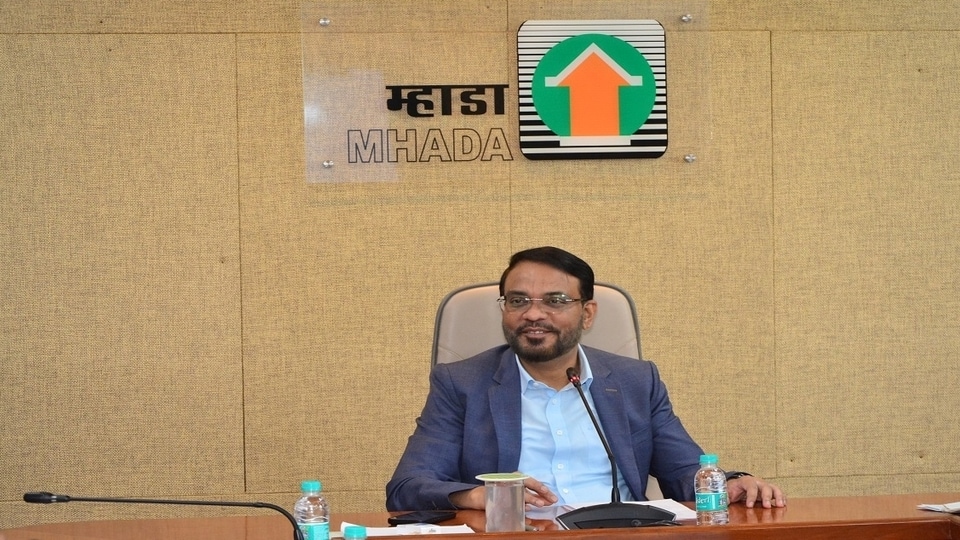
"We are working on the minute details and expect to announce the Mumbai lottery in January or February 2027. The lottery will have a similar number of homes as the 2026 edition, around 2,000 to 2,500 units. Every year, our target is to make this many homes available for the Mumbai real estate market," Jaiswal said.
Cluster redevelopment to add 30,000 MHADA homes
According to Jaiswal, the ongoing and proposed cluster redevelopment of around 1,000 acres of prime land in Mumbai will increase MHADA's housing stock by around 30,000 units over the next seven years.
"Currently, around 925 acres, to be precise, are under development or awaiting approval under the cluster redevelopment model. Because of this, 65,000 units will be made available for rehabilitation over the next seven years, along with 30,000 units for MHADA, and private developers will generate over one lakh units in the same period," Jaiswal said.
Officials said the final details of the 2027 lottery, including the number of homes, locations, pricing and inventory, are still being worked out. The final planning will also depend on the inventory remaining after the 2026 lottery allocation process.
MHADA is the nodal agency for providing affordable housing in the State. Since its establishment (1977) up to November 2025, MHADA has constructed 5.27 lakh dwelling units in Maharashtra, according to data shared by the Maharashtra government Economic Survey 2025-26.
What is cluster redevelopment?
Cluster redevelopment involves the integrated redevelopment of ageing urban pockets by amalgamating slums, dilapidated buildings, cessed properties, chawls, industrial premises, commercial buildings and warehouses into planned townships with modern infrastructure.
Major MHADA-led cluster redevelopment projects include Motilal Nagar (Goregaon), Abhyudaya Nagar (Parel), Adarsh Nagar (Worli), Bandra Reclamation, GTB Nagar (Sion) and Kamathipura. Several private housing societies are also being redeveloped under the model.
Under MHADA's Construction and Development Agency (C&DA) framework, developers are appointed to redevelop entire housing clusters. Eligible residents receive rehabilitation apartments, transit rent and corpus compensation. MHADA states that the projects aim to improve living standards through planned urban renewal.
Also Read: What is driving the growing interest of large corporates in Mumbai's cluster redevelopment projects?
All about the MHADA lottery 2026
For 2026, MHADA offered 2,640 affordable homes across Mumbai in locations such as Borivali, Kandivali, Goregaon, Powai, Vikhroli, Tardeo, Wadala and Dadar.
The lowest-priced home in the lottery was around ₹29 lakh, while the most expensive apartment in South Mumbai was over ₹6 crore.
The 2026 lottery was announced in March, applications closed in May, and the draw results were declared on August 6.