The Supreme Court has loosened its hold on firecrackers once more. On Wednesday, it cleared “next-generation” laris, the chains of crackers that go off one after another, for use nationwide ; these were previously banned for spewing excessive emissions than most firecrackers. The court also declined a total ban on crackers, citing the need to accommodate sentiments, and left room for barium-based crackers (barium, when burnt, emits particularly harmful gases) if tests due by October 15 clear them. This
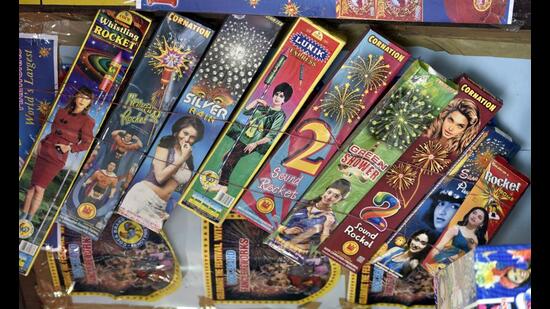
The Supreme Court has loosened its hold on firecrackers once more. On Wednesday, it cleared “next-generation” laris, the chains of crackers that go off one after another, for use nationwide ; these were previously banned for spewing excessive emissions than most firecrackers. The court also declined a total ban on crackers, citing the need to accommodate sentiments, and left room for barium-based crackers (barium, when burnt, emits particularly harmful gases) if tests due by October 15 clear them. This is the second such relaxation in a year.
The timing could hardly be worse. Diwali falls on November 8, in the thick of the farm-fire season, when cool, heavy air keeps smoke close to the ground. Last October, the court allowed green crackers in Delhi-NCR after years of a total ban. The Capital then had warm weather and few farm fires on its side, yet the firecrackers still caused the worst Diwali pollution peak since 2021.
At the heart of the problem is a simple fact: firecrackers, green or not, pollute. Green formulations are said to cut emissions by 30-40% per cracker. But the rest still goes into the air, and permitting crackers where none were allowed becomes a numbers game: burst roughly half as many again, and the gain is gone.
Then there is the problem of whether what’s sold as green is even green. The market is rife with conventional crackers passed off as green, boxes stamped “eco-friendly” with no certification behind them, and QR codes bought from licensed makers to dress up unlicensed stock, and there is no laboratory in Delhi that can test what is actually inside.
The cost of these emissions is easy to miss under today’s clear skies and brisk winds. But like clockwork, in about four weeks, the Capital will slide into its annual cocktail of bad air, mixed from farm fires, the city’s own pollution andstill weather. Diwali’s firecrackers will add to this at the worst possible moment.
To be sure, past bans were flouted too, people found crackers anyway, and the industry employs thousands of poor workers whose livelihoods deserve weight.
But the crisis is too severe, and the damage to health too grave, to accommodate these concerns. The industry should be helped to make cleaner products, and the state to build the laboratories and checks to verify them. Until then, the restrictions should stay.
The right to breathe comes first.
One Subscription.
Get 360° coverage—from daily headlines
to 100 year archives.
Archives
HT App & Website