The first redesigned coronavirus vaccine was approved for use this week when authorities in the United Kingdom cleared a Moderna dose that the company adapted to create immunity against the Omicron variant. The vaccine is a 50-50 formulation of Moderna’s 2020 product, designed on the Sars-CoV-2 variant that first spread around the world, and of a new dose developed using the blueprint of the Omicron variant that has taken over the world since early this year. In other words, it
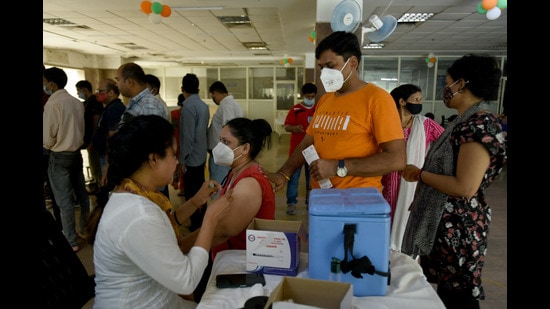
The first redesigned coronavirus vaccine was approved for use this week when authorities in the United Kingdom cleared a Moderna dose that the company adapted to create immunity against the Omicron variant. The vaccine is a 50-50 formulation of Moderna’s 2020 product, designed on the Sars-CoV-2 variant that first spread around the world, and of a new dose developed using the blueprint of the Omicron variant that has taken over the world since early this year. In other words, it is a bivalent vaccine. Other companies with approved doses for Covid-19 too are working on updated coronavirus vaccines, including Pfizer, AstraZeneca and Novavax.
Updating vaccines is a tricky question. Scientists need to broadly consider two questions: First, has the pathogen changed substantially enough to warrant such a decision, which includes millions of dollars in costs and months in time for requisite tests? And, second, is the new mutated pathogen here to stay? In Omicron’s case, the first question was clear as early as in January when the virus was seen to be too evolved from the version that first spread out of Wuhan for biologicals and therapeutics designed on its predecessor to be adequately effective. In the time since, the second question too became clear: The Omicron variant and its sub-lineages have displaced all other configurations, and subsequent mutations in the virus (such as BA.4, BA.5 and now, BA.2.75) have only conferred it more resistance. In other words, the Omicron variant, at least for almost 10 months now, has become the foundation on which the Sars-CoV-2 one is evolving.
The evolutionary phenomenon is not unique, nor unexpected. Many diseases require bivalent or multivalent vaccinations as pathogens evolve. More vaccine makers will soon roll out their updated doses, with the mRNA platform developers likely to do so first since their product is easily reengineered. Till now, India’s vaccination journey has rested on its industry’s staggering production capacity. But licensing bottlenecks and a lack of government purchase orders meant that some of the most quickly developed doses worldwide have been unavailable to Indians. Thus, it is crucial for the government and the pharma industry to step up. Particularly important will be production, licensing and purchase – all three pillars should be worked on, in case any of the others are difficult to execute. The next phase of the global Covid-19 vaccination is beginning, and India must keep abreast of developments.
One Subscription.
Get 360° coverage—from daily headlines
to 100 year archives.
Archives
HT App & Website